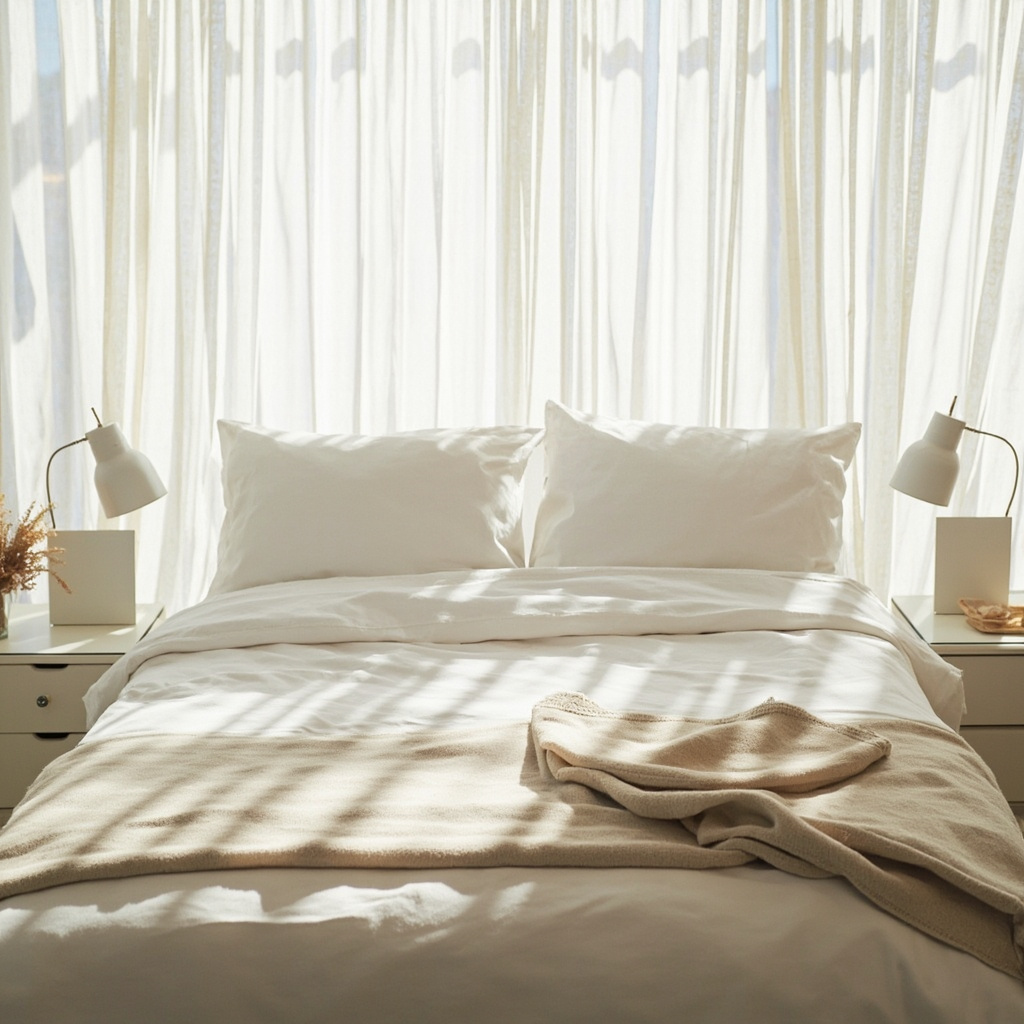
Many bedrooms come with a closet that’s too small, too narrow, or missing entirely (older homes, studio apartments, additions). The fix isn’t resigning yourself to underbed storage — it’s building a closet with one of 6 retrofit options. Some are $50 (a portable wardrobe), some are $2,000+ (custom built-in), and most are weekend projects.
This guide walks through the 6 options in order of cost and commitment, with trade-offs and a decision tree for picking the right one for your room and budget.
Why Bedroom Closets Are Tricky
Bedrooms without closets are common — older homes, studio apartments, basements converted to bedrooms, additions built without permits. The challenge is that a closet is structural in concept (a rod, walls, often a door) but you need it to be portable in practice (renters, moves, downsizing).
Three failure modes recur:
- The portable wardrobe sags. Cheap portable wardrobes last 18-24 months before the fabric stretches under clothing weight. The fix is buying one rated for 30+ pounds with reinforced corners.
- The freestanding wardrobe doesn’t fit the wall. Most reach-in closets aren’t standard 24” or 36” wide; off-the-shelf wardrobes leave dead space. The fix is measuring first and choosing an adjustable system.
- The built-in requires permanent modification. Wall anchors, screws into studs, sometimes electrical work. Renters can’t always do this; owners underestimate the labor cost.
This guide covers 6 options in order of cost and commitment, with the products that handle each failure mode.
What You’ll Need
The tools and products that solve the 6 retrofit options below. Most readers need 2-3 from this list, not all 10:
Freestanding wardrobe system
A modular wall-mounted system like the Aheaplus Closet System 4-9Ft with 4 Wooden Drawers at $169.98 runs 4-9 feet (fits non-standard walls) with 4 wooden drawers at the base for socks, underwear, and accessories. Best for owners who want built-in aesthetics without custom millwork.
Portable wardrobe
The SONGMICS Portable Closet Wardrobe at $89.99 is the cheapest option that doesn’t look like dorm furniture. No tools, 1-2 hour install, moves with you. Best for renters and short-term stays.
Freestanding wardrobe armoire
The Whitmor 6-Piece Freestanding Wardrobe Closet System at $159.99 includes drawers, mirror, and integrated shelving. Disassembles if you move. Best for medium-term bedrooms (2-5 years).
Top-shelf organizer
Once you have any wardrobe or closet, the top shelf is wasted space without a clear-view organizer. The mDesign Acrylic Makeup Organizer at $19.99 gives you visible daily-wear storage without rummaging through bins.
Double-hang rod
A standard single rod wastes the vertical space below shirts. A STORAGE MANIAC Hanging Closet Rod (Double Rod) at $29.99 hangs a second rod below the existing one, doubling hanging capacity without taking more wall space. Pairs with the wall-mounted system above.
Velvet hangers
Switching from plastic to thin velvet hangers gains 30-40% more rod space because each hanger is 1/4 inch thick instead of 3/8. A Utopia Home Premium Velvet Hangers 50-Pack at $16.99 covers a full wardrobe.
Over-door hooks
The back of the bedroom door is dead space. Optish Over The Door Hooks (6-Hook) at $13.99 hold robes, bags, hats, and tomorrow’s outfit — no drilling required.
Under-bed storage backup
When the closet fills up, the bedroom’s next-largest unused space is under the bed. A Budding Joy 90L Under Bed Storage Container at $20.99 fits a queen-size comforter for seasonal storage without taking floor space.
Soft-goods baskets
Once you have shelves, soft goods (sweaters, scarves, linens) collapse into piles. The SIXDOVE Woven Storage Baskets (4-Pack) at $29.99 give you 4 stackable baskets that hold folded items upright and visible.
Labels
The moment you add more than 3 boxes or bins, you need labels that survive seasonal rotation. A pack of ONUPGO Chalkboard Labels ($9.99 for 180 stickers, plus a chalk marker) lets you relabel “winter scarves” to “linen sheets” without buying new stickers.
Step 1: Measure the Room and Your Wardrobe
Before buying anything, measure:
- Linear feet of available wall: most options want 36-72 inches of wall
- Ceiling height: standard 8 ft vs. tall ceilings open up different solutions
- Reach to your clothes daily: clothes you’ll grab 10x/week should be closer to the bed; seasonal storage can be taller or further
- Total clothing volume you want to store: count hangers per category. A typical wardrobe needs about 1-2 cu ft per clothing item.
Write these numbers down — they’re the constraint that any solution must satisfy.
Step 2: Pick Your Retrofit Type from the 6 Options
Option 1: Portable Fabric Wardrobe (~$50-150, 1-2 hour install)
Best for: rentals where you can’t make holes. Light clothing only (sweaters stretch on hangers).
The cheapest workable option that doesn’t look like a dorm closet is a portable wardrobe like the SONGMICS Portable Closet Wardrobe at around $90 — it assembles in 1-2 hours with no tools, hangs from a steel tube frame, and moves with you when the lease ends. Most renters keep it for 2-4 years before the fabric starts sagging at the seams.
Pros: cheapest, no install damage, fits awkward dimensions, often portable if you move. Cons: fabric can sag with heavy clothes, looks cheap, doesn’t last as long as wood. Limitations: max hanging space ~6 inches deep; single tier; integrated shelves are small.
Option 2: Freestanding Wardrobe Armoire (~$200-700, 1-3 hour install)
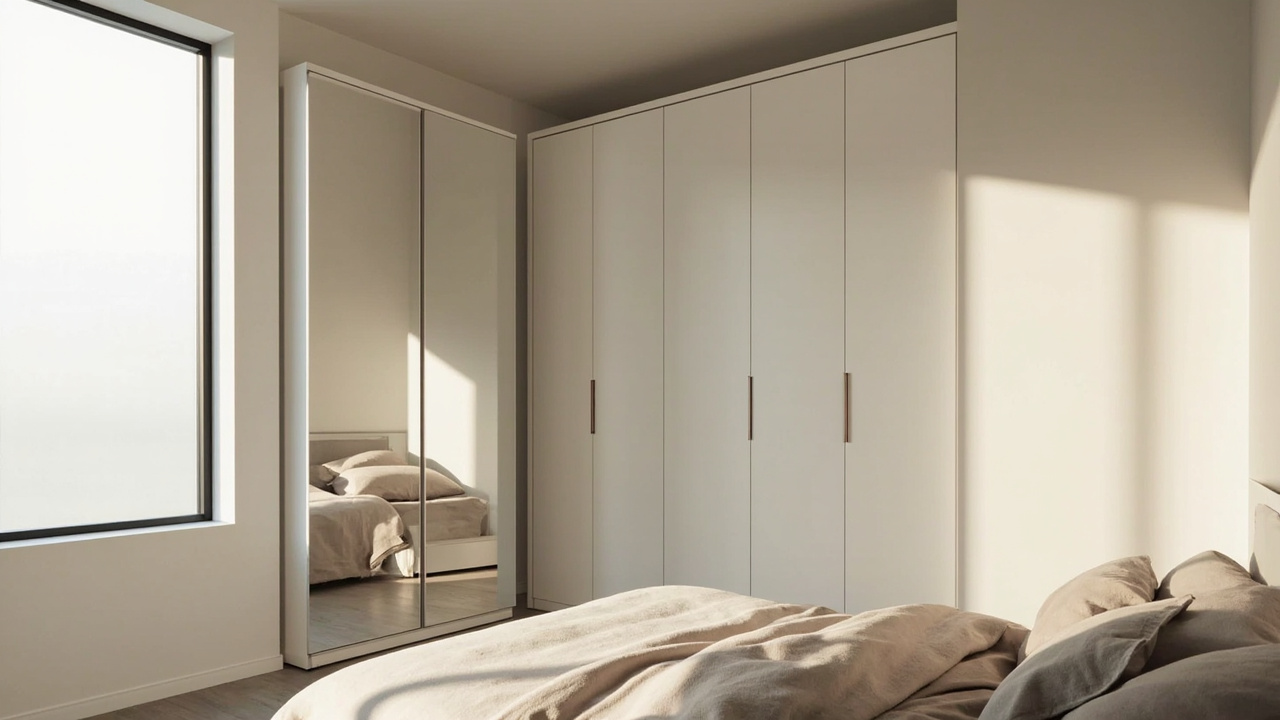
Best for: medium to long-term bedroom storage. Most flexible — looks built-in but is movable.
The strongest mid-budget choice is a 6-piece freestanding system like the Whitmor 6-Piece Freestanding Wardrobe Closet System at $159.99 — it pairs a hanging section with shelves you can rearrange, and the whole thing disassembles if you move. Add an mDesign Acrylic Makeup Organizer ($19.99) on the top shelf if you need a clear-view zone for daily-wear accessories.
Pros: large capacity, looks like real furniture, can include drawers, mirror, integrated lighting. Cons: takes floor space (deep), assembly required, may need anchoring if tall and top-heavy. Limitations: must be on flat floor; door swing requires 1.5-2 ft clearance.
Option 3: Reach-In Closet Expansion Kit (~$150-300, 2-4 hour install)
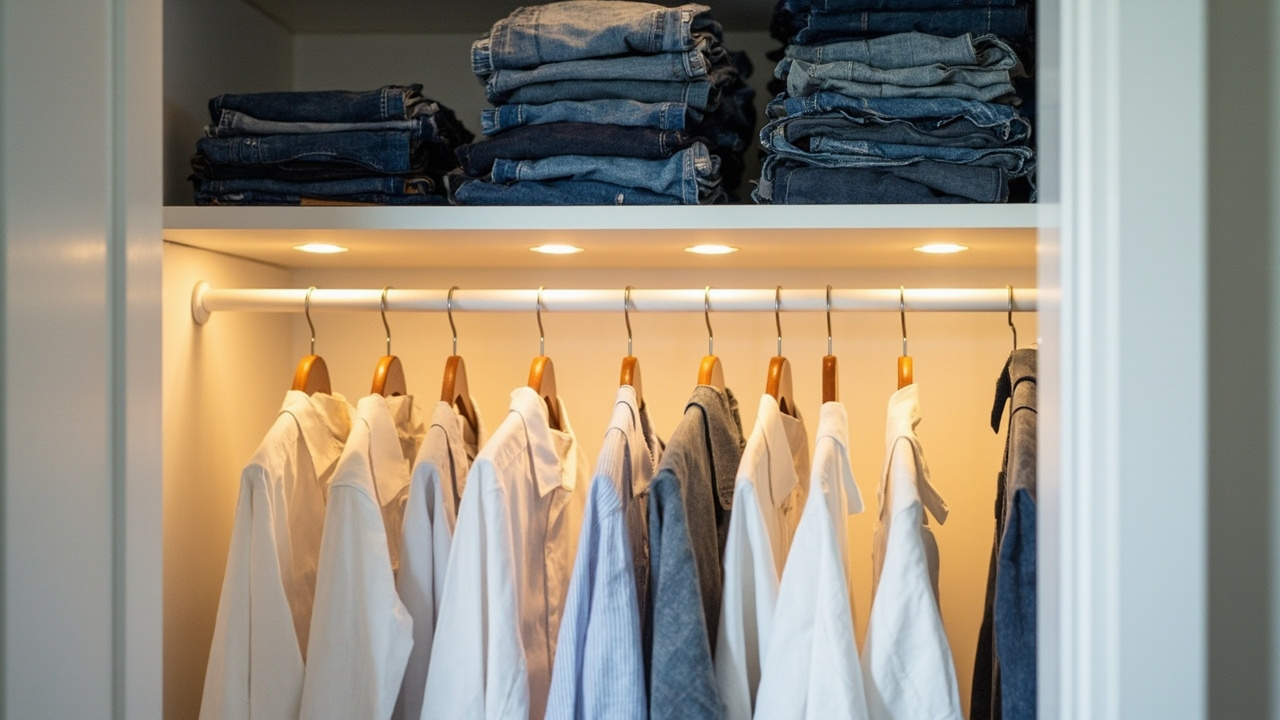
Best for: rooms with a small existing closet you want to enlarge or resurface.
Pros: extends existing infrastructure, can add a second rod (double-hang), integrated shoe racks, valet rods. Cons: requires screwing into walls (rental-clause check), smaller capacity gain than freestanding. Limitations: depends on existing closet depth; you gain rod space more than cubic space.
Option 4: Open Wardrobe System (~$300-1500, 2-5 hour install)
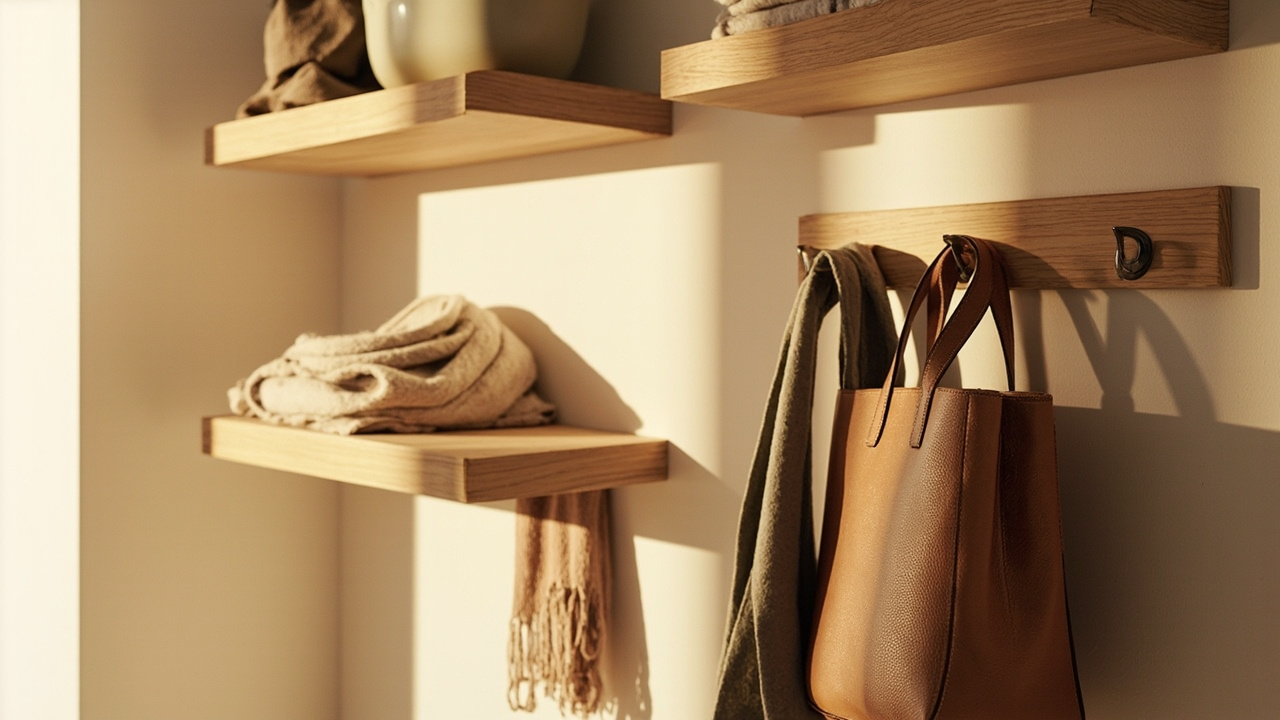
Best for: design-conscious bedrooms where the wardrobe is part of the room’s visual identity.
Pros: full customization, looks intentional, often expandable over time. Cons: requires wall anchoring (must-not-fall safety), exposed clothing is dust-prone. Limitations: needs good lighting to look right; not for cheap finishes.
Option 5: Prefab Built-In Closet System (~$1000-3500, professional install)
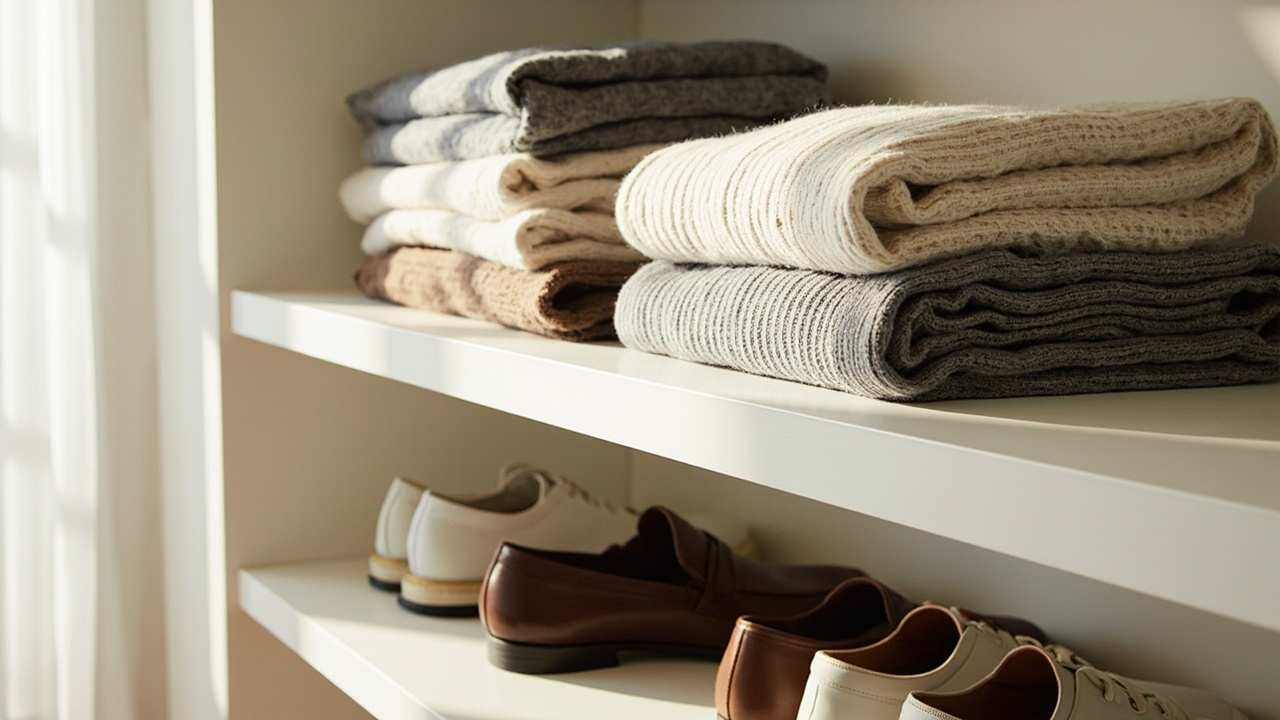
Best for: long-term bedrooms (5+ years), high clothing volume, walk-in ambitions.
Pros: looks custom, all space utilized, designed for your clothing inventory. Cons: expensive, professional install ($500-1500 labor), not portable. Limitations: 2-3 week timeline for design + install; can’t undo without wall repair.
Option 6: Custom Built-In (~$3000+, multi-week professional)
Best for: dream bedroom with full walk-in ambitions.
Pros: everything designed for your clothing, can add island, lighting, mirror, lockers. Cons: highest cost, longest timeline, often needs architect + carpenter. Limitations: if you might move in 5 years, sunk cost risk.
Step 3: Lay Out Zones Inside Whatever You Pick
Whichever option you choose, zone it like the hub article on bedroom organization:
| Zone | Holds | Reach frequency |
|---|---|---|
| Daily-wear rod | Shirts, pants, jackets | Daily |
| Hand-off rod | Tomorrow’s outfit | Daily |
| Seasonal/rare | Heavy coat, formal wear | Seasonally |
| Shoes | All footwear | Daily |
| Drawers | Underwear, socks, accessories | Daily |
| Soft surfaces | Sweaters, knits | Weekly |
| Bulky | Luggage, off-season bags | Seasonally |
Place daily-wear at eye level (60-66 inches); seasonal at top (75-90 inches) or hard-to-reach corners; soft surfaces in mid-drawer; shoes on floor or lowest shelf.
Step 4: Install Hangers, Dividers, Lighting
Don’t skip these — they determine whether the system works daily:
Hangers: use uniform thin velvet hangers throughout. They hold more clothes per linear inch (vs. plastic or wood), and identical hangers visually compresses clutter.
Dividers: vertical sections inside the rod prevent category bleed. One divider for daily tops, one for bottoms, one for jackets.
Lighting: minimum 800 lumens inside the closet. LED strip lights mounted under the top shelf wash the closet rod without shadows. Battery-powered stick-on LEDs work for renters.
Labels: the moment you add more than 3 boxes or bins, you need labels that survive seasonal rotation. A pack of ONUPGO Chalkboard Labels ($9.99 for 180 stickers, plus a chalk marker) lets you relabel “winter scarves” to “linen sheets” without buying new stickers. The chalkboard surface rewrites cleanly for years; regular adhesive labels peel off in 6 months.
Step 5: Live With It for 2 Weeks Before Committing
Closet decisions look great in the showroom and bad in 6 months if you got the layout wrong. Spend 2 weeks using the new closet before:
- Adding more storage you didn’t budget for
- Painting or making it permanent
- Calling it “done” and moving on
This trial period catches most fitting mistakes (rod too high, drawer depth wrong, lighting too dark).
Common Mistakes and How to Avoid Them
Mistake 1: Underestimating volume. The empty bedroom wall looks big. After a month of stuffing clothes in, the closet feels small. Over-buy by 30% — extra rod space, extra drawer depth, extra top-shelf height — you’ll use it within a year.
Mistake 2: Skipping the lighting fix. A dark closet uses 30% less space than a well-lit one because you can’t see or reach the back. LED lighting is $30 and 30 minutes of work; it transforms the closet.
Mistake 3: Buying aesthetically before functionally. The most beautiful wardrobe is useless if you can’t reach the back. Function first, then look.
Mistake 4: Forgetting door swing clearance. A 4-door wardrobe with 1.5ft doors requires 6ft of floor space when fully open. Measure the room with the wardrobe’s doors open, not closed.
Quick Recap
Q: My bedroom is 10x10 ft with no closet. Realistic options? A: Freestanding wardrobe (Option 2) is your best bet. Look for one with mirror doors to double function. Expect 24-36 inches of floor depth dedicated to the wardrobe.
Q: Can I put a built-in system in a rental? A: With landlord permission, yes. Many landlords allow non-load-bearing closet systems if you repair walls on move-out. Document everything in writing.
Q: What’s the cheapest option that doesn’t look ugly? A: Portable wardrobe (Option 1, $80-150) from IKEA or SONGMICS. Looks respectable, cheap, easy to dismantle.
Q: How do I prevent the bedroom from looking like a closet? A: Use zone techniques — keep the “visible” zone (clothes on the rod) tidy, hide the rest behind doors. The same bedroom can have a 6-foot closet without feeling cramped if the closet doors close.
Related Bedroom Guides
This guide is part of the broader Bedroom Organization Hub. For a complete weekend reset, see our Bedroom Declutter Checklist.
For specific room surfaces:
- Dresser Organization — drawer-by-drawer system
- Nightstand Organization Ideas — drawer organizers and valet trays
- Jewelry and Accessory Storage — five zoning systems
- Under Bed Storage Ideas — 4-zone system for hidden clutter
- Small Bedroom Organization — for studios and tight rooms