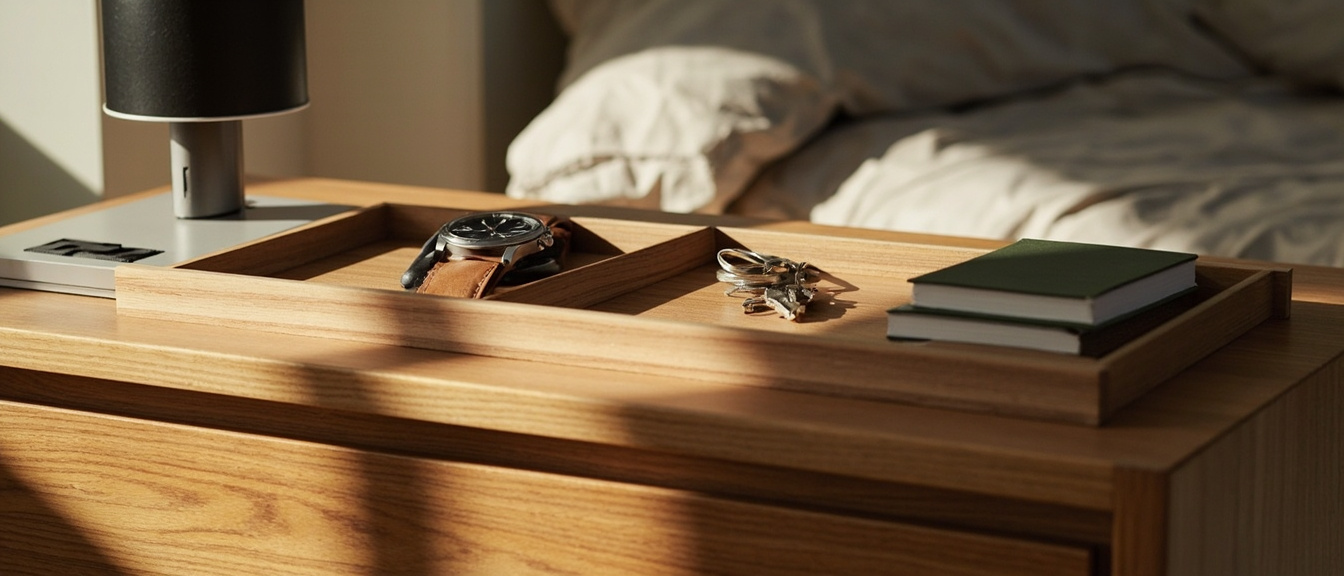
The nightstand is the smallest piece of furniture in the bedroom, yet it’s the one surface most likely to turn into a junk drawer. Glasses, phone, lip balm, books, a half-empty water glass, yesterday’s receipts, charging cables — everything loose from the day lands here.
The fix isn’t more organizers. It’s deciding what belongs on the nightstand in the first place. Function first, pretty second.
Why Nightstands Get Messy
A nightstand sits at the intersection of three routines: waking up, going to sleep, and the pockets-emptying moment in between. Phone, glasses, watch, rings, lip balm, books, the water glass that follows you to bed — all of it lands on roughly 200 square inches of surface. No organizing product solves this; the surface is just too small.
Reddit’s r/declutter threads confirm it: “my nightstand is a catchall and it’s driving me crazy” is one of the most repeated phrases in the subreddit. The complaint isn’t storage — it’s that nothing has been sorted yet.
The mistake most people make is reaching for bins, trays, and dividers before deciding what should stay on the nightstand. They buy three organizers, fill them with the same 20 items, and the surface is still messy.
The real fix is a function rule: a nightstand holds only sleep-related items. Everything else migrates somewhere it has a real home.
What You’ll Need
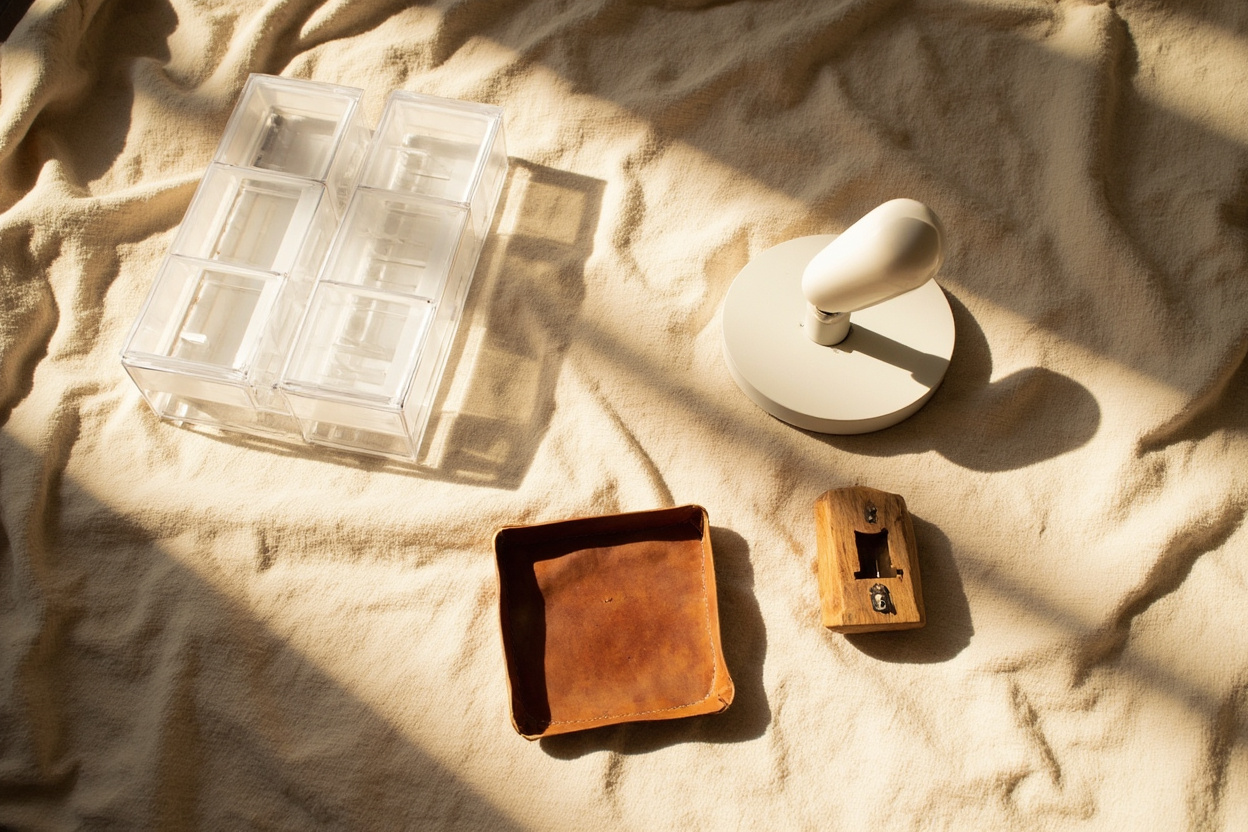
Three tools cover roughly 90 percent of nightstand problems. None are expensive, and each solves one specific failure mode.
Drawer organizers
The nightstand drawer has the same problem as every junk drawer in the house — items pile on top of each other and you forget what’s in the back. A clear plastic 4-size organizer set (Vtopmart 25-piece) gives you four compartment sizes for medications, jewelry, charging cables, and earbuds. Clear plastic beats felt here because you can see what’s in each compartment without lifting anything.
For the lower drawer where you keep jewelry or watches, felt dividers protect against scratches. See our drawer organizer buying guide and our clear vs opaque bins comparison for the full tradeoff.
A catchall tray
A single wooden valet tray kills the daily “where did I put my ring” hunt — one designated spot for things that come out of your pockets at night. A wooden tray with a leather base sits flat and matches most bedroom furniture. If you wear a watch plus rings daily, a 5-compartment tray keeps each item in its own slot. For more bedroom storage ideas, see our shelf organizer guide and storage bin guide.
Lamp with charging ports
A bedside lamp with two USB ports and an AC outlet (Lynnoland touch-dimmable set) replaces a separate lamp, a USB charging brick, and a power strip — removing two cables and one plug from the nightstand. Touch-dimmable beats pull-chain for half-asleep fumbling.
Step-by-Step Guide
A 5-step reset that takes 30 to 45 minutes for a standard two-drawer nightstand. Order matters — declutter first, organize second.
Step 1 — Empty everything
Take every item off the top surface and out of both drawers. Wipe the surface and drawer interiors with an all-purpose cleaner. Before you put anything back, line the drawer floor with Beautysaid Non-Adhesive Drawer Liner at $9.65 — the non-slip surface keeps trays and dividers from sliding when you open the drawer.
Sort items into three piles: keep here (sleep-related), relocate (kitchen, bathroom, closet), donate or trash.
This is where bedroom decluttering overlaps with the declutter fast system — the 4-quadrant decision framework (Trash / Donate / Keep / Relocate) is the same one you’d use for a closet or pantry reset. For the underlying “does this belong here” decision, the KonMari method offers a sparks-joy filter for ambiguous items.
Step 2 — Define the surface rule
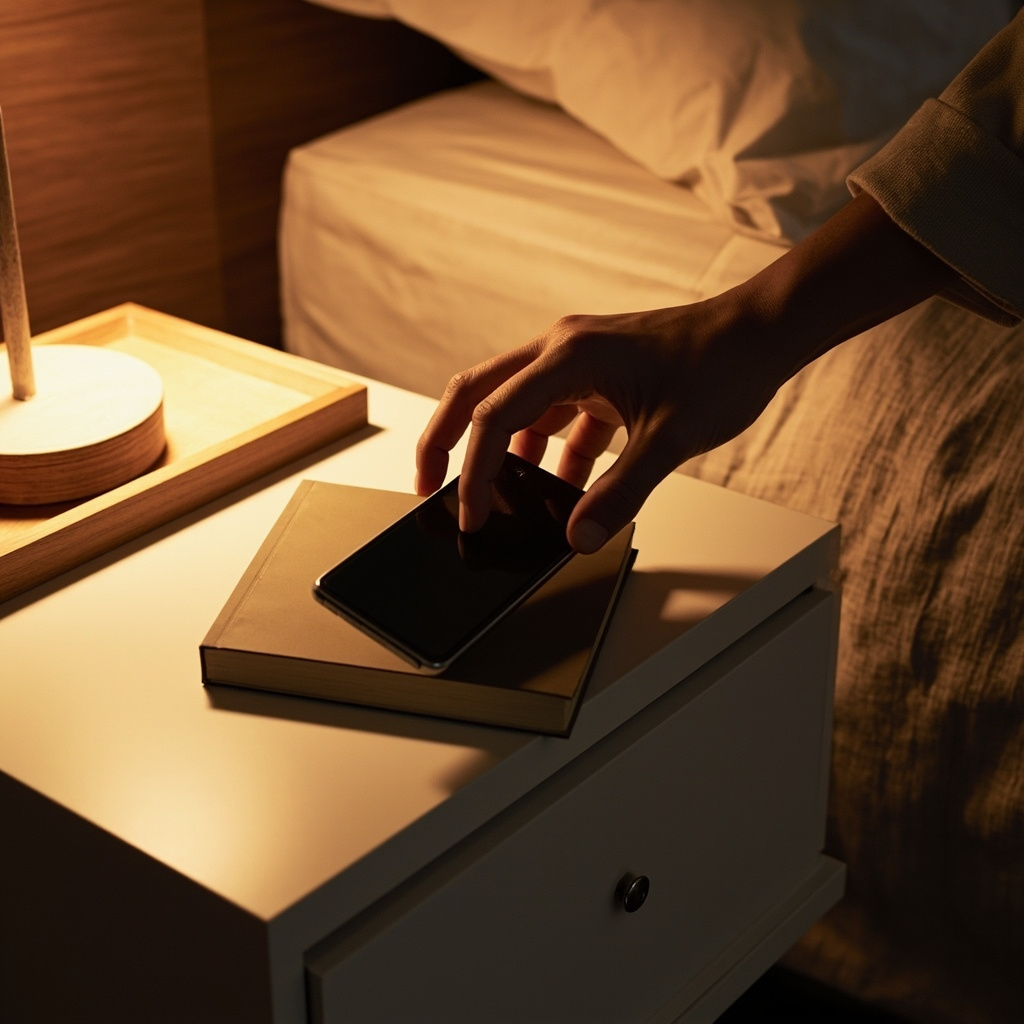
A bedside table holds a lamp, a sleep aid, and a phone charger. That’s it. Everything else migrates: glasses → eyeglass case, books → a small stack of one or two, water → one coaster with a closed-top tumbler, jewelry → catchall tray, medications → drawer compartment (not on top, where kids, pets, and spills reach). For medications, the Lifewit 5-Pack Upgrade Drawer Dividers at $15.97 give you adjustable compartments for vitamins, prescriptions, and eye drops in one drawer.
If you need more drawer space than the nightstand has, add a Vtopmart Stackable Storage Drawers (4-Pack Acrylic) at $34.49 — these stack on top of the nightstand (or under it on a shelf) and add 4 transparent drawers for items that don’t fit inside.
The function rule is what keeps the nightstand organized three weeks later. Without it, the surface collects clutter at the same rate it did before the reset.
Step 3 — Sub-divide the drawer
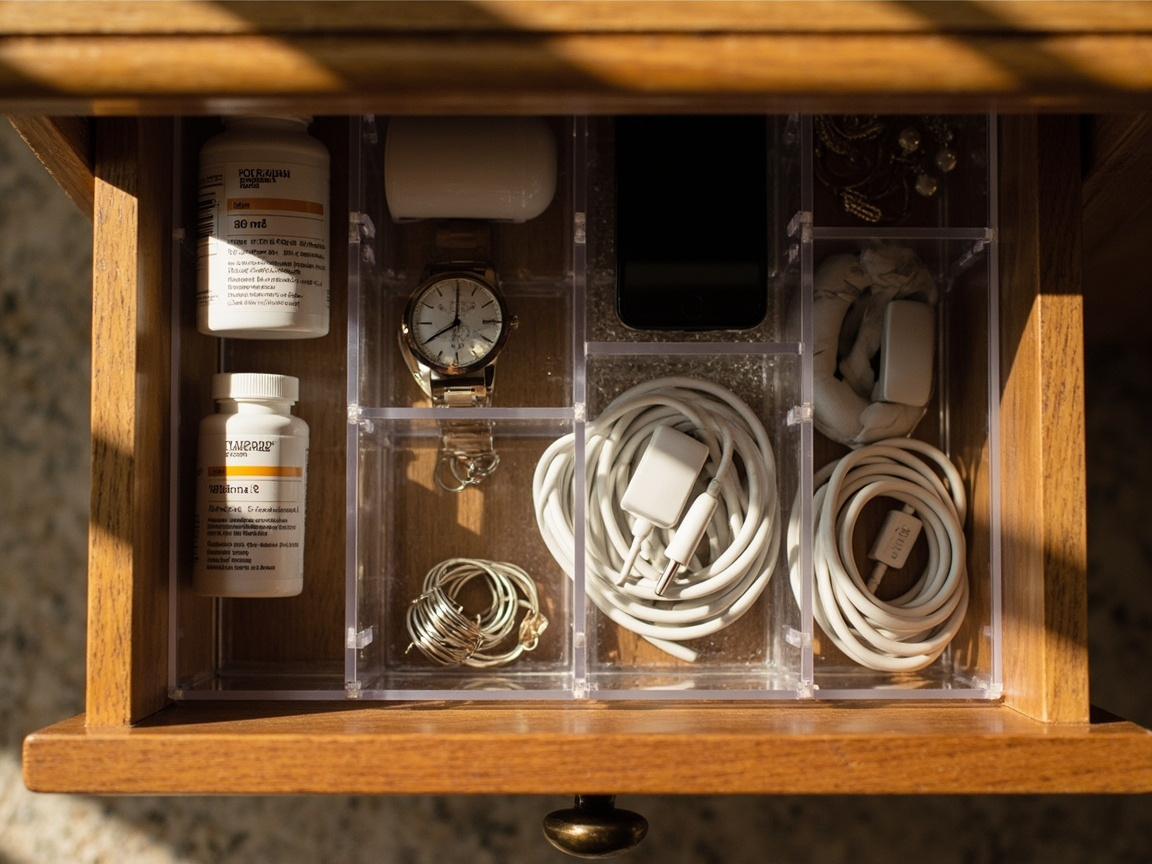
The 4-size clear plastic organizer (Vtopmart) zones the top drawer: medications, jewelry, charging cables, small tools. Use a felt organizer in the lower drawer for sleepwear, socks, or watches. Chalkboard labels let you rename compartments without re-labeling the bin. See our drawer organizer buying guide for sizing.
Step 4 — Cable and charging reset
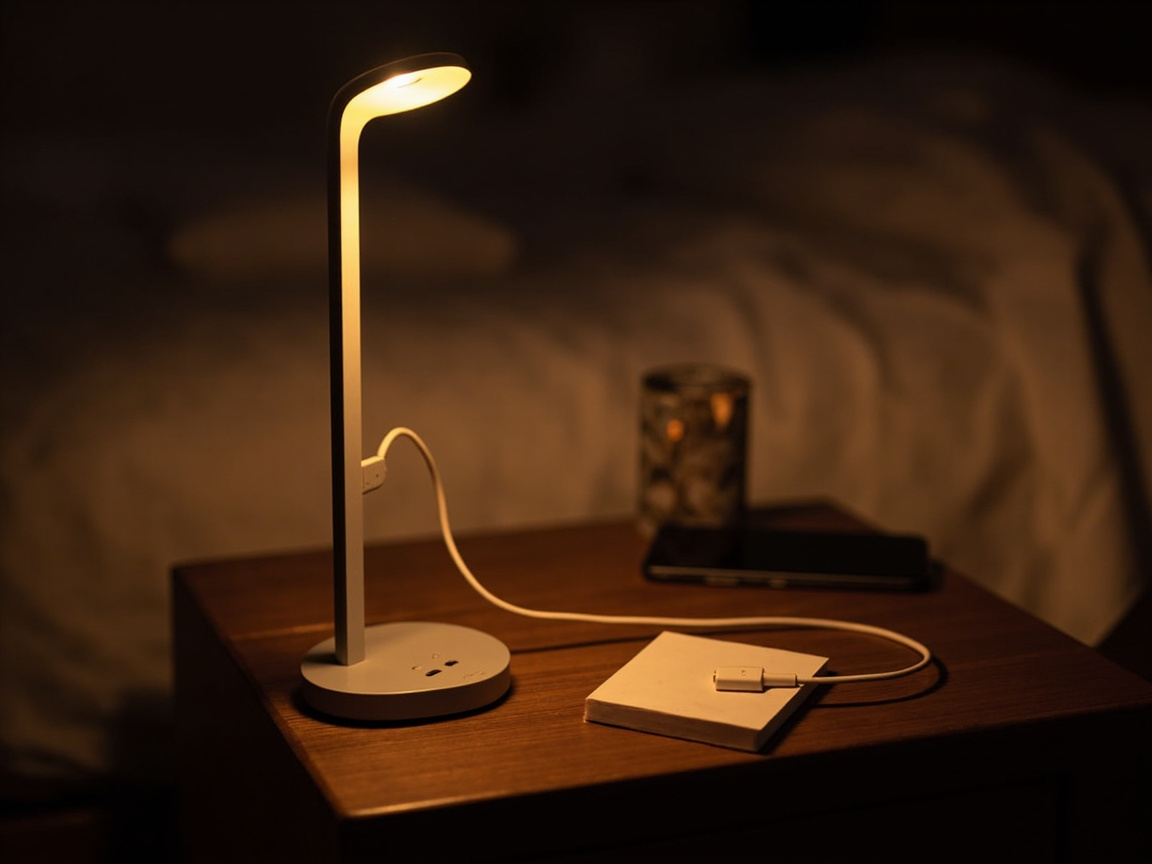
Move all charging cables to a single lamp with USB ports (Lynnoland combo). One cable for the phone, one port left for a watch charger. If you need more outlets, put a single charging station on the floor behind the nightstand — never on top. A cable box eats surface area; skip it. For bedrooms without nearby outlets, a wall-mounted hooks and racks system holds the charging station off the floor.
Step 5 — Build the one-touch nightly rule
A 30-second nightly habit prevents drift. The one-touch rule:
- Phone on the charger (the lamp USB port).
- Glasses in the case or tray compartment.
- Water glass to the kitchen in the morning.
- Watch and rings into the catchall tray.
For the items that don’t fit the rule (medication bottles, supplements, ear plugs), label the drawer compartments with Kuocodall 288 Pre-Printed Labels at $12.99 — 288 labels in 8 categories means you never run out and don’t have to print your own.
Same checklist every night. For broader habit design, the declutter fast system covers the weekly-reset habit that prevents the entire bedroom from drifting back to chaos.
Nightstand Organization
The right organizing strategy depends on which of four nightstand types you have. Each one has a different layout and a different failure mode, so the step-by-step above gets adjusted per type.
Open-shelf nightstands (no drawers)
All your storage has to live on the surface or in a small cart beside the bed. A catchall tray takes the top; a slim 3-floor rolling cart at the wall holds the drawer-worthy items — medications, books, journal. For tight rooms where every inch matters, see our small bedroom organization guide for the floor-space trade-offs.
A bed caddy or under-mattress pouch handles the items you want within arm’s reach without consuming surface area — phone, remote, the book you’re currently reading.
Single-drawer nightstands
The drawer does the heavy lifting. Sub-divide with a 4-size clear organizer: meds, jewelry, cables, earbuds. The top surface holds three items only — lamp, water, phone. Skip the catchall tray here; the drawer has corralled the loose items.
Two-drawer nightstands
Top drawer for daily items (meds, charging cables, eyeglass case). Lower drawer for less-frequent items (sleepwear, books, backup supplies). The dresser organization guide covers the drawer-by-drawer logic in depth — the same divide-by-frequency principle applies to a nightstand.
Three-drawer and tall nightstands
Less common, but the format is the same as a mini dresser: top = daily, middle = weekly, bottom = monthly or seasonal. Treat the nightstand like a dresser top with one drawer for the most-frequently-used items and the lower drawers for rotation stock.
Shared nightstands (couples)
If you share a nightstand with a partner, the function rule still applies but the surface count doubles — one half each. Use two small trays instead of one large one so each person’s catchall stays separate. For the broader multi-surface coordination when both partners have separate nightstands and dressers, the bedroom organization ideas guide covers how the dresser, closet, and nightstand systems work together as one design.
Kids’ nightstands
Lower the drawer pulls so a child can reach them. Skip the catchall tray in favor of a labeled bin for the small toys that migrate to the bedside table. Medications move to a high shelf or out of the bedroom entirely.
Decor Tips
A clean nightstand doesn’t have to be cold. The function rule leaves room for personality — you just have to choose items that earn their place at the start or end of the day.
One plant or one photo, not both
A small pothos, succulent, or single framed photo (5x7 or smaller) earns its place if it makes you smile at bedtime or first thing in the morning. Two decorative items start to compete with the lamp for surface space. Pick one and let it carry the visual weight.
Books: one stack, not three
One book in progress, one book waiting — that’s the cap. A third book becomes a stack that pushes everything else off the surface. Rotate books through the nightstand as you finish them, and store the rest on a shelf or in a closet system — see the closet within a bedroom guide for tight-room storage.
Material coordination
The nightstand reads as designed (not random) when the lamp base, tray, and any decorative object share a material or finish — all wood, all brass, all black metal. Mixed surfaces on a 200-square-inch surface read as visual noise. The jewelry and accessory storage guide covers the same coordination logic for the dresser top — apply the same principle to the nightstand.
Layer the light
One overhead ceiling light isn’t enough for a bedroom. The bedside lamp handles reading light. A second low light source — a small accent lamp across the room or a string-light strip behind the headboard — adds depth without consuming nightstand space. Skip the second lamp on the nightstand itself; you only have room for one.
What not to decorate with
Candles (fire risk near bedding, especially with the daily-grab habit), essential oil diffusers (compete with the lamp for outlet space), photo frames larger than 5x7 (consume surface area), and stacks of unread books (the same clutter problem as on a coffee table). If you want a candle, use an LED one — same visual, no flame.
Common Mistakes to Avoid
- Buying organizers before decluttering — wasted money on bins for items you’ll donate. Empty and sort first.
- Treating the nightstand like a junk drawer — the surface is for sleep-related items only. Receipts, change, and used tissues don’t belong here.
- Ignoring charging cables — cables are the #1 reason nightstands look messy two days after a reset. Consolidate charging into a lamp with USB ports.
- Choosing felt organizers when you need to see inside — felt is great for jewelry drawers but bad for cables and medications. Match the material to the use case.
- Skipping the one-touch nightly rule — without a daily reset, the nightstand drifts back to chaos in 5 to 7 days. The rule is what makes the organization stick.
Wrap-Up
A nightstand reset is one of the fastest wins in the bedroom — 30 to 45 minutes for a complete redo, 30 seconds a night to maintain. The pattern is the same as any zone: declutter first, pick a function rule, choose organizers that match the items you’re keeping, then build a daily habit to prevent drift.
For the full bedroom system, see our bedroom organization guide. For the decision-making framework, our declutter fast guide and KonMari method guide both apply. For closet and dresser systems, see our wire cube vs wood closet comparison and drawer organizer buying guide.
Related Bedroom Guides
This guide is part of the broader Bedroom Organization Hub. For a full reset, see our Bedroom Declutter Checklist.
For more specific topics, check out:
- Dresser Organization — drawer-by-drawer system
- Closet Within a Bedroom — building a closet when you have none
- Jewelry and Accessory Storage — five zoning systems for daily-wear to sentimental pieces
- Under Bed Storage Ideas — zone-by-zone hidden storage
- Small Bedroom Organization — for studios and tight rooms