
Decluttering has a maintenance problem nobody talks about: you re-clutter within 6-12 months of any big session. The initial declutter feels great, but without a maintenance routine, the stuff creeps back. This guide is about the OTHER half of decluttering — the daily, weekly, and monthly habits that keep your space organized forever.
The 4-tier maintenance routine takes a total of 8 hours per month (5 min/day + 15 min/week + 60 min/month + 3 hours/quarter). That’s less than most people spend watching TV in a single weekend. All 8 picks below are verified live on Amazon and cost under $30 each.
This guide covers the 4-tier routine + habit stacking + 5 essential tools + common mistakes. For the initial declutter that precedes maintenance, see declutter-fast. For bedroom-specific maintenance, see bedroom-declutter-checklist. For philosophy-based organizing, see KonMari method.
Why Maintenance Is the Hard Part
Most decluttering content focuses on the INITIAL declutter — the satisfying purge, the dramatic before/after, the KonMari “spark joy” moment. After that high wears off, the stuff creeps back:
- New purchases arrive weekly
- Mail, papers, and “stuff” accumulate on counters
- Items get put back in wrong places
- Old habits reassert themselves
Without a maintenance system, 80% of people re-clutter to pre-declutter levels within 12 months. The 20% who stay organized? They have one of two things: either obsessive daily attention (unsustainable) or a simple system that runs on autopilot.
This guide is the system. It’s not glamorous, but it works.
The 4-Tier Routine
The routine has 4 tiers that scale with your available time. Start with Tier 1 only. Add Tier 2 after 2 weeks. Add Tier 3 after 1 month. Add Tier 4 quarterly.
Tier 1: Daily 5-Minute Reset (Every Day)
Every evening before bed, spend 5 minutes resetting the most-used surfaces:
- Kitchen counter (60 seconds) — dishes in dishwasher, mail sorted, clean counters visible
- Living room (60 seconds) — pillows straightened, remotes in basket, throw blanket folded
- Bedroom (60 seconds) — clothes hung or in hamper, nightstand cleared except essentials
- Bathroom (60 seconds) — towels hung, counter wiped, toilet lid closed
- Entryway (60 seconds) — shoes in rack, bag hung, keys in bowl
Time it with a 5-minute digital timer ($5.93). When the timer beeps, stop. The point is speed, not perfection.

Tier 2: Weekly Zone Sweep (15 Minutes, One Day Per Week)
Pick ONE day per week (Sunday recommended). Pick ONE zone to deep-tidy:
- Week 1: Kitchen pantry
- Week 2: Bathroom vanity
- Week 3: Bedroom closet
- Week 4: Living room shelving
The 4-week rotation covers your whole home once per month. Each session:
- Pull everything out of the zone (5 min)
- Sort into 4 categories — Keep / Relocate / Donate / Trash (5 min)
- Wipe down empty surface (2 min)
- Put Keep items back by category (3 min)
Use a 15-minute timer for the full session. If you don’t finish, that’s OK — the timer prevents rabbit-holes.
Tier 3: Monthly Deep Dive (60 Minutes, One Saturday Per Month)
Once per month, do a full-home scan for things that drifted:
- Donation pile — anything that crept into a “maybe” pile
- Expired products — check bathroom, kitchen, and medicine cabinet
- Mail backlog — process any unopened mail
- Single-item orphan — items that ended up in wrong places
The 60-minute window is non-negotiable — longer sessions invite perfectionism. Use a 60-minute mechanical timer ($8.99) with loud alarm — when it rings, you’re done regardless of state.

Tier 4: Quarterly Refresh (3 Hours, Every 3 Months)
Four times per year, do a comprehensive refresh:
- Deep clean — windows, baseboards, behind furniture
- Reorganize — systems that worked in January may need tweaks by April
- Re-evaluate storage — outgrown bins, new purchases that don’t fit
- Donate 4+ items — anything you haven’t used in 3 months
The quarterly refresh is what most people skip — and why they re-clutter. Without it, drift accumulates silently for 12 months until you need another big decluttering session. With it, you never need another big session.
Habit Stacking (Make It Automatic)
Habit stacking means attaching a new habit to an existing one. The existing habit is your anchor:
- “After I brush my teeth” → 5-min daily reset
- “After Sunday morning coffee” → 15-min weekly zone sweep
- “After the first Saturday of the month” → 60-min monthly deep dive
- “After every equinox/solstice” → quarterly refresh
The anchor habit already happens reliably. Attaching the new habit to it bypasses the “should I do this today?” decision. You’re not building a new habit — you’re piggy-backing on an existing one.
Example stack: “After I finish my morning coffee, I spend 5 minutes doing the daily reset.” The coffee habit is the cue; the reset is automatic.
For the daily reset, the best anchor is a fixed evening time (before bed, after dinner cleanup). For weekly, it’s a fixed day (Sunday morning). For monthly, it’s a fixed date (1st Saturday). For quarterly, it’s an external cue (solstice, equinox, Daylight Saving).

The 5 Essential Tools
You don’t need much, but these 5 tools make the routine stick:
1. Digital Timer (For Daily + Weekly Sessions)
The essential tool. A 5-minute timer turns “I’ll just do a quick reset” into “I’ll do exactly 5 minutes.” Without it, you spend 20 minutes wondering when to stop. With it, you stop when the buzzer rings.
Best for daily: Antonki Digital Timer 2-Pack — $5.93. Magnetic back attaches to fridge. 2-pack lets you keep one in kitchen + one in bedroom.
Best for monthly: 60-Minute Wind-Up Timer — $8.99. Visual countdown ring + loud alarm. No batteries needed.
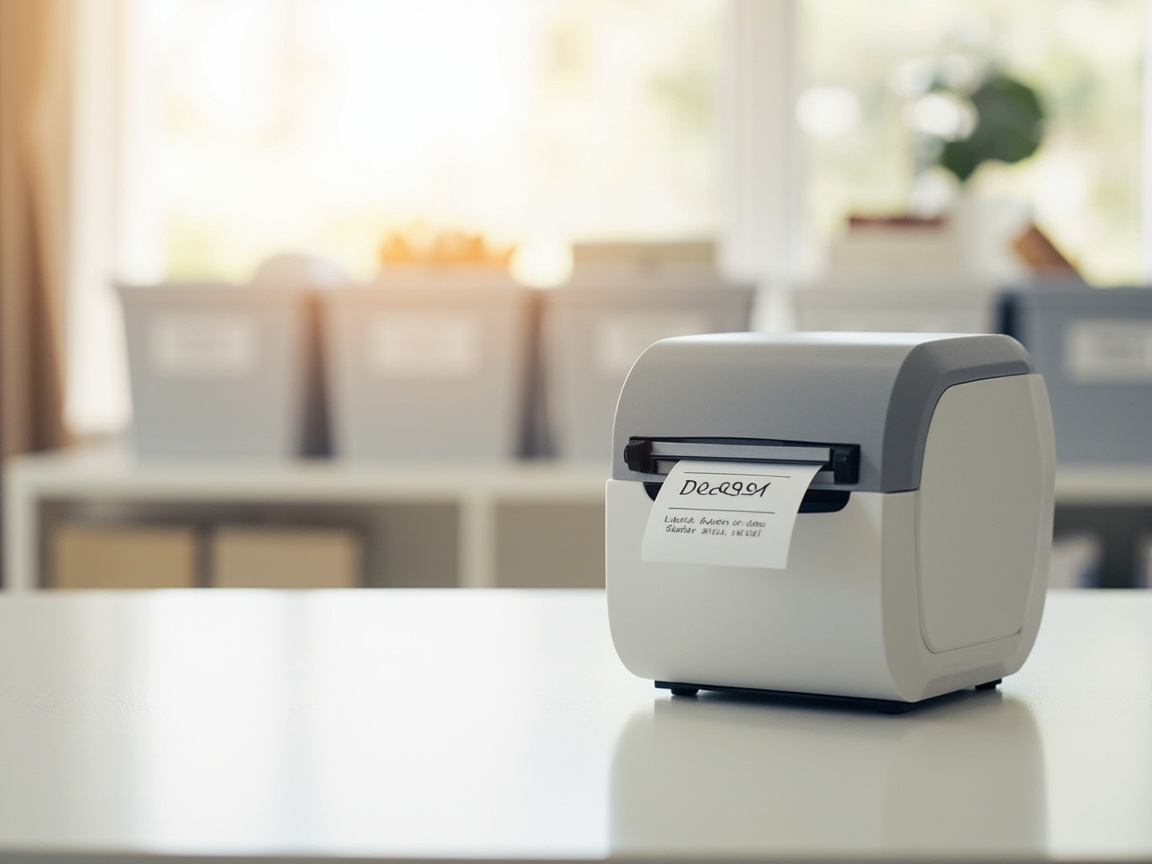
2. Label Maker (For Visual Cues That Stick)
Labels turn “I should put this back” into “this goes HERE.” Without labels, every maintenance session includes a 5-minute decision about where things go. With labels, the decision is pre-made.
Best basic: Brother P-Touch PT-N20 — $19.99. Handheld, refillable tape. Use it for drawer labels, bin labels, shelf labels.
Best app-connected: SUPVAN T50M Pro Bluetooth — $27.99. Phone app with 30+ fonts + 660 icons. Waterproof labels survive kitchen and bathroom.
3. To-Do Notepad (For Tracking What You Did)
A visible notepad turns maintenance into a streak. Most people fail maintenance because the wins are invisible. A notepad on the fridge showing “Day 5 ✓ Day 6 ✓ Day 7 ✓” creates accountability.
Best daily: Spiral To-Do Notepad (60 sheets) — $6.99. Multiple sections per page — daily/weekly/monthly all on one pad.
Best weekly: Large To-Do Notepad (8.5x11”) — $8.98. Bigger pages for weekly planning.
4. Donation Bin (Always Visible)
A donation bin that’s always visible reminds you to add items. A bin in the garage you have to drag out gets forgotten.
Best: a 13-gallon kitchen trash bag in the back of your closet. Add items as you find them during daily resets. When it’s full, drop it at the donation center. Free.
5. A Second Timer for Multi-Zone Households
If you live with family or maintain multiple zones simultaneously, a second timer keeps everyone in sync. Keep one in the kitchen (main reset zone) and one in the bedroom (secondary). Best for: 2+ person households where simultaneous maintenance is normal.
6. Long-Term Planner (For 6+ Months)
A 2-pack undated notepad ($8.99 for 2 pads) gives you 6+ months of daily tracking — no need to reorder for half a year. Best for: people who want a single setup that runs on autopilot.
7. A “Habit Tracker” Calendar (Visual Streak)
Visual streaks work. Mark each day you complete the daily reset on a wall calendar. After 14 days, the streak feels like a habit. After 30 days, you don’t think about it.
Best: free printable from the declutter-fast guide or any habit-tracker template.
Common Mistakes
Five failure patterns in maintenance:
-
Treating decluttering as a one-time event. The initial declutter is only half the work. Without maintenance, you re-clutter in 6-12 months. The maintenance tier is what separates “I decluttered once” from “I live in an organized home.”
-
Waiting for motivation to do big sessions. Motivation fades. Systems persist. The 5-minute daily reset doesn’t require motivation — it requires a timer. The weekly zone sweep doesn’t require motivation — it requires Sunday morning.
-
Not having a daily/weekly system. Willpower alone fails within 2-4 weeks. A timer + a notepad + a fixed day = a system. Build the system, then forget about it.
-
Skipping the maintenance phase. Initial decluttering is satisfying. Maintenance is boring. Boring wins long-term. Don’t skip the boring part.
-
Using complex systems that require lots of willpower. If your system requires deciding which zone to clean this week, you’ll skip it. If it’s automatic (“Sunday = pantry, week 2”), you’ll do it.
Constraint Guide: If-Then Decisions
Four if-then rules for maintenance scenarios:
- IF you have kids → use short 5-minute daily resets (longer is unrealistic)
- IF you work full-time → do weekly 15-min zone sweep on Sunday (predictable schedule)
- IF you just finished initial decluttering → start with daily reset only (don’t add all 4 tiers at once)
- IF you live alone → monthly deep dive on a Saturday morning (treat it like an appointment)
FAQ
How do I keep my house decluttered forever?
The 4-tier routine: daily 5-min reset (every day) + weekly 15-min zone sweep (one day per week) + monthly 60-min deep dive (one Saturday per month) + quarterly 3-hour refresh (4× per year). Most people fail maintenance because they skip Tier 1 — the daily reset. Without it, drift accumulates and Tier 3 becomes overwhelming.
How often should I declutter?
Initial decluttering: one big push. After that, the 4-tier maintenance routine handles everything. You should NEVER need another “big declutter” if the maintenance routine is working. Quarterly refreshes prevent the slow drift that eventually requires another big session.
What’s the minimum maintenance to stay organized?
Tier 1 only — the daily 5-minute reset. If you do nothing else, do this. It prevents 80% of clutter drift. Add Tier 2 (weekly zone sweep) for the next 15% prevention. Tier 3 and 4 are nice-to-haves for people who want zero drift.
Related Decluttering & Maintenance Guides
For the initial declutter that precedes maintenance:
- Declutter Fast — 4-quadrant method (start here)
- Bedroom Declutter Checklist — bedroom-specific 9-step system
- KonMari Method — philosophy-based decluttering
- Frugal Home Organization — budget storage under $10
- Small Space Decluttering — studio/dorm/small space strategies
For quarterly refresh support:
- Seasonal Closet Rotation — quarterly rotation system
- Linen Closet Organization — sheet/towel refresh
For room-specific organization:
- Small Bathroom Organization — bathroom maintenance
- Bathroom Hub — all bathroom content
For label + storage tools:
- How to Label Anything — full labeling system
- Storage Bins Guide — bin selection
- Essentials Hub — all essentials content
For the full Learn library: /learn/ — 8 articles spanning theory + practice.