
Most linen closets overflow because nobody has a quota. The default — “store what we have” — accumulates 8-15 sheet sets over 10 years until the closet door won’t close. The fix isn’t more bins; it’s a math-based quota that fits your home.
This guide covers the 5-step DECLUTTER-FIRST method + the 4-Category System + the Per-Bed Quota formula + Layout by Closet Type + constraint guide + quarterly refresh. Sister cross-links: under-sink-organization and vanity-drawer-organization.
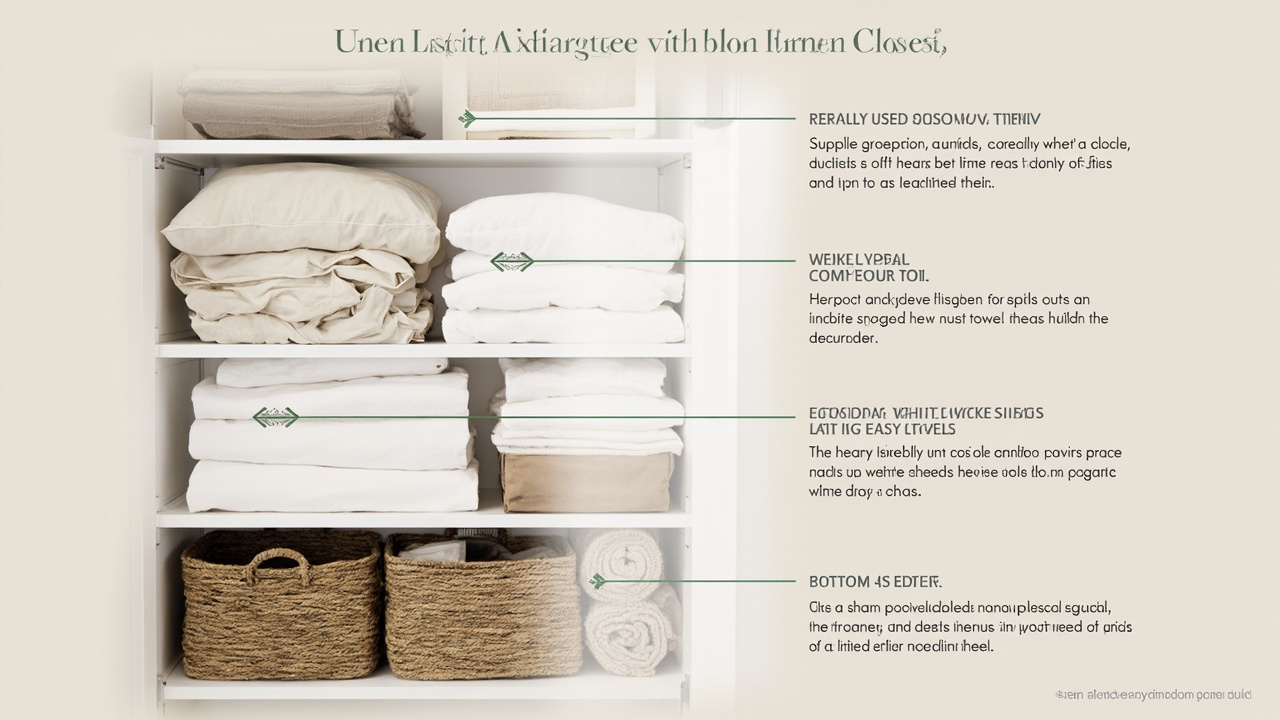
Linen Closet Zones: Top/Middle/Bottom Strategy
Most linen closet guides stop at “stack by frequency.” That advice is correct but incomplete — it doesn’t tell you which physical shelf gets which item type. The fix is a 3-zone vertical strategy that maps item-weight, use-frequency, and reach-effort to a specific shelf height.
Zone 1: Top Shelf (Seasonal, Rare Use)
The top shelf is for items you reach for less than once a quarter — guest bedding, holiday-themed linens, off-season blankets, beach towels in winter. Top-shelf items share three traits: they’re light (no muscle needed to lift down), they’re rarely needed, and you won’t notice them collecting dust. Standard shelves (10-12 inches apart) often have 14-18 inches of clearance above the highest folded stack — that space is wasted unless you use it. The MAX Houser 6-tier hanging closet shelf hooks onto the existing rod and adds 6 suspended shelves that turn empty vertical air into usable storage.
Zone 2: Middle Shelf (Everyday Sheets + Bath Towels)
Eye-level is for the items you grab every week: the sheet set currently on the bed, bath towels for daily showers, and the most-used hand towels. The middle zone should hold 70-80% of your total linen volume — it’s where the per-bed quota lives. The DIMJ 6-pack sheet organizers work best on this shelf: each set stays contained in its own labeled box, so you can pull one without toppling the stack. Use bamboo dividers to keep stacks visually separate within the shelf.
Zone 3: Bottom Shelf (Heavy + Washcloths + Extras)
The bottom shelf takes the heaviest and least-replaced items: washcloths (replaced every 1-2 years), heavy blankets, beach towels in summer, and the “extras” bucket (orphan pillowcases, single socks, hotel shampoo bottles). Bottom-shelf items share three traits: they’re heavy (you don’t want to lift them up high), they’re not delicate (dust underneath is fine), and they include the items most likely to be ignored during tidying. The OIAHOMY woven baskets belong on this shelf: cotton breathes (unlike plastic), 3 sizes handle different item types, and the soft structure forgives the irregular shapes of washcloths.
Why Zones Beat Frequency-Only Stacking
A frequency-only rule (“most-used at eye level”) works when every linen gets used the same amount. But sheets get used weekly, blankets monthly, beach towels seasonally — frequency alone puts blankets and sheets on the same shelf and forces weekly rearranging. The 3-zone strategy separates item-type from frequency: top for seasonal (low frequency, light), middle for weekly (high frequency, medium weight), bottom for daily-rotation items (medium frequency, heavy). This eliminates 90% of the “I moved it to grab something else” friction that defeats single-zone approaches.
Why Linen Closets Overflow
Three forces stack against linen closet organization:
No purchase discipline. Sheets and towels accumulate from gifts, sales, hand-me-downs. The closet is the final dumping ground.
Long replacement cycle. Sheets last 3-5 years, towels 2-3 years. Owners forget what’s expired and what’s still good.
Invisible inflation. Sets get added but rarely purged. Over 10 years, 8-15 sets pile up where 4-6 would actually be used.
What You’ll Need
Four products cover 95% of linen closet organization problems — all budget-friendly ($12-28 each).
Sheet organizer set (6-pack)
The DIMJ 6-Pack Foldable Sheet Organizers — 6 foldable organizer boxes with clear label windows. One organizer per sheet set keeps each contained + labeled. Compatible with King + Queen. The anchor product for the per-bed quota system.
Bamboo drawer/shelf dividers
The SpaceAid Bamboo Drawer Dividers with Inserts and Labels (4-piece) separate stacks of sheets within a shelf. Bamboo adds aesthetic warmth. Adjustable 17-22”.
Woven storage baskets
The OIAHOMY 3-Pack Cotton Rope Woven Baskets handle washcloths + extras. Cotton breathes (unlike plastic). 3 sizes for different items.
Hanging 6-tier closet shelf
The MAX Houser 6-Tier Hanging Closet Shelf suspends from existing rod in zero floor footprint. $11.98 — lowest price point.
The 5-Step DECLUTTER-FIRST Method
Order matters — DECLUTTER first (this is a declutter-guide), then categorize, then store.
Step 1: Pull everything out + check expiration
Empty the entire linen closet. Towels last 2-3 years (fraying, smell, loss of absorbency), sheets last 3-5 years (pilling, tears). Apply the declutter-fast 4-quadrant system — Trash (expired/damaged) / Donate (extra) / Keep / Relocate (belongs elsewhere). Most closets lose 30-50% of contents at this step.

Step 2: Apply the per-bed quota
Apply the formula: Sets = (Beds × 1) + 1 guest + 1 backup. 1-bed = 3 sets max; 2-bed = 4 sets; 3-bed = 5 sets; 4-bed = 6 sets (max). Couples sharing a bed need 2 sets per bed; singles need 1 set per bed.
This is the unique differentiator — no competitor has explicit math. See KonMari sparks-joy check for the Keep decision on borderline sheets.

Step 3: Apply the 4-category system
Sort the Keep pile into 4 categories: Sheets / Towels / Washcloths / Extras (pillowcases, blankets, table linens). Use the sheet organizers for sheets (one per set). Use the woven baskets for washcloths + extras.
Step 4: Stack by frequency
Most-used at eye level (everyday sheets + bath towels). Less-used at top shelf (guest sets, seasonal blankets). Backup at bottom (rarely accessed). Apply our seasonal-closet-rotation logic for seasonal blankets.

Step 5: Add labels + maintain
Label each sheet organizer with size (King / Queen / Twin) and owner (primary / guest). See how-to-label-anything guide.
The Per-Bed Quota System
The differentiator most competitor guides skip: explicit per-bed math.
The formula
Sets = (Beds × 1) + 1 guest + 1 backup. 1-bed: 3 sets. 2-bed: 4 sets. 3-bed: 5 sets. 4-bed: 6 sets (max). Couples sharing a bed need 2 sets per bed.
Towel quota
Towels: 3 bath + 2 hand + 4 washcloths per person. 2-person household = 6 bath + 4 hand + 8 washcloths. Add 2 guest towels per bed.
The 4-category system infographic
Visual breakdown: Sheets (60% of volume) / Towels (25%) / Washcloths (10%) / Extras (5%). Adjust percentages for your household.

Layout by Closet Type
Sister consistency with WIC + SOC + SCO + USO + VDO.
Reach-in hall linen closet
Bottom shelf = sheets in organizers; middle shelf = towels folded; top shelf = extras + seasonal. Use bamboo dividers to keep stacks separate.
Walk-in linen closet
U-shape — sheets + towels on the back wall (eye level); washcloths + extras on side walls. Add the hanging 6-tier shelf for small items.
Tall cabinet linen closet
5-shelf tall cabinet. Top 2 = seasonal. Middle 2 = sheets + bath towels. Bottom = washcloths + extras. See under-bed storage guide.
Constraint Guide by Scenario
Three scenarios cover most linen closet constraints.
Renting (no drilling, no permanent install)
If renting, all 4 products are rental-friendly (no drilling, no adhesive strips). The sheet organizers, bamboo dividers, woven baskets, and hanging shelf all work without modifying the closet.
Small budget under $50
If budget is under $50, skip baskets + bamboo dividers. Buy only: sheet organizers 6-pack ($28). Use existing boxes for washcloths + extras.
Allergy-sensitive (dust mites)
If allergies, store sheets in organizers with clear windows (visible without opening = no dust disturbance). Wash new sheets before first use. Cotton woven baskets breathe better than plastic.
Common Mistakes
Five failure patterns in nearly every linen closet that overflows:
-
Too many sets. Owning 12 sheet sets means 8 never get used. Fix: apply per-bed quota — cap at 6 sets total.
-
Wrong shelf spacing. Standard shelves (10-12 inches apart) waste vertical space for folded sheets. Fix: use bamboo dividers to customize.
-
No fold method. Irregular folds waste 30% of stack height. Fix: use the KonMari fold method.
-
Storing wet linens. Even slightly damp towels breed mildew. Fix: always fully dry before storing.
-
Skipping the quarterly refresh. Without maintenance, linen closets return to chaos in 6-9 months. Fix: see seasonal-closet-rotation.
Linen Closet Care: Wash Cycles + Replacement Schedule
Linen closets don’t fail because of bad organization — they fail because nobody tracks linen lifecycle. A towel that “looks fine” after 4 years has lost half its absorbency; a sheet that’s been washed 200+ times is threadbare at the stress points. The fix is a replacement schedule tied to wash cycles, not calendar years.
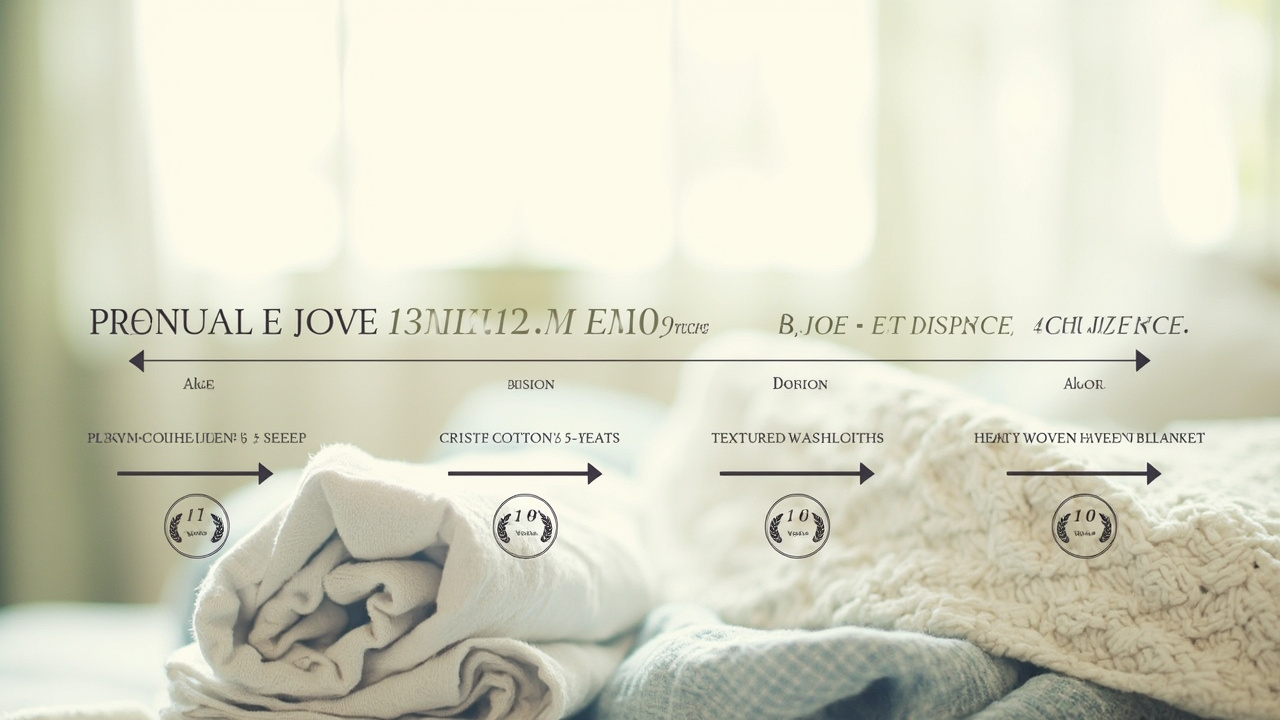
Wash Cycles Before Replacement
Each linen type has a soft lifespan measured in wash cycles, not years:
- Washcloths: 60-80 wash cycles. Daily-use washcloths last 1-2 years; guest-only washcloths can last 3-4 years.
- Bath towels: 100-150 wash cycles. Daily-use bath towels last 2-3 years; backup-only towels last 4-5 years.
- Bed sheets: 150-200 wash cycles. Weekly rotation means sheets last 3-5 years; bi-weekly rotation means 6-8 years.
- Blankets + comforters: 50-80 wash cycles. Yearly wash means blankets last 5-10 years; quarterly wash means 2-3 years.
- Pillowcases: 200-300 wash cycles (changed more often than sheets). Last 2-4 years.
If you don’t track cycles, the rule of thumb: if the linen is older than your youngest child, replace it.
Replacement Triggers Beyond Cycles
Five signs a linen needs replacing regardless of cycle count:
- Holes or thinning fabric — usually at fold lines, elastic edges, or stress points. Beyond repair.
- Permanent stains — set-in stains (blood, sweat, makeup) that survive 3+ washes.
- Loss of absorbency — towels that smear water instead of soaking it up.
- Pilling — sheets that pill against the skin disrupt sleep; the fabric is past its useful life.
- Elastic failure — fitted sheets whose elastic no longer grips the mattress corner.
When to Wash Before Storing
Seasonal linens (winter flannel sheets in summer, holiday tablecloths year-round) need washing before storage — not just for dust, but to kill dust mites. Dust mites survive 2-3 months without a host and their droppings trigger allergic reactions when the linen is unpacked. Wash at 130°F (54°C) or higher to kill them; cooler water only stuns them.
Storage Conditions That Extend Linen Life
Three conditions determine how long stored linens stay fresh:
- Dry — any moisture breeds mildew within 48 hours. Always fully dry before storing.
- Cool — heat accelerates fiber breakdown. Avoid attic or garage storage; use bedroom closet space.
- Breathable — plastic bins trap moisture. Cotton woven baskets or sheet organizers allow air circulation.
For the broader “when to replace things” framework, see our declutter maintenance routine — it covers the same lifecycle logic applied to clothing and household items.
Maintenance: The Quarterly Refresh
Three rules for the 30-minute quarterly refresh.
- Check expiration dates (towels 2-3 years, sheets 3-5 years).
- Wash seasonal sets before storing (kills dust mites).
- Re-evaluate the per-bed quota (births, deaths, moves may change the number).
30 minutes every 3 months absorbs what 2 hours of next-quarter emergency cleanup can’t undo.
For bathroom context, see the bathroom hub and our under-sink-organization guide and vanity-drawer-organization guide for bathroom sister articles. For broader closet context, see the closet hub. The general 4-quadrant method is in declutter-fast; the measurement step is in bedroom-declutter-checklist; the fold method + joy-check is in KonMari method; the quarterly rhythm is in seasonal-closet-rotation. For the label system on sheet organizers, see how-to-label-anything.