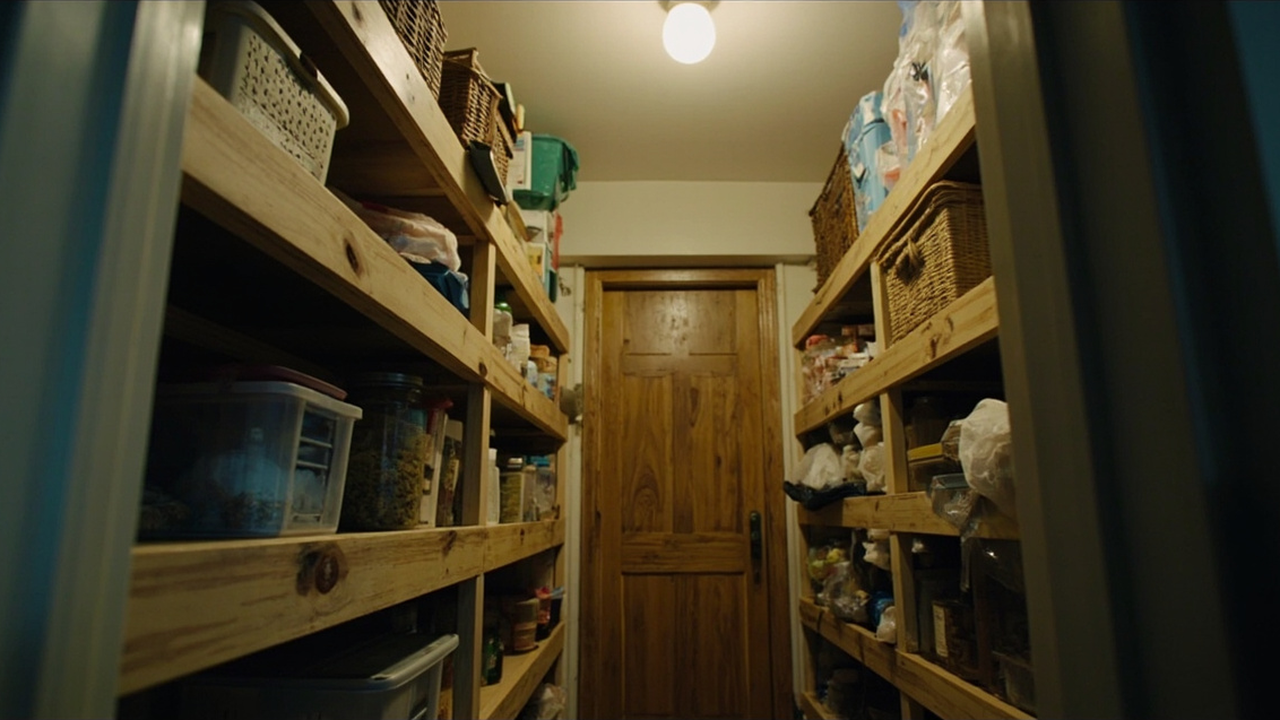
Most pantry “systems” are ten mismatched products fighting for one shelf. A real one is five components that interlock — zone bins, airtight containers, door storage, labels, a weekly reset — in three tiers, starting with Vtopmart’s zone bins ($29.99).
The whole system, priced three ways:
| Tier | What’s in it | Total |
|---|---|---|
| Starter | Vtopmart zone bins + ONUPGO chalk labels | $39.98 |
| Core | Starter + LANDNEOO turntables + Eastherry door rack | $104.96 |
| Complete | Core + SKTEET stackables, OKZEST cart, PRAKI decant set, LANDNEOO bulk bins | $230.12 |
Full room map: the pantry organization hub. Below: which component goes where, the three measurements that decide it, and what each tier leaves unsolved.
Why Most Pantry Systems Collapse in Three Weeks
People buy pieces, not a system. Bins from three kits leave dead columns, an over-door rack goes up before anyone checks the door swing, and nothing resets — so week three finds piles.
The fix isn’t more containers. It’s a fixed component set with one job each, layered on top of the five-step pantry zoning method that decides what lives where.
What a Real Pantry Organization System Includes
Five components, one job each. Skip one and the other four work harder.
Component One: Zone Bins
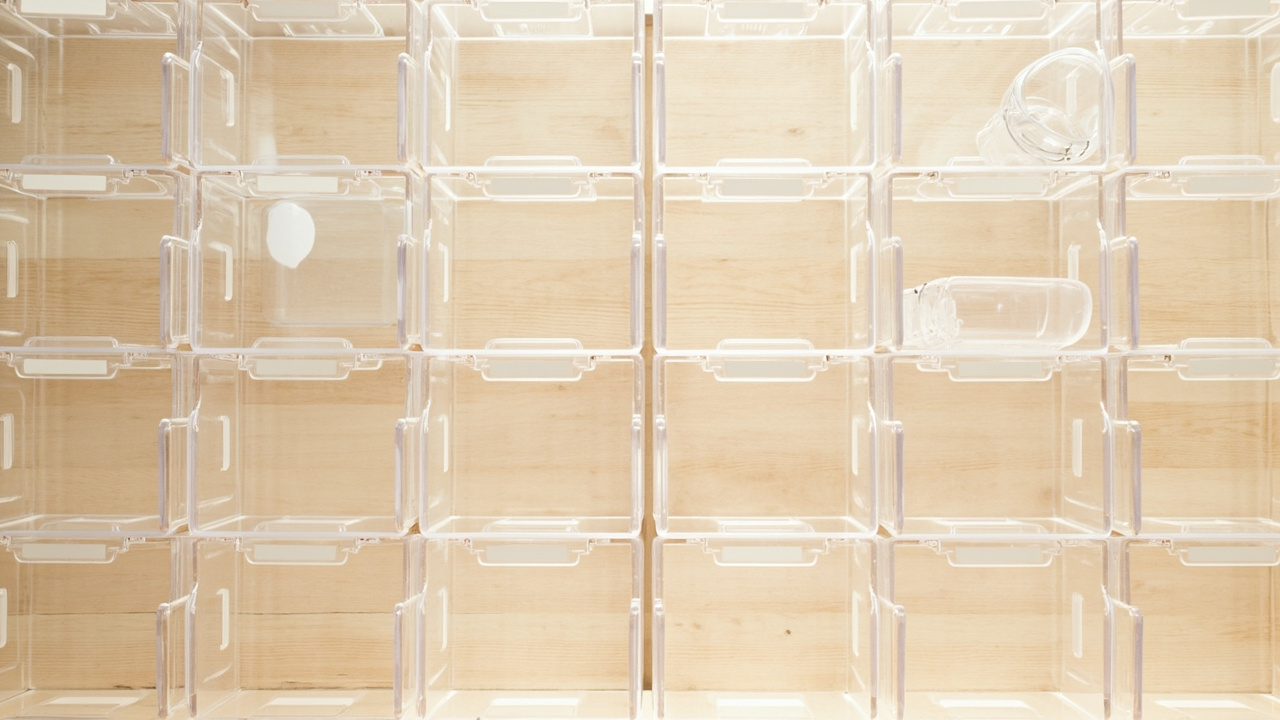
Zone bins carve shelves into categories — snacks north, cans south, baking mid-shelf. The Vtopmart set gives eight clear bins with four compartments each, enough for six to eight zones on a ten-to-twelve inch shelf. One bin holds roughly eight to ten snack packets or six cans laid flat, and the four inner compartments split packets from sticks. One category per bin, and no “misc” bin: that’s where systems go to die.
Component Two: Airtight Containers
Dry goods move from torn bags into sealed containers. PRAKI’s airtight set ($26.99) covers flour, rice, cereal and pasta. FIFO keeps it working: new stock behind old, and you buy nothing new until the front is empty. Skip the sealed set for anything you finish inside a month — open bags are fine, and short-dated pasta gains nothing from it. Full method: how to decant pantry staples into containers.
Component Three: Door Storage
The door is a vertical shelf most pantries waste. The Eastherry over-door organizer ($39.99) adds about six feet for spices, packets, and small jars, no drilling. Load the heaviest jars on the lowest tiers so the rack doesn’t tip as the door swings, and keep the top tier for flat packets. Nothing on it may be taller than the tier gap.
Component Four: The Label Scheme
Labels are the system’s index. ONUPGO’s chalk labels ($9.99) come with a marker and wipe clean. Label the zone, not the item: “snacks” survives a brand swap, a chip brand name doesn’t. Two sizes do the job: narrow for bin fronts, wider for jar lids. Skip labeling inside a bin — nobody reads it. More options: labeling systems for every room of the house.
Component Five: The Reset Habit
Ten minutes a week: every bin back to its zone, door closed, one shelf wiped. Most guides file this as a “maintenance step” — it’s what keeps the other four alive. Time it to something you already do, like unloading groceries, and the loop survives bad weeks. Cadence from the weekly declutter maintenance routine.
Measure First: Shelf Depth, Height, Door Clearance
Three numbers decide what fits — measure before buying.
Shelf Depth Dictates Bin Class
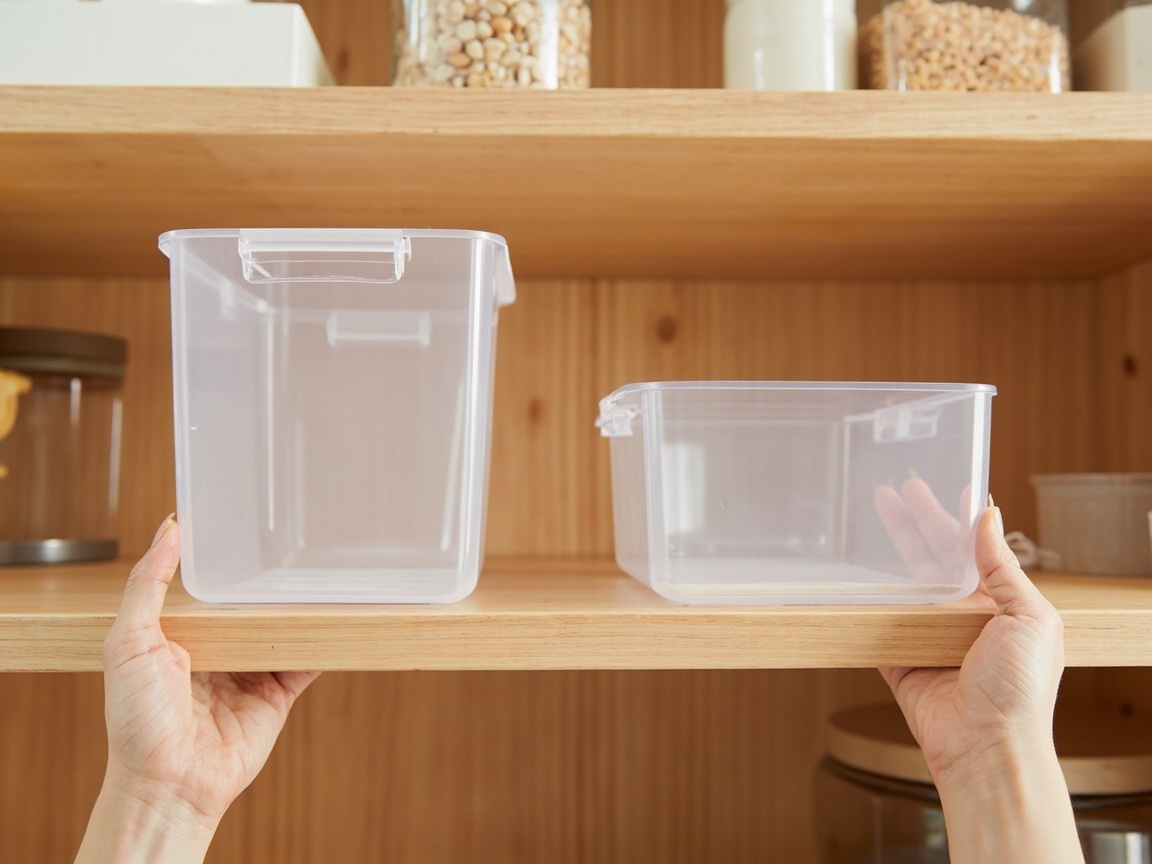
Three depth bands. On ten-to-twelve inch shelves, front-load bins you pull like drawers. On fourteen-to-sixteen inch shelves, deeper pull bins. Past sixteen inches, stacking wins: SKTEET’s stackable set ($37.79, four large, four small) turns one deep shelf into two levels. Tape the front lip, not the back wall — a two-inch recess is common, and it’s where a deep bin jams. By depth: individual pantry storage pieces matched by shelf depth.
Shelf Height Sets the Stack Limit
Measure the gap between shelves, not the shelf. A stacked pair — large bin, small nested on top — needs the full stack height plus an inch of finger clearance to lift the top bin out. Risers pay off only above fourteen inches of headroom.
Door Clearance Is the Most-Skipped Measurement
Measure edge to shelf edge with the bins already loaded, not empty. Under two inches and the front row stops it. Jars on the door tiers need half an inch under the tier above, or the rack rattles every time the door moves. Over-door racks need a door at least 6.2 feet tall and solid-core; if the gap fails, mount the Eastherry rack on the wall beside the pantry instead. I’d skip the over-door rack on a hollow door: the hooks fatigue the frame within a season.
The Three Budget Tiers
Buy the tier that fits this month’s budget; each upgrades into the next without waste.
Starter Tier
The Vtopmart set ($29.99) plus ONUPGO labels ($9.99) is $39.98, and it labels six to eight zones in one afternoon. This alone fixes most of the chaos. What Starter doesn’t solve: deep corners still hide jars and the door stays empty. Fine for month one — you’ll learn which zones earn space before spending further. Run the whole tier in a single afternoon: purge, measure, place bins, label. Write the zone names on the labels before the bins go back on the shelf, not after.
Core Tier
Add the LANDNEOO four-pack of 12-inch turntables ($24.99) for deep corners and the Eastherry door rack ($39.99) for the vertical: $104.96. Turntables bring back-of-shelf jars forward in one spin; the door rack absorbs everything small. The jump from Starter to Core buys access, not capacity: neither piece holds more food, they just make what you own reachable. What Core still doesn’t solve: a pantry deep enough to need a cart, or dry goods still sitting in torn bags. If both of those describe you, you’re shopping the Complete row of the table above.
Complete Tier
For family-scale or bulk pantries, add the LANDNEOO pack of multi-use bins ($27.99) for duplicate-zone overflow, SKTEET stackables, the OKZEST rolling cart ($32.39), and the PRAKI decant set: $230.12, all five components. The last hundred and twenty-five dollars is for pantries where a zone set, a cart and a decant station each earn space. If shelves sit half-empty after the purge, stop at Core.
Component-Matching Rules: Bin, Shelf, and Label
These interlock rules are the difference between components and a system.
Bin Width Must Divide Shelf Width
A 30-inch shelf divides into two 14-inch bins plus slack; widths that don’t divide leave dead columns. Split the remainder, stop at two. Materials: how to choose storage bins by material and size.
Stack Height Must Clear the Shelf Gap
Stack only where the gap fits both bins plus an inch. A stack you can’t reach gets abandoned.
Label Size Must Match Bin Class
Small labels on large bins are unreadable at eye level, where you shop. Chalk labels forgive: zones fixed, definitions moved.
Layout by Pantry Type
Same five components, different geometry. Pantry organization by room size handles room scale; this section is pantry type.
Reach-in Closet Pantry
One cabinet, shelves on the back wall, no aisle to step into. Turntables where jars pile up, zone bins at eye level where you shop daily, overflow on top. In a thirty-six inch reach-in, one LANDNEOO turntable per middle shelf covers the four to six jars that always end up at the back. Nothing parks on the floor.
Cabinet Pantry
Kitchen-cabinet pantries run shallow, usually ten to twelve inches: front-load bins only, skip stacking. A cabinet that shallow fits one turntable, not two. If the doors are solid-core, the Eastherry rack behind them adds a shelf you didn’t have. The OKZEST rolling cart parks beside the fridge and rolls out for the reset.
Open Shelving
Open shelves carry aesthetic pressure: mixed packaging reads as clutter from across the kitchen. Uniform bins kill that noise — four identical fronts read as one block; mixed packaging never will. The LANDNEOO bulk pack is the cheap route, and labels on the bin fronts keep the block looking deliberate rather than stocked. Skip the turntables here — open shelving is where you can see everything, so reach is never the problem.
Walk-in Pantry
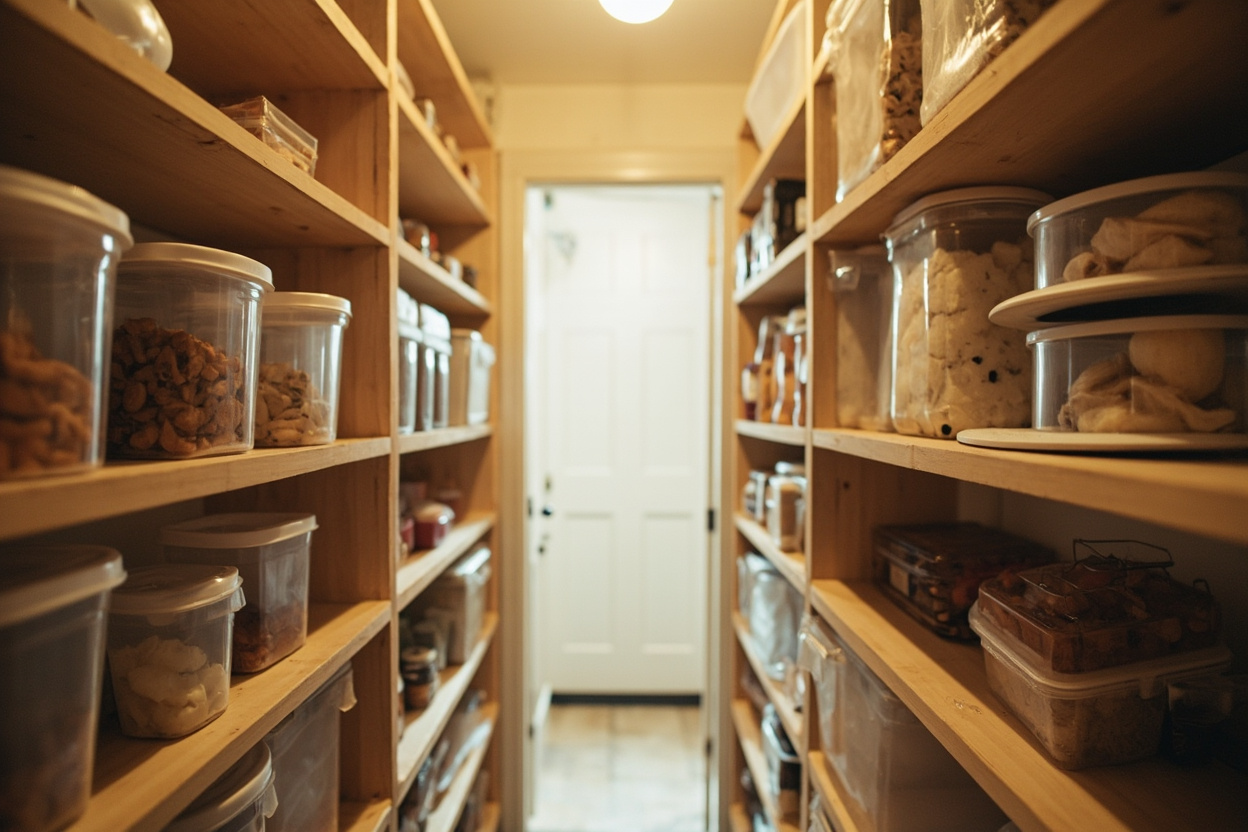
All five components: bulk zones in the LANDNEOO bulk pack on low shelves, the decant station at counter height, the door rack for small jars. In a walk-in running thirty to forty linear feet of shelf, run three bins per section, not one — the only pantry type here where the full stackable set pays for itself in a week. Label the low shelves, not the eye-level ones: in a walk-in you squat to reach the bottom tier, and a label you can’t read from standing is a label you won’t use.
Constraint Guide
Five constraints, five direct paths.
If You Rent (No Drilling)
The Eastherry over-door rack and the OKZEST rolling cart are both zero-drill — one hangs, one rolls. Zone bins need no hardware. Skip anything wall-mounted.
If Your Budget Is Under Fifty Dollars
Vtopmart’s zone bins plus ONUPGO chalk labels is the whole starter tier. Run it a month, then add one component per month as budget allows.
If Your Pantry Is a Single Cabinet
Skip door storage and the bulk pack. Eight zones from the Vtopmart bins plus one LANDNEOO turntable for the deep corner covers a single cabinet. Scale-down: small pantry organization tactics.
If You Buy in Bulk
Bulk runs need overflow zones and decanting, not door storage. The LANDNEOO bulk pack holds the duplicates; the PRAKI airtight set decants the open bags. Pair it with the pantry inventory method that prevents overbuying so the bulk zone doesn’t become a second problem.
If Zones Change Often
Kids’ snack categories rotate monthly in some houses. Chalk labels wipe clean — ONUPGO’s label pack absorbs years of relabeling — while the Vtopmart bins stay put.
Common Mistakes
Buying Organizers Before Decluttering
Bins bought for food you’ll purge next month are shelving for trash. Run the pantry declutter checklist before you buy anything first. Sizing the shelf after the bins arrive is the same mistake reversed.
Choosing Bins by Look, Not by Measurement
The beautiful bin that’s one inch too deep stops the door from closing. The most common interlock violation, and not a taste problem. Pick the bin that fits the measurement, then the one you like in that size.
Decanting Everything Into Identical Jars
Uniform jars without FIFO discipline hide expiration dates. Decant only what you restock monthly; keep backups in original packaging until the front is empty.
Skipping the Weekly Reset
The system is a loop, not a project. Three weeks without a reset and the zones drift back into piles — the pattern this page opened with. The loop is the product; everything else is hardware.
Maintenance Rhythm
The Ten-Minute Weekly Loop
Weekly, ten minutes: bins to zones, door closed, one shelf wiped.
Monthly runs front to back, oldest shelf first: expiration sweep, relabel drift, wipe bin fronts. With chalk labels, a relabel is a wipe, not a reprint. Quarterly, re-tier for the season — soup moves cans forward, holiday baking comes out until November.
Measure once, buy one tier, give it ten minutes a week. That’s the system.