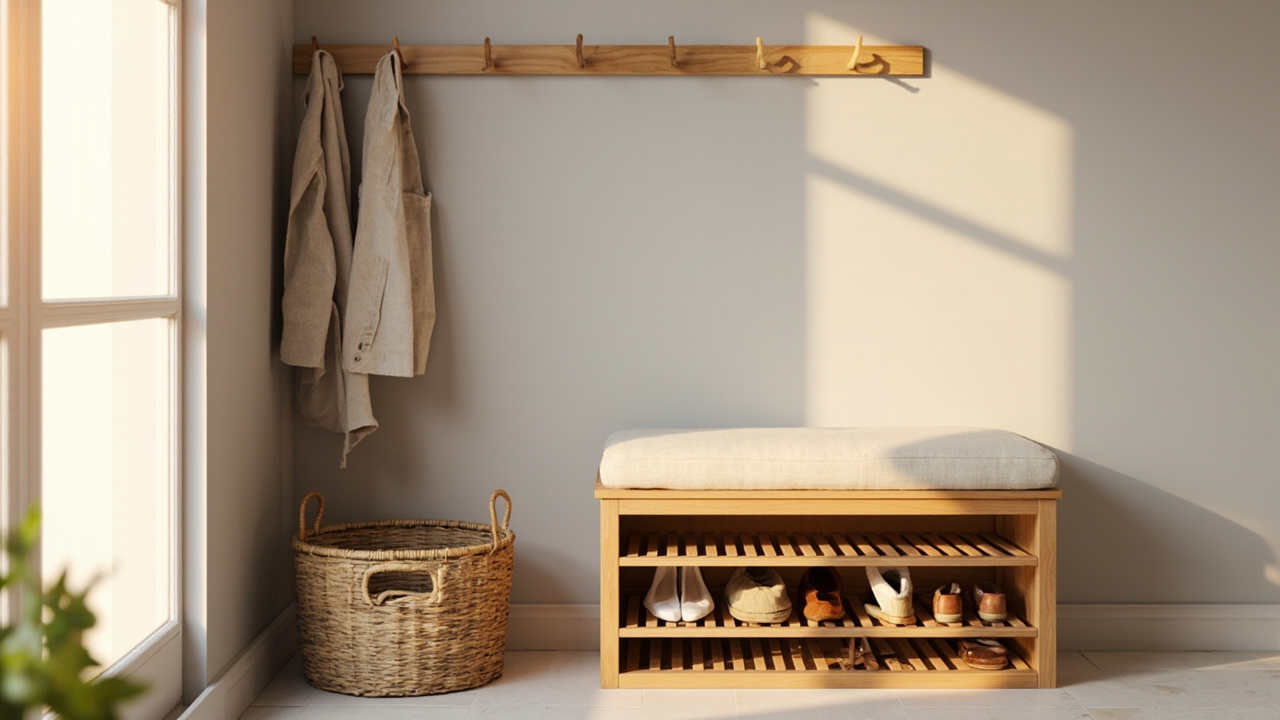
Entryway bench storage combines seating with hidden compartments for shoes, bags, and seasonal gear. The 4 main types are open shoe benches with slatted shelves, cushioned storage benches with hinged lids, folding ottomans for portable hidden storage, and barn-door cabinets that conceal cubbies behind panels. Pick by wall width, shoe count, and whether you need daily seating or just occasional perching. This guide breaks down each type with measurement rules, constraint scenarios, and 7 vetted Amazon picks from $30 to $110.
Why Entryway Benches Need Storage
The entryway is the highest-traffic drop zone in most homes. Bags land on the floor, shoes pile near the door, and mail stacks on the nearest flat surface. Without a dedicated bench, people end up balancing against the wall to change shoes.
A storage bench solves two problems at once: a seat for pulling on boots, and a compartment that hides the clutter you don’t want guests seeing. In the 4-zone entryway system from the entryway organization hub, the bench covers Zone 2 — seated storage. The hub’s framework divides the entryway into drop, shoe, coat, and bench zones; this article zooms in on the bench zone specifically. If you’re weighing whether a bench makes sense before investing in one, the answer comes down to traffic: households with 3 or more daily users benefit most from having a dedicated seat plus storage in one footprint.
If you haven’t measured or cleared the entryway yet, the declutter fast guide walks through clearing the space before you buy furniture. For the broader storage landscape including coat racks and shoe cabinets, see entryway storage solutions.
Layout by Bench Type
Entryway benches fall into 4 categories based on how they handle shoes and storage. Each type serves a different household need — from open-air visibility to full concealment.
Four Bench Types at a Glance
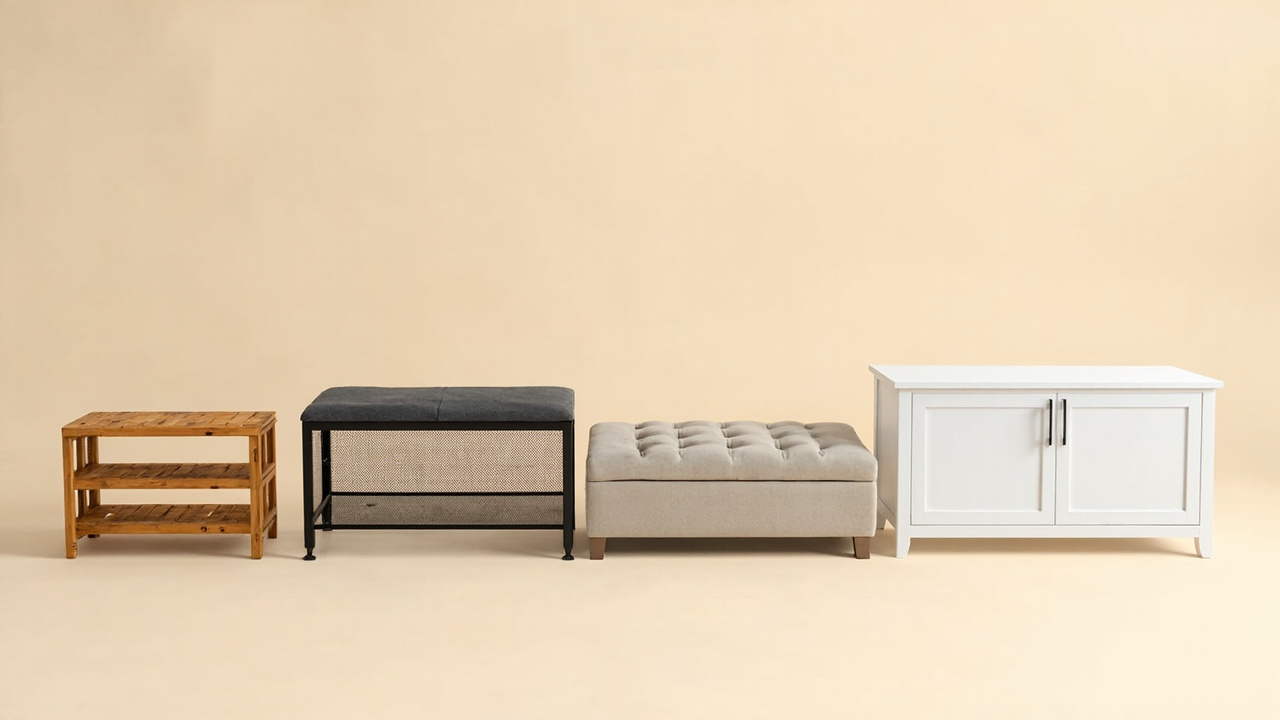
Type 1 — Open Shoe Bench (Slatted Shelves)
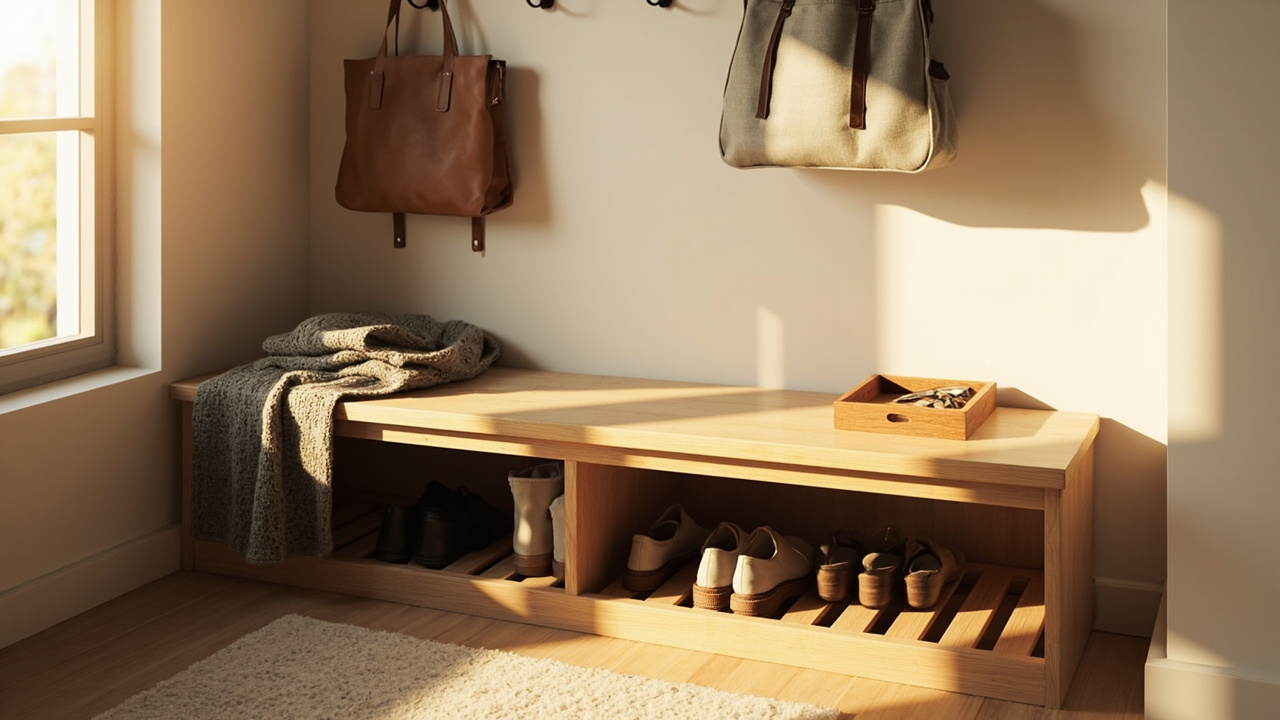
Open shoe benches use bamboo or industrial wood-and-metal construction with 2-3 exposed shelves. The NEWBULIG 3-Tier Bamboo Shoe Rack Bench at $26.96 holds 6 pairs across two shelves and supports 286 lb on top — enough for an adult to sit while tying shoes. The Pipishell 3-Tier Bamboo Shoe Rack Bench at $35.99 adds a third shelf and raises the weight rating to 300 lb. For an industrial look, the HOOBRO 3-Tier Industrial Shoe Bench at $36.99 pairs a rustic brown top with black metal legs in a 29.5-inch footprint. Open benches work best for households who want shoes visible, aired out, and easy to grab on the way out.
Type 2 — Cushioned Storage Bench (Hinged Lid)
Cushioned benches add a padded seat on top of a storage compartment. The SONGMICS Cushioned Entryway Storage Bench at $42.29 has a 2-inch foam pad over a 2-tier shoe shelf, with a powder-coated steel frame rated to 300 lb. The seat height sits at 18 inches — standard chair height — which makes daily shoe-changing comfortable for most adults. This type splits the difference between an open rack and a full ottoman: you get some visible shoe storage underneath and a comfortable seat on top.
Type 3 — Folding Storage Ottoman (Portable Hidden Storage)
Folding ottomans are fabric-upholstered boxes that fold flat when not in use. The SONGMICS 43-Inch Folding Storage Ottoman at $39.98 offers 35-gallon interior capacity and supports 440 lb on the lid despite weighing under 12 pounds. These are ideal for renters who move frequently, temporary setups, or seasonal storage that only needs a home part of the year. The trade-off: a 15-inch seat height is too low for comfortable daily use by older adults.
Type 4 — Barn-Door Cabinet Bench (Concealed Cubbies)
Barn-door cabinets hide shoe cubbies behind farmhouse-style doors. The HOMSHO Barn Door Shoe Storage Bench at $99.99 has 4 cabinet doors hiding adjustable shelves that fit 8-12 pairs, plus a 25 mm foam cushion on top. For a larger footprint, the Huatean Home 48-Inch Storage Ottoman at $109.98 spans 48 inches with dual safety hinges and a button-tufted lid. These work best in formal entryways where visible shoes aren’t welcome.
How to Choose: 5 Measurement Rules
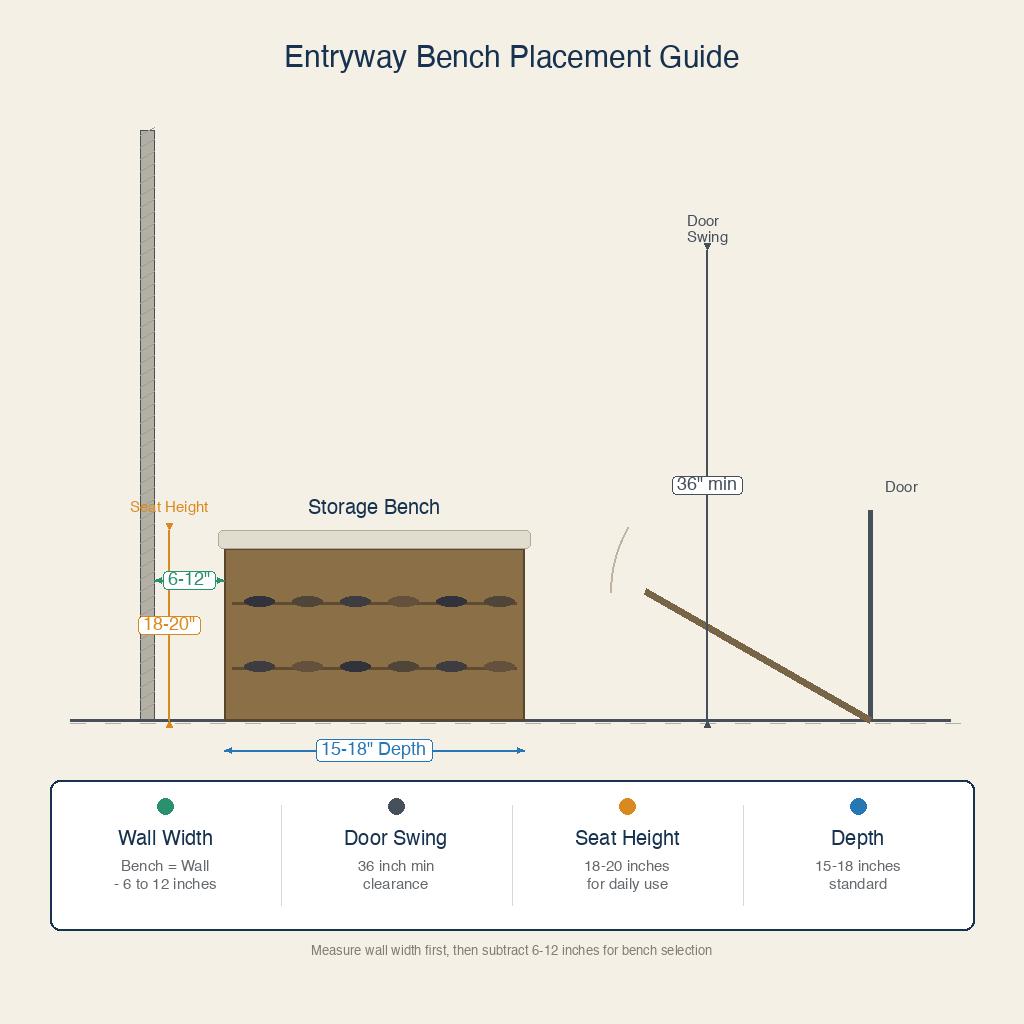
Rule 1 — Measure Wall Width, Subtract 6-12 Inches
A bench shouldn’t span the full wall. For a 42-inch wall, pick a 30-36 inch bench to leave visual breathing room. Going edge-to-edge makes the entryway feel cramped and blocks access to outlets or light switches.
Rule 2 — Check Door Swing Clearance
Leave at least 36 inches of unobstructed space in front of the bench for an inward-opening door to swing fully. A 15-inch-deep bench against a 42-inch-deep entryway leaves 27 inches — tight but workable. Test by opening the door fully before finalizing bench placement.
Rule 3 — Match Bench Type to Shoe Count
Open shelf benches handle 6-8 visible pairs. Barn-door cabinets fit 10-12 hidden pairs. Folding ottomans hold shoe boxes and bulk items rather than loose shoes. If your household cycles 15+ pairs daily through the entryway, one bench won’t be enough — pair it with a separate rack.
Rule 4 — Verify Seat Height for Daily Use
Standard chair height is 18-20 inches, which works for comfortable shoe-changing. Bamboo shoe benches sit at 17-18 inches. Folding ottomans at 15 inches are too low for elderly users or anyone with knee issues. If the bench is for daily use, prioritize seat height over storage capacity.
Rule 5 — Confirm Weight Capacity
Check the manufacturer spec before sitting. Bamboo benches hold 286-300 lb on the top shelf. Cushioned steel-frame benches support 300 lb. Folding ottoman lids carry 440 lb despite their lightweight build. Barn-door cabinets vary — the HOMSHO rates to 300 lb static load. If the bench doubles as the primary entryway seat, aim for 300 lb minimum.
Constraint Guide by Scenario
Not every constraint is physical. Rental rules, budget limits, household composition, and aesthetic preferences all narrow the field. These 4 scenarios cover the most common decision points.
If You Rent (No Drilling, No Wall Mounting)
Choose a freestanding bench that needs zero installation. The SONGMICS Folding Ottoman is ideal — portable, no assembly beyond unfolding, and folds flat when you move. The NEWBULIG Bamboo Shoe Bench is also renter-friendly: just place it against the wall. Avoid hall trees that require wall-anchoring for the coat rack. For more rental-specific tips, see small entryway organization.
If You Have a Narrow Entryway (Under 36 Inches Wide)
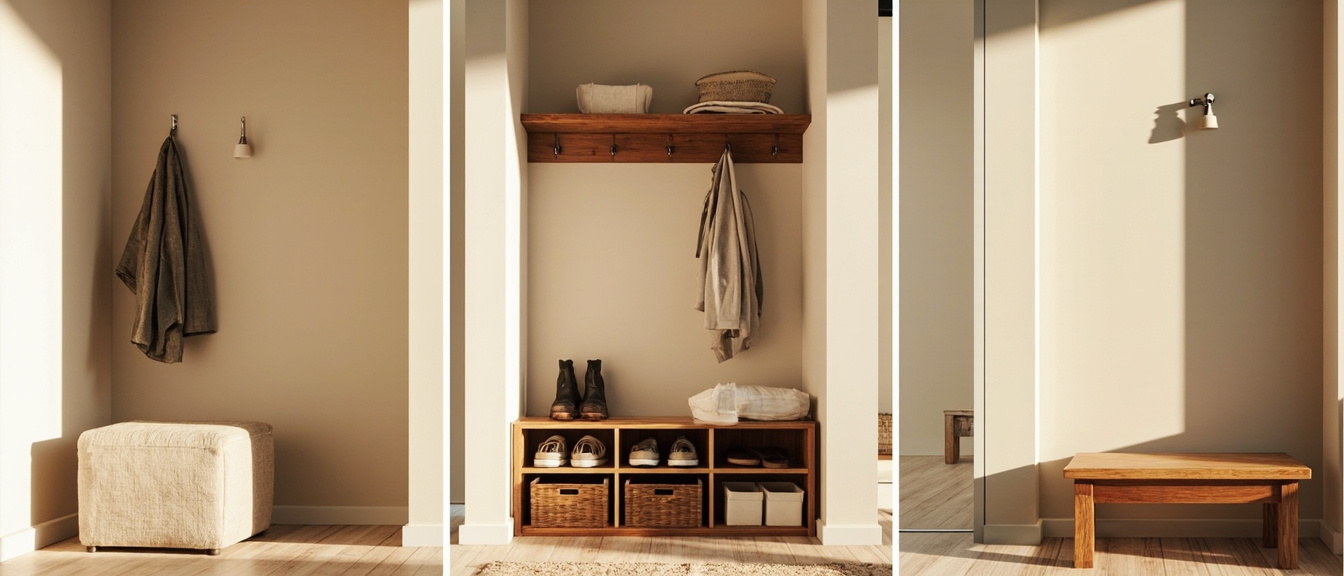
Skip barn-door cabinets, which typically run 39+ inches wide. The HOOBRO Industrial Shoe Bench at 29.5 inches is the narrowest option. Alternatively, a folding ottoman can be tucked away when not in use. Wall-mount coat hooks above the bench to save floor space — see hooks and racks for vertical storage for load-rated options.
If You Have Kids (High Daily Shoe Volume)
Open shelving beats cabinets because kids won’t close doors reliably. A 3-tier bamboo bench lets kids see and reach shoes across 3 levels. Add a labeled bin inside an ottoman compartment for mittens, hats, and scarves. For category-based kid organizing, the KonMari method groups items by type rather than location.
If You Want Hidden Storage (Shoes Out of Sight)
The HOMSHO Barn Door Cabinet is purpose-built for concealment — 4 doors hide 8-12 pairs behind farmhouse panels. The Huatean 48-Inch Ottoman hides shoe boxes and seasonal gear under a tufted lid. The cushioned SONGMICS bench offers moderate concealment for smaller items. Pair with storage bins inside the compartment to keep loose items sorted.
Common Mistakes
- Buying before measuring the wall. The most common error — browsing benches before checking width, depth, and door swing. Measure first, write the numbers on your phone, then shop. A bench that looked perfect online often turns out to be 4 inches too deep for the hallway.
- Ignoring weight capacity for daily seating. If the bench is the primary shoe-changing seat, check the spec. A 286 lb bamboo rating handles most adults; anything lower risks shelf bowing over time. Folding ottomans with 440 lb lid ratings are the exception — they’re surprisingly strong despite their lightweight build.
- Choosing open shelving when you hate visible clutter. If shoes-on-display bothers you, don’t buy a slatted bench. Pick a barn-door cabinet or ottoman instead. The mismatch between personality and bench type is the fastest path to buyer’s remorse.
- Blocking the door swing. Placing a bench too close to an inward-opening door creates a daily annoyance. Leave 36 inches minimum clearance and test the door before settling on placement.
- Overloading shoe shelves beyond rated capacity. Bamboo shelves bow and crack under excessive weight. A 286 lb rating means 4 adult pairs max — distribute weight across tiers rather than stacking everything on top.
Daily Reset Routine: 5-Step Tidy
The 2-Minute Reset
A daily reset keeps the bench area from devolving into a pile. It takes under 2 minutes:
- Clear the surface — remove mail, bags, and packages from the bench top
- Sort shoes into shelves — each household member gets a designated shelf or cubby
- Hang coats and bags — use wall hooks above the bench, not the bench itself
- Stash small items — keys, sunglasses, and dog leashes go into the interior compartment or a tray
- Wipe the seat — a 10-second wipe of the cushion or wood top keeps it guest-ready
For the full 5-step declutter system that precedes this daily maintenance, see the entryway declutter method.
What You’ll Need
Here are 7 vetted entryway benches, each filling a different niche. Products are referenced inline throughout the guide above — this table serves as a quick comparison.
| Bench | ASIN | Badge | Price | Type |
|---|---|---|---|---|
| NEWBULIG Bamboo 3-Tier | B0GWHC5LH7 | Best Budget Bamboo | $26.96 | shoe-rack |
| Pipishell 3-Tier Bamboo | B07SSWHJJ2 | Best Value | $35.99 | shoe-rack |
| HOOBRO Industrial 29.5” | B0B8CMDLBT | Best Industrial | $36.99 | shoe-rack |
| SONGMICS Cushioned | B07SR2S95R | Best Cushioned | $42.29 | ottoman-bench |
| SONGMICS Folding 43” | B0BS3X4HBT | Best Folding | $39.98 | ottoman-bench |
| HOMSHO Barn Door | B0CN47QTTB | Best Hidden Storage | $99.99 | ottoman-bench |
| Huatean 48” Ottoman | B0D8VQZ47X | Best Large Ottoman | $109.98 | ottoman-bench |
For shoes-and-coats pairing strategies, the entryway shoes and coats organization guide covers rack-and-hook combinations that complement any bench.
Related Guides
- Entryway organization hub — the 4-zone system framework
- Entryway storage solutions — coats, shoes, and benches overview
- Entryway shoes and coats organization — shoe and coat deep-dive
- Small entryway organization — narrow-space strategies
- Start here guide — new to declutter101? Begin here
Key Takeaways
- Measure wall width, depth, and door swing before buying — subtract 6-12 inches from wall width for visual clearance
- Match bench type to shoe volume: open shelves for visibility, cabinets for concealment
- Folding ottomans are renter-friendly, portable, and fold flat for storage
- 18-20 inch seat height is comfortable for daily shoe-changing; 15-inch ottomans are too low for elderly users
- Check weight capacity — 300+ lb rating for daily adult seating
- Pair bench with wall hooks for a complete entryway storage system
- Daily reset takes under 2 minutes with a simple 5-step routine