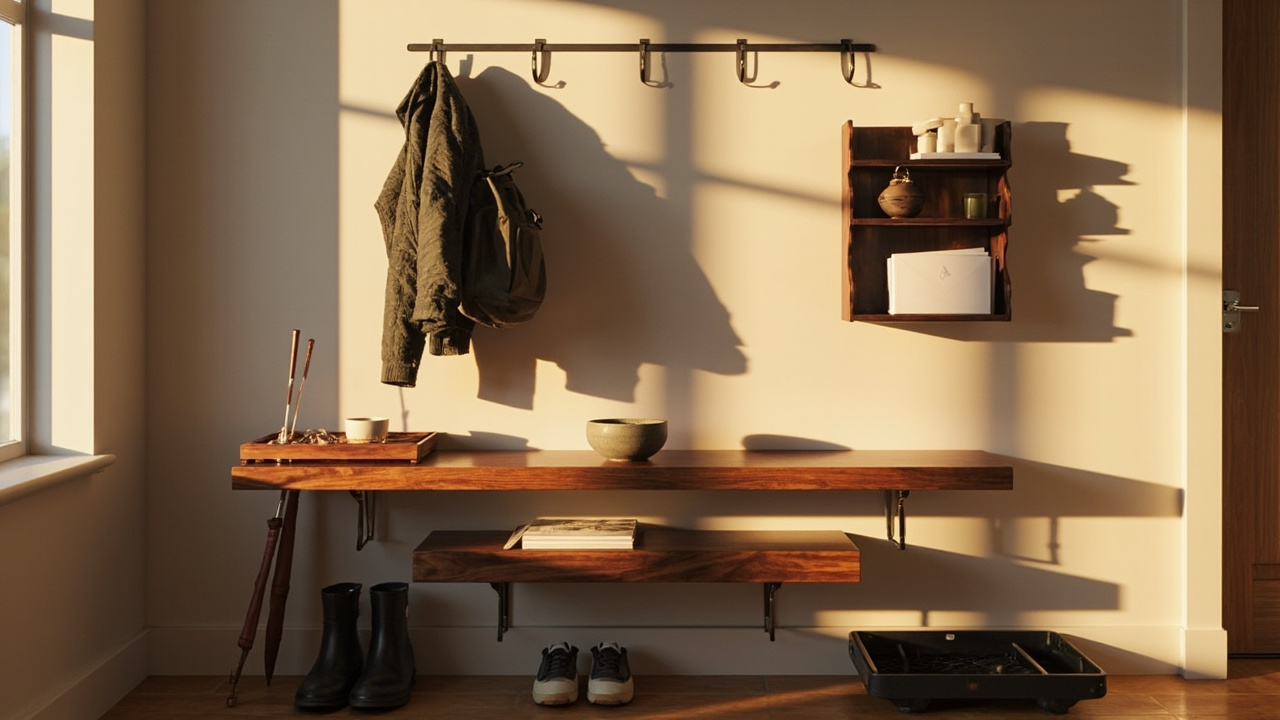
The 5-minute family entryway reset is a daily evening routine that sweeps the day’s drop-zone clutter into assigned homes, preps tomorrow’s launch-out, and stops the entryway from becoming the household’s most disorganized room. It works because each family member has an assigned hook, basket, and tray — the reset just sends each item back to the spot it already owns.
Quick answer: The 5-minute family entryway reset is a daily evening sweep that clears today’s shoes, coats, mail, and small items back to assigned homes in five steps: Clear, Sort (5-bucket split), Reset (each item to its home), Sanity Check (10-second scan), and Tomorrow Prep (launch-out kit). Run at 7pm with a 5-minute timer, and the entryway stays under control without a deep clean.
For the broader system that makes this reset work, see the entryway organization hub, the entryway drop zone guide, and our entryway shoes + coats organization sister article.
Why Family Entryways Get Cluttered Every Day
Family entryways accumulate clutter faster than single-person households because three streams hit the same surface every day: shoes (school, work, and gym changes 2–4 times per person), coats and bags (morning departure and evening return), and small items (keys, mail, phones, permission slips, gym water bottles). Most homes treat the entryway as a temporary surface — a place where things land before going to their real home. When each real home is two rooms away, the entryway becomes a parking lot nobody returns to until the pile blocks the door.
The reset that works isn’t a longer decluttering session — it’s a daily 5-minute habit that returns each item to the home it already has.
The 5-Minute Reset: Step 1 — Clear
Sweep everything from the entryway surface to the center of the floor in 60 seconds. Shoes, coats, bags, mail, keys, papers, lunch boxes, gym clothes — all of it lands in one pile in the middle. Don’t sort yet. Step 1 is to give yourself a clean canvas.
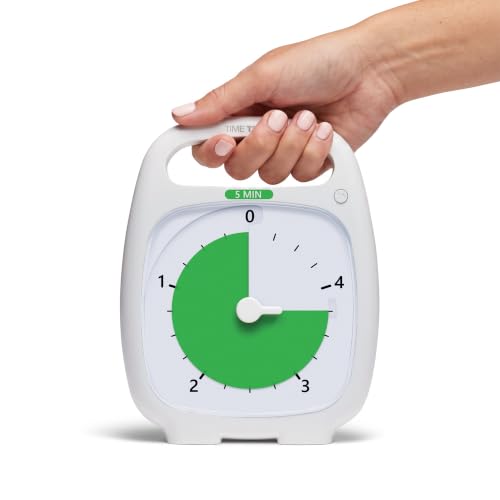
Set a visible 5-minute timer (P1: TIME TIMER PLUS 5 Minute Visual Timer) before starting. Visible countdowns cut overruns. Most families finish with two minutes to spare.
The 5-Minute Reset: Step 2 — Sort (5-Bucket Family Split)
Stand over the pile and grab one item at a time. Sort each into one of five buckets:
- Keep here — shoes, coats, bags, daily keys → returns to entryway in Step 3
- Relocate — kitchen items, bedroom items, office mail → load into a “relocate” basket for the after-dinner walk
- Laundry — gym clothes, stray socks, muddy jacket → straight to the hamper
- Trash/Recycle — junk mail, broken items, takeout menus → trash
- Tomorrow’s launch-out — backpack, signed slip, library books, gym bag → into the launch-out basket
The 5-bucket family split at a glance

The five-bucket split is what separates a reset from a relocate pile. Without it, “kitchen pile” and “office pile” become two new piles.
The 5-Minute Reset: Step 3 — Reset (Each Item to Its Assigned Home)
“Assigned home” is the part most families skip. Each family member needs a labelled hook, basket, and tray. Without assigned homes, Step 3 becomes “shove things anywhere they’ll fit” — and tomorrow starts with a fresh pile.
Coats, jackets, and backpacks → per-person hook
Each hook holds one person’s coat, backpack, and shoulder bag. The Command Forever Classic Large Metal Hooks carry 4 lb per pair and remove cleanly at move-out — the standard rental-safe hook.
Shoes → per-person basket or boot tray
Shoes go in a per-person basket or on the GORILLA GRIP 32x16 Rubber Boot Tray. The 16-by-32-inch rubber tray holds muddy shoes and wet boots and hose-washes clean.
Keys, wallet, and phone → per-adult tray
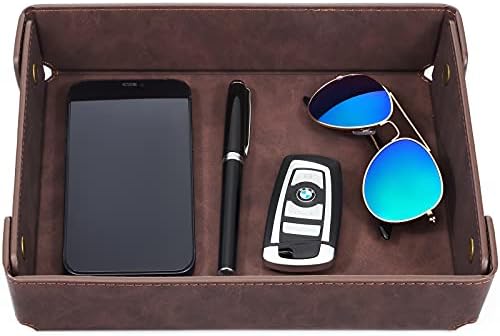
The CASIRENA Faux Leather Valet Tray Organizer catches the keys, wallet, watch, and phone every adult drops the moment they walk in. One tray per adult keeps the entryway surface from becoming the daily dump zone.
Loose mail and papers → wall basket near the door
The Deco Brothers Wall Mail Organizer hangs at door-handle height and holds three days of mail plus five key hooks. The basket is the dedicated mail destination instead of the console top.
Per-person labels on every hook, basket, and tray
SAVVY & SORTED 200 Chalkboard Labels waterproof and rewrite — the right tool for per-person labels on every hook. The marked hook is why Step 3 finishes in 90 seconds instead of 5 minutes.
Walk the pile through the buckets from Step 2 and put each item in its assigned home. The whole Step 3 takes 90 seconds once assigned homes exist.
The 5-Minute Reset: Step 4 — Sanity Check (10-Second Scan)
Step back to the entryway door. Look at the surface from across the room. If you can see the floor, the wall, and the front of every basket — you’re done. If anything looks like a pile, reset it before walking away.
The 10-second scan is the discipline step. Without it, the routine leaves a halfway-cluttered entryway that triggers tomorrow’s reset to start with a bigger pile.
The 5-Minute Reset: Step 5 — Tomorrow Prep (Launch-Out Kit)
The launch-out kit is a basket or tote staged by the door with what has to leave tomorrow: school backpacks, signed slips, library books, gym bags, dry cleaning, packages. After Step 4, walk tomorrow’s calendar and stage the kit.
This step is the inverse of the entryway clutter problem. Without the kit, tomorrow’s scramble searches the whole house for the gym bag — and creates tomorrow’s pile when that bag lands by the door at 6pm.
Build the Reset Into a Habit (Trigger → Routine → Reward)
The reset fails not because of motivation but because of cue design. A habit loop is trigger, routine, and reward. The 5-minute reset needs three explicit pieces:
- Trigger: “When the dinner dishes go in,” or “When the kitchen timer for 7pm goes off.” The trigger ties to an existing habit, not a clock.
- Routine: the 5 steps above, in order, with the same visible timer (TIME TIMER PLUS) every night.
- Reward: the visible entryway itself. Walking past a clean entryway at 8pm is its own reward. For younger kids, a Friday “reset champion” badge from the SAVVY & SORTED chalk labels keeps the social cycle alive.
The habit loop at a glance
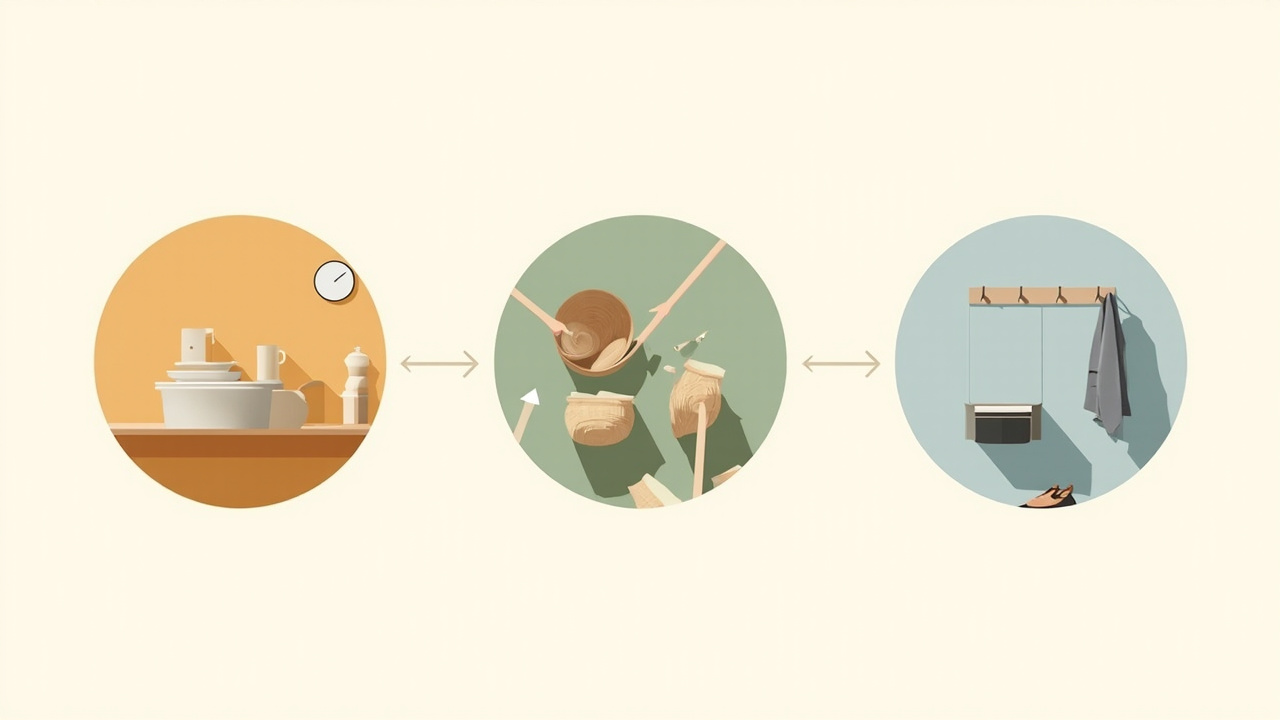
Run the reset at the same time and place for 21 nights. By night 22, the family does it without the timer.
Adjust the Reset for Household Size
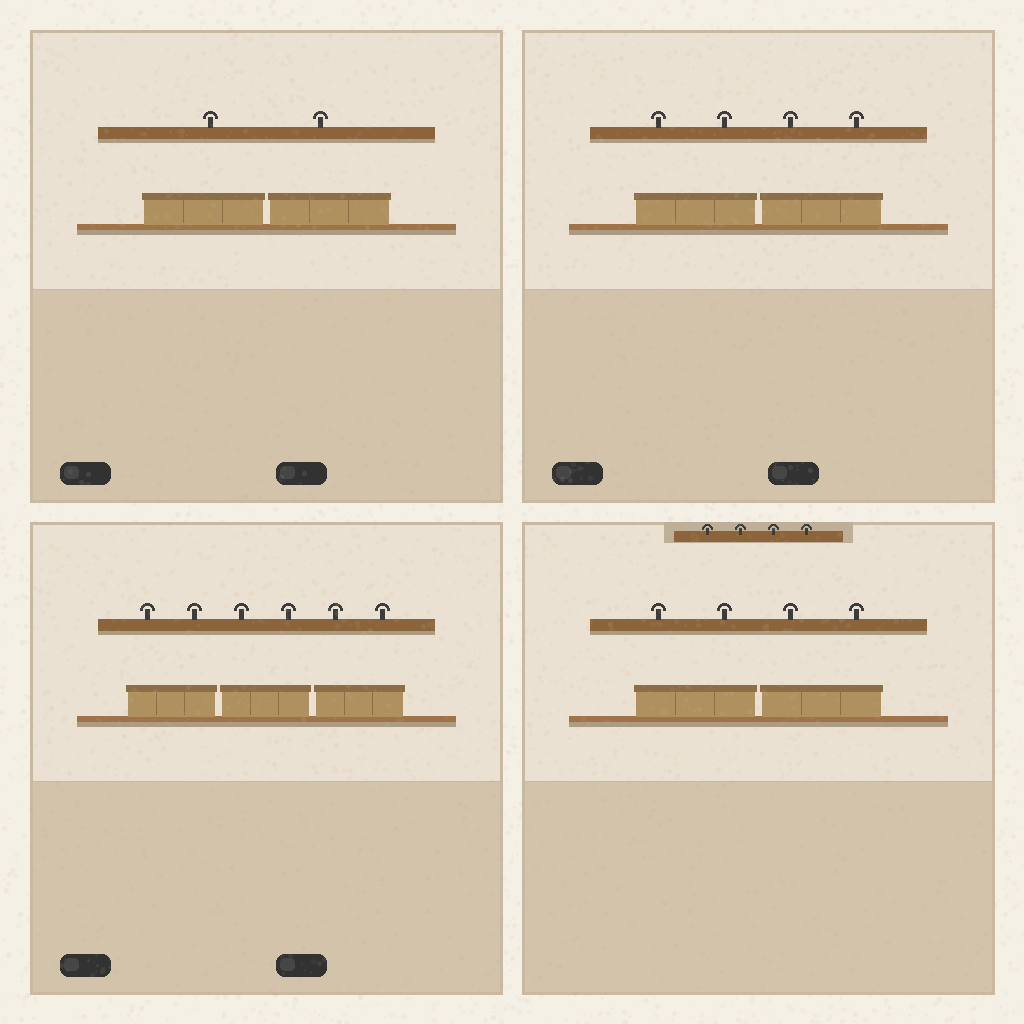
The 5-minute reset stretches and contracts with household size. Most systems assume a 4-person family and break down at 2 or 6+. Here’s how to scale the bucket split, hook count, and launch-out kit for three sizes.
2-Person Household (Couple or Roommates)
Two people share four hooks (two coats, two bags), one shoe rack or bench, and two trays. Reset time: 3 minutes. Skip Step 5 most nights — couples don’t have permission-slip flow. The entryway bench storage guide covers seat-plus-storage variants for 2-person entryways.
4-Person Family (Parents + 2 Kids)
Four marked hooks (one per person), two baskets for shoes (one per kid, one shared), and four trays or one per adult. Reset time: 5 minutes. The launch-out kit becomes essential — without it, school mornings spiral. The entryway shoes + coats organization sister article covers the morning-departure flow.
Household-size reset variants
6+ Person Household (Large Family or Multi-Gen)
Six or more hooks (over-door rail plus wall-mounted rail), 3 shoe baskets, 1 large tray per adult. Reset time: 5–7 minutes — extend the timer or split into “kid half” and “adult half.” The launch-out kit must be a wide basket (the Deco Brothers wall mail organizer doubled as an over-door basket, or a dedicated tote).
For 6+ households, the reset splits: parents do Steps 1–4 at 7pm, kids do Step 5 at bedtime.
When the Reset Breaks (Skip-Day Recovery)
Skipped days happen. The protocol for a missed reset is not two resets the next day — that turns into a 10-minute sprint and breaks the habit. Instead:
- Day 1 missed: Resume the next night at the normal time. Don’t acknowledge the skip.
- Days 2–3 missed: Do a “reset-the-reset” Sunday catch-up — see the declutter maintenance routine.
- Days 4+ missed: The entryway is in pile mode. Move to a 30-minute zone-cleaning reset — see the zone cleaning method — before returning to the daily 5-minute habit.
Reset breakage is normal. The recovery protocol matters more than perfect adherence.
What You’ll Need (6 Tools, Distributed by Reset Role)
The reset needs five physical tools plus one labeling system. None are required — a family can reset with nothing but a basket and a timer — but the kit makes Step 3 finish in 90 seconds instead of 5. The entryway coat hooks sister article covers alternatives.
| Role | ASIN | What it does | Where it lives in the article |
|---|---|---|---|
| P1 Timer anchor | B07BR4CHPG | Visible 5-minute countdown | Step 1 (start) + habit loop |
| P2 No-drill hooks | B0722663G9 | Per-person coat/bag hooks, rental-safe | Step 3 Reset + Constraint Guide “Rental” |
| P3 Wall basket | B00OLHIJ42 | Mail + loose paper catch | Step 3 Reset + Step 5 Tomorrow Prep |
| P4 Catch-all tray | B09BN7832X | Per-adult keys/wallet/phone | Step 3 Reset + Step 4 Sanity Check |
| P5 Hook labels | B0CW99MWHQ | Per-person name labels for hooks | Step 3 Reset + Constraint Guide “6+ people” |
| P6 Boot tray | B0GQVW34HP | Floor-level shoe + mud containment | Step 3 Reset + Constraint Guide “Wet/muddy shoes” |
Minimum kit (under $50)
The Command hooks at $16.29, the Deco Brothers wall mail organizer at $19.87, and the chalkboard labels at $12.95 = $49.11. Skip the timer, skip the tray, skip the boot tray — the reset still works without them.
Full family kit (under $115)
The 6-tool family reset kit at a glance
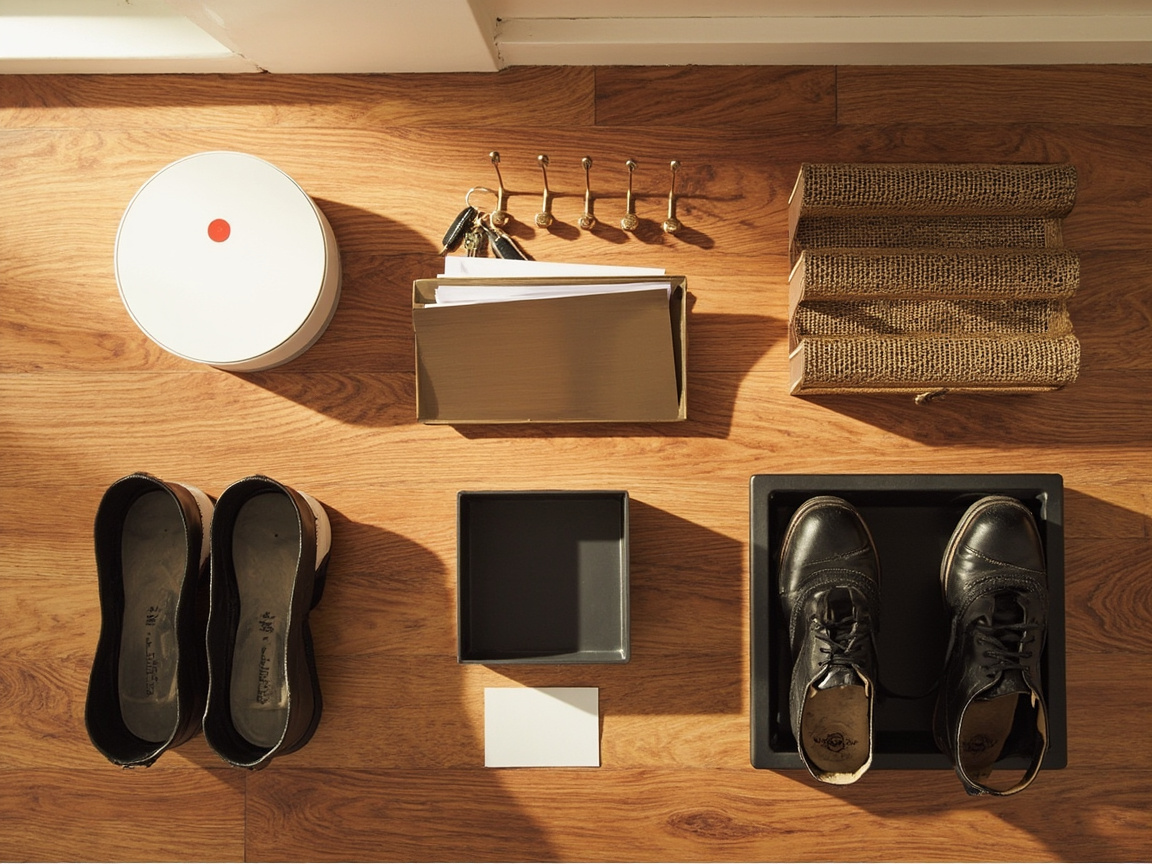
All six ASINs = $113.56. This is the reset kit the article uses as the baseline recommendation.
Constraint Guide by Scenario
The 5-minute reset breaks predictably when household setup doesn’t match the published system. These five scenarios cover the common ones.
If you rent and can’t drill
Use the Command Forever Classic Large Metal Hooks (damage-free, 4 lb per pair). Skip the wall-mounted Deco Brothers mail organizer. Full rental playbook in the entryway declutter method guide.
If you have 2 or fewer people
Skip the chalkboard labels (only useful when hooks are shared). Skip the wall basket unless you get lots of mail. The 2-person reset doesn’t need a launch-out kit.
If you have 6+ people or kids under 10
Add a second Command hooks pack (you’ll need 6+ hooks). Add a wider GORILLA GRIP boot tray — the 16-by-32-inch version fits 4 adult pairs or 6 kid pairs. The launch-out kit becomes mandatory; see small entryway organization for narrow-space reset variants.
If your entryway is under 30 inches wide
Skip the wall basket and the boot tray. Use a Command-hook wall basket (over-door variant). Per-person trays go on a narrow console or inside a closet. The full narrow-hallway playbook lives in small entryway organization.
If you receive packages daily
Double the Deco Brothers wall mail organizer or add a second basket for delivered-today overflow. The CASIRENA valet tray doubles as the package staging spot. See entryway storage solutions.
Common Mistakes
These five failure patterns show up on family-organizer forums within the first month of trying a daily reset. Read them before you start.
-
Skipping the visible timer and “eyeballing” 5 minutes. The 5-minute estimate makes the reset survivable. Without the TIME TIMER PLUS, the reset drifts to 12 minutes — easy to skip after 4 nights.
-
Skipping the “assigned home” labels on hooks. Hooks without labels default to “first-come, first-served” — whoever gets home first hangs their coat, others land on the bench. SAVVY & SORTED chalkboard labels at adult eye height prevent the drift.
-
Letting mail stack on the console top. The console table is the catch-all surface, mail is the catch-all item. Once mail stacks, Step 3 takes 8 minutes instead of 90. The Deco Brothers wall mail organizer is the dedicated destination.
-
Doing the reset at the wrong time. 9pm after kids are in bed fails — adults are tired and skip steps. 4pm fails because accumulation isn’t done. The 7pm dinner-dishes trigger is the family-tested sweet spot.
-
Treating a missed reset as a reset failure. Skipped days are part of the system. The recovery protocol in the skip-day section keeps the habit alive. A “reset failure” mindset stops families from restarting after one miss.
Key Takeaways
- The 5-minute reset works because each item has an assigned home — Step 3 returns items to existing homes.
- Visible timer (B07BR4CHPG) keeps the reset at 5 minutes — without it the routine drifts to 12.
- 5-bucket split (Keep / Relocate / Laundry / Trash / Tomorrow) replaces “sort into room piles.”
- Skip-day recovery is built in: 1 missed = resume; 2–3 missed = Sunday catch-up; 4+ missed = zone-cleaning reset.
- Per-person Command hooks + chalkboard labels is what stops first-come-first-served coat storage.
- The launch-out kit (Step 5) prevents tomorrow’s morning scramble from creating tomorrow’s pile.
- The reset is a habit, not a chore — tie to an existing trigger (dinner dishes) and run 21 nights in a row.