
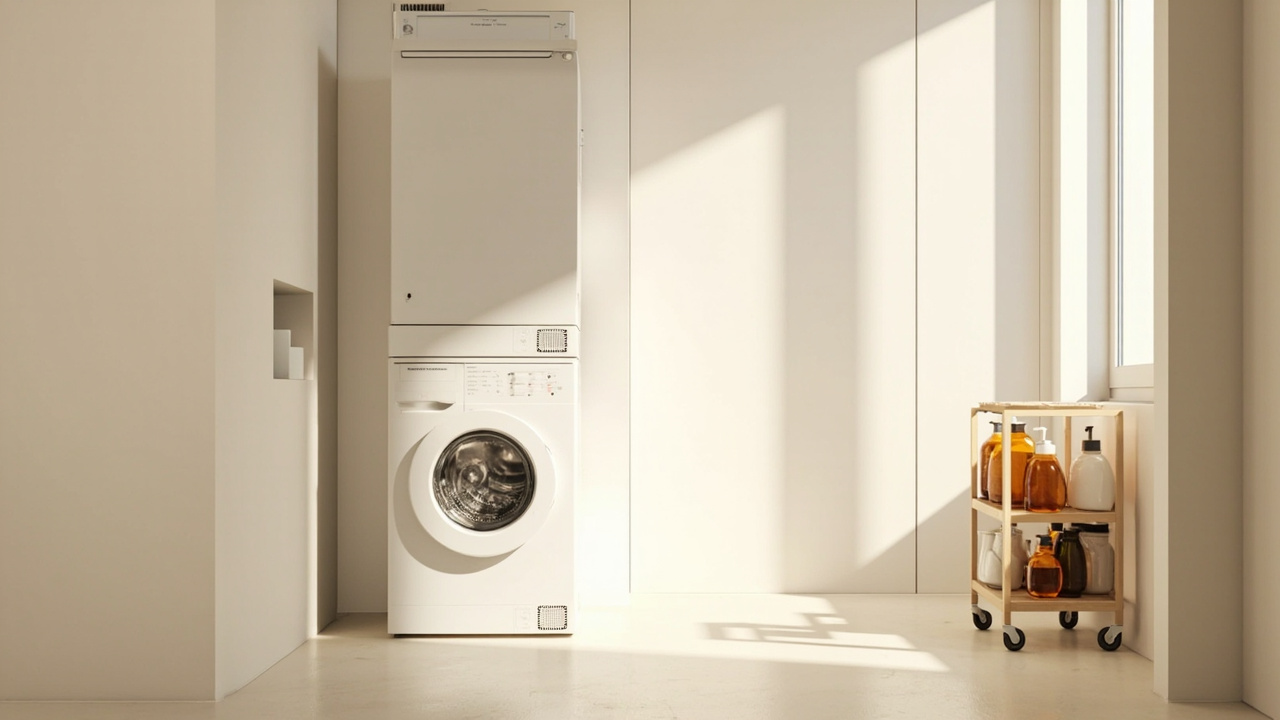
The laundry room generates clutter at three speeds — weekly loads, monthly detergent refills, and seasonal linen swaps. A declutter method that doesn’t separate those speeds falls apart within a week. The 5-stage method (Sort, Store, Dry, Fold, Iron) handles all three speeds by giving each one its own zone and own product pick. This guide covers the 5 stages, 4 layout geometries, 4 constraint scenarios, and a weekly cadence that keeps the system from re-cluttering for good.
Sister cross-links: laundry hub for the broader 5-zone overview + kitchen under sink for the parallel pipe-aware + child-safe pattern.
Why Laundry Rooms Resist Decluttering
Three forces make the laundry room one of the fastest rooms in the house to re-clutter.
Laundry generates waste at three speeds
Clothing, packaging, and consumables all enter the room at different cadences: weekly loads, monthly detergent refills, and seasonal linen swaps. A declutter method that doesn’t separate those speeds falls apart within a week.
Storage compounds faster than the cabinet was designed for
Detergent, pods, dryer sheets, stain sprays, and sewing supplies accumulate faster than the cabinet was designed to hold. When backstock overflows, it spills onto the folding surface.
Hidden moisture risk makes “out of sight” the wrong goal
Laundry is one of two rooms where water is part of daily use (the other is the kitchen). Open baskets expose pods to humidity and to children. Closed storage is not optional. See kitchen under-sink organization for the parallel pipe-aware + child-safe pattern.
The 5-Stage Laundry Declutter Method
The core framework. Each stage owns one zone, one product, and one failure mode. Run them in order the first time, then any single stage on its own when a zone starts to drift.
Stage 1 — Sort the dirty-in flow first
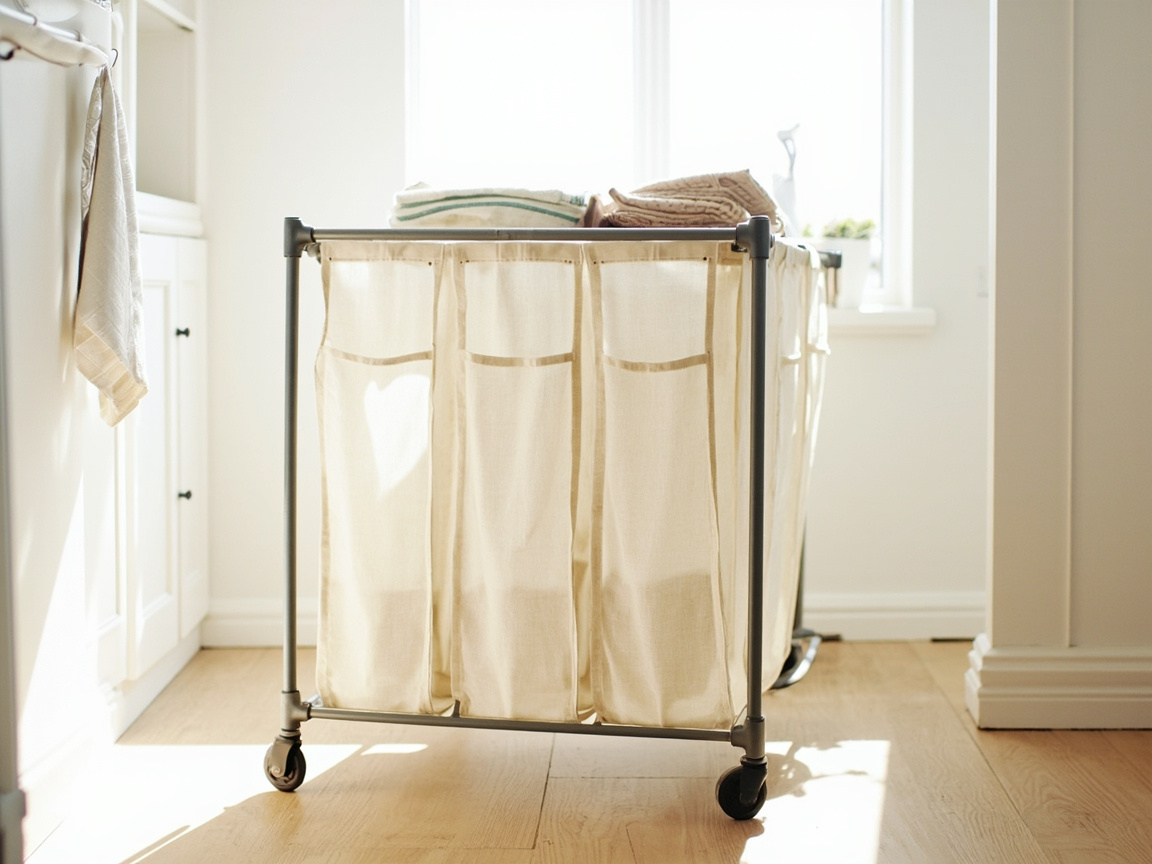
End the “I’ll sort it later” pile on the floor. A 4-section rolling sorter (lights, darks, delicates, towels) splits dirty clothes at the point of drop-off so every household member lands the right load on the first try. Without sort, every later stage absorbs the cost of unsorted piles. Inline pick: the ROMOON 4-Section Sorter Cart ($39.99) — 4 mesh bags, 180L capacity.
Stage 2 — Close the detergent cabinet
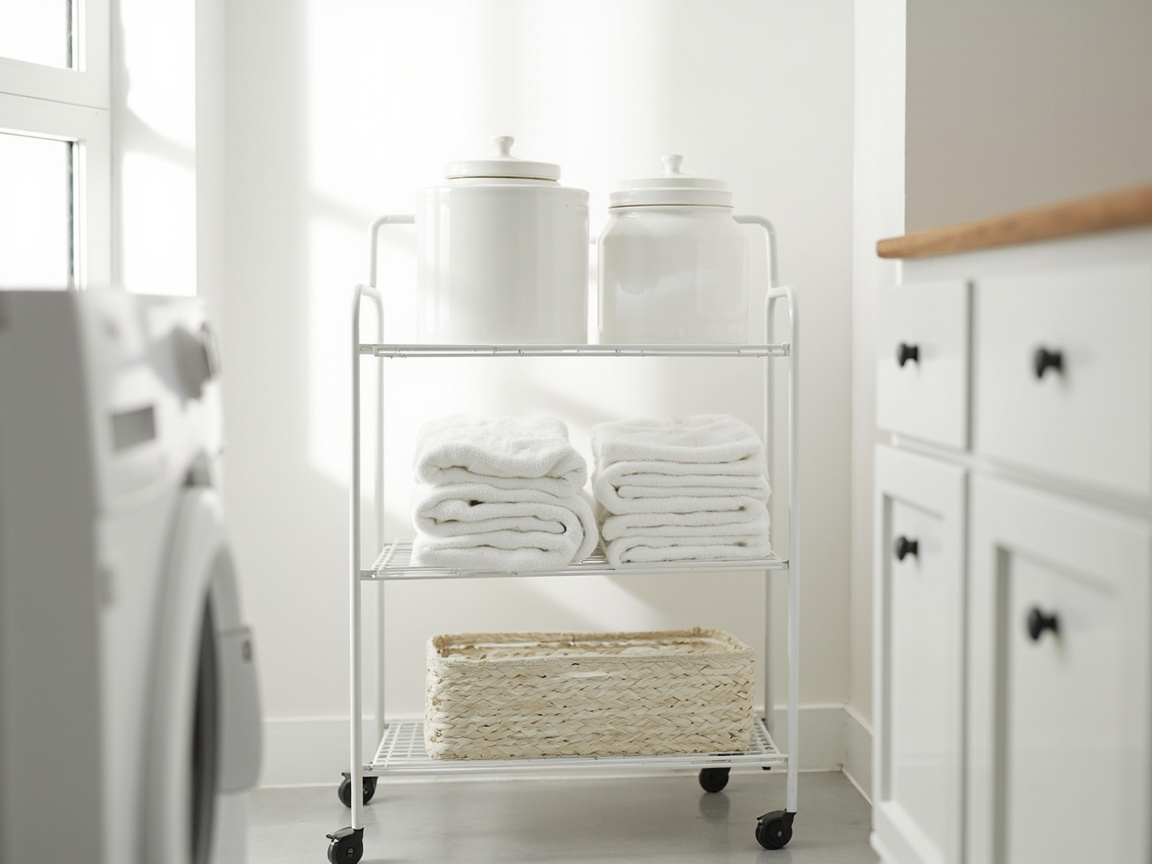
Detergent, pods, stain sprays, and dryer sheets belong in a closed cabinet or a slim 4-tier rolling cart. The store stage must be moisture-aware (no open baskets under pipes), child-aware (cabinet lock if kids share the home), and stock-aware. Inline pick: the OKZEST 4-Tier Slim Cart ($32.29) — fits 5–6 inch gaps, wood top.
Stage 3 — Add a drying surface that disappears
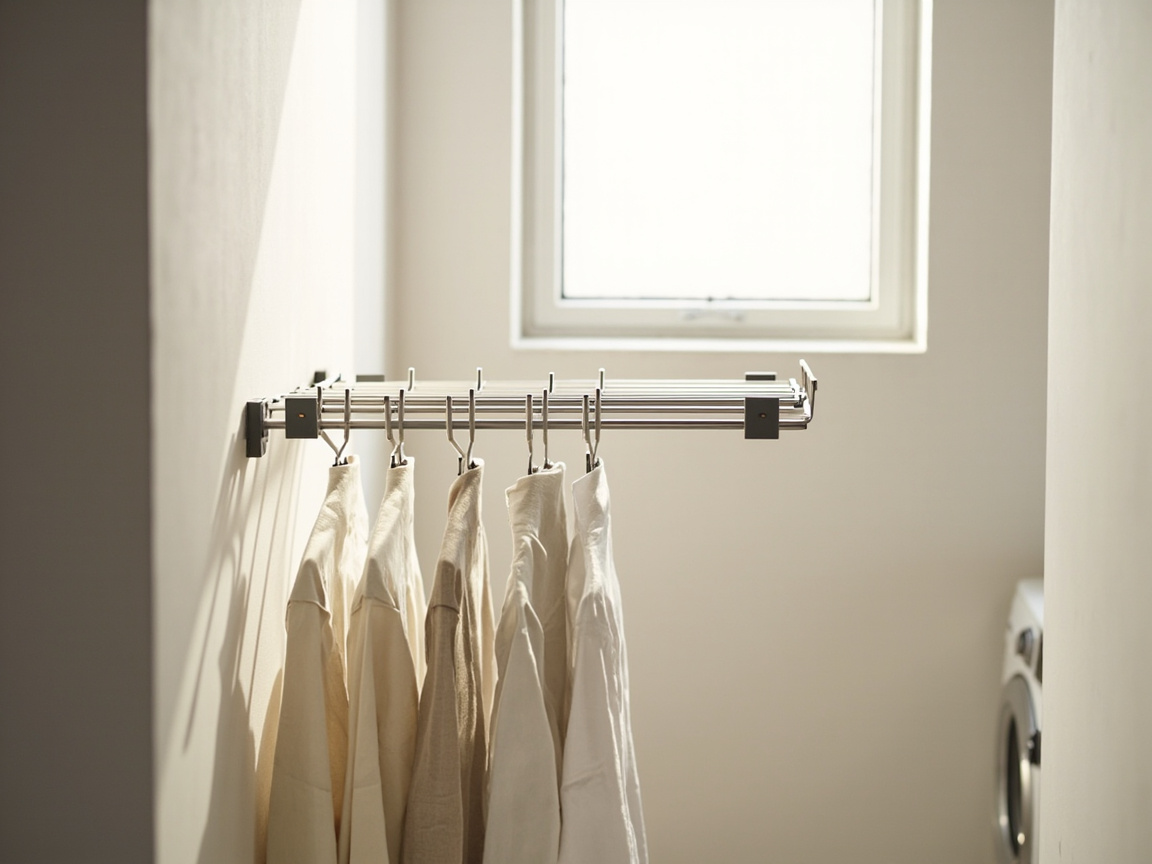
The dry stage covers both the dryer and any air-dry surface — a fold-out wall-mounted drying rack for delicates, wool, and activewear. Wall-mounted racks reclaim floor space and handle a full load on the 40-inch bar. Keep the lint trap clean; never stack dirty clothes in front of the dryer. Inline pick: the Vikaqi Wall-Mount Drying Rack ($58.99) — 40” fold-out, 14 drying rods.
Stage 4 — Install one folding surface at standing height
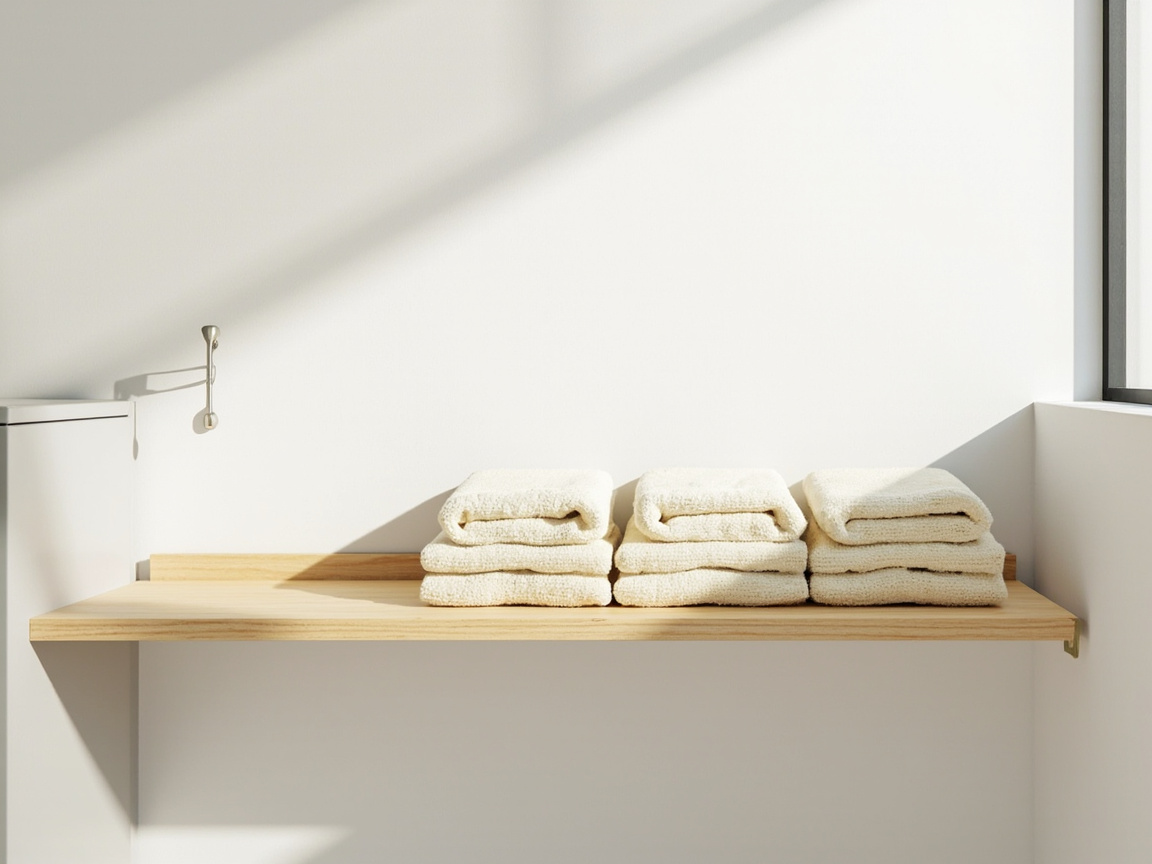
Folding needs exactly one flat surface at standing height. A wall-mounted table that folds flat wins for small rooms; a freestanding counter works in medium rooms (see common mistakes — dryer heat damages wood). Add a return-to-room basket so folded piles don’t take over the surface. Inline pick: the koretech Wall-Mount Folding Table ($59.99) — 32” × 16”, folds flat to 2”. Stud-mount required.
Stage 5 — Hide the iron
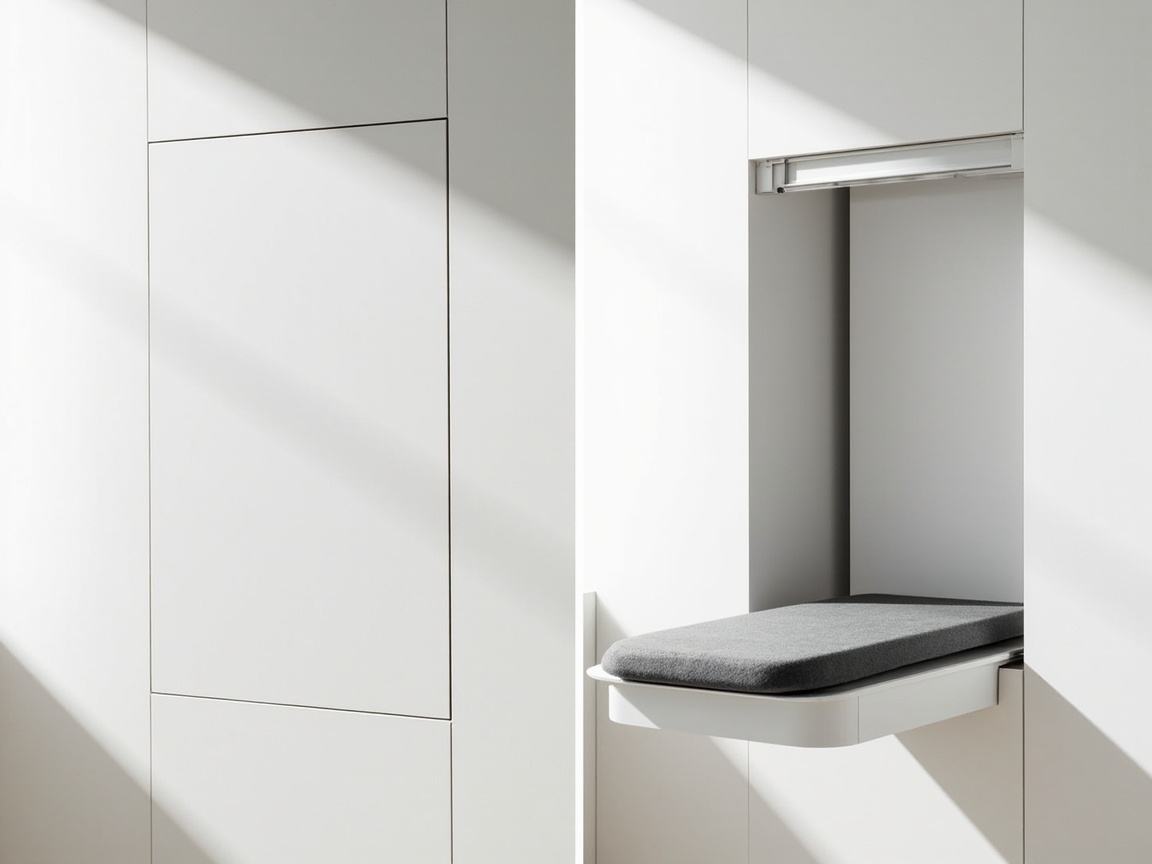
Ironing lives in its own stage so the iron doesn’t migrate to the kitchen counter or bedroom dresser. A wall-mounted ironing-board cabinet hides both board and iron when closed and pulls out at chest height when needed. Pair it with a small repair strip (sewing kit, stain pen, button box) on a wall rail. Inline pick: the Household Essentials Stowaway in-Wall Ironing Center ($187.73) — in-wall cabinet hides a full-size board behind a flush door.
Layout by Laundry Space
Adapt the 5-stage framework to the four most common laundry-room geometries. Each layout lists the products that fit, gives concrete numbers (square feet, wall inches, dollar range), and points to the right stage emphasis.
Laundry closet or alcove (under 30 sq ft)
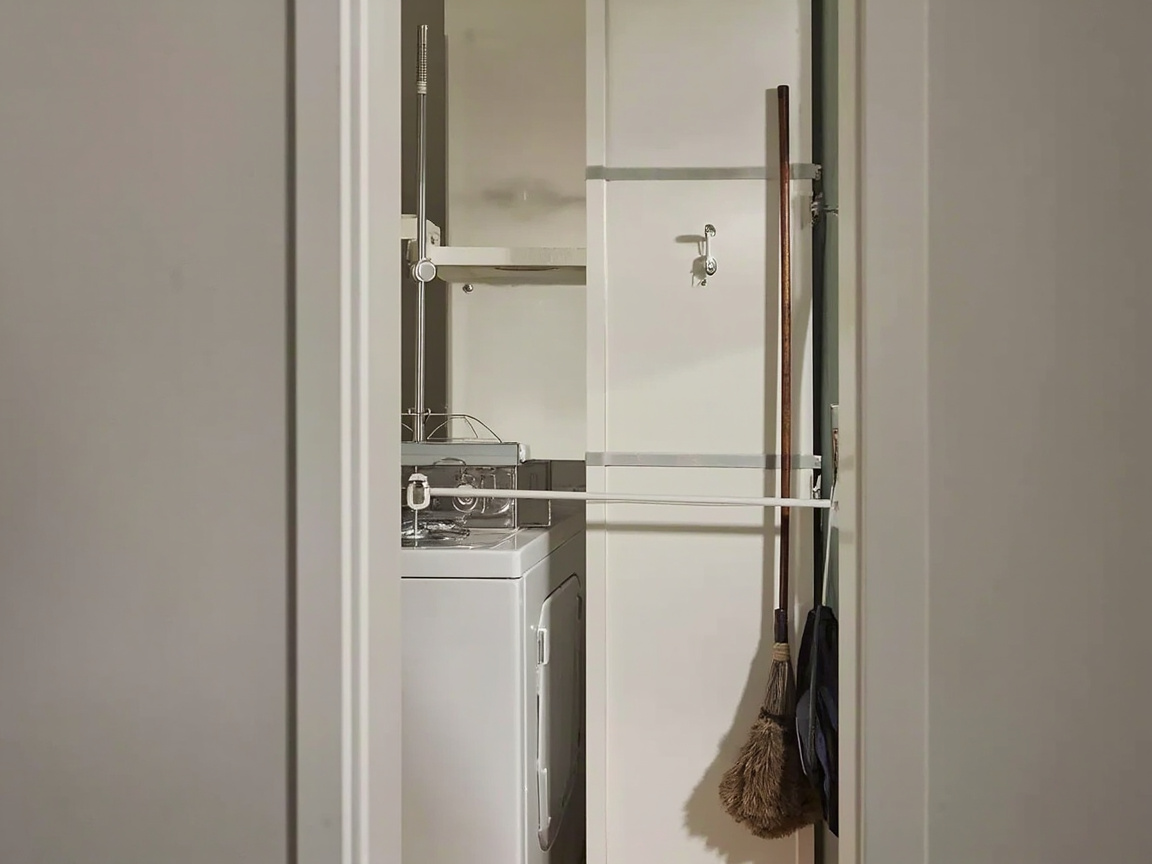
Stacked washer and dryer, bi-fold or sliding doors, no dedicated folding surface. Emphasize Stage 1 (Sort), Stage 4 (Fold) with a wall-mounted folding table, and Stage 5 (Iron) with an in-wall cabinet. Recommended build: 32” wall-mounted folding table + 4-tier slim storage cart (5-inch gap) + in-wall ironing board cabinet. Estimated budget: ~$280 ($59.99 + $32.29 + $187.73). Skip the freestanding drying rack — vertical wall drying rack only.
Small dedicated room (30–60 sq ft)
Stacked or side-by-side, 1–2 walls of free space, may include utility sink. All 5 stages fit with planning. Recommended build: rolling 4-section sorter + slim cart + magnetic lint bin + wall-mounted drying rack + wall-mounted folding table + in-wall ironing board cabinet. Estimated budget: ~$410. Place the folding surface directly opposite the dryer, opposite the room from the door.
Medium side-by-side room (60–120 sq ft)
Side-by-side washer and dryer, full room for movement, sometimes a window. Stretch the 5 stages plus a utility wall. Recommended build: full 5-stage system + utility wall with the OUTNILI Mop and Broom Holder ($11.99) + a dedicated return-to-room basket station. Estimated budget: ~$420–$480 including the utility wall.
Basement or shared utility room (120+ sq ft)
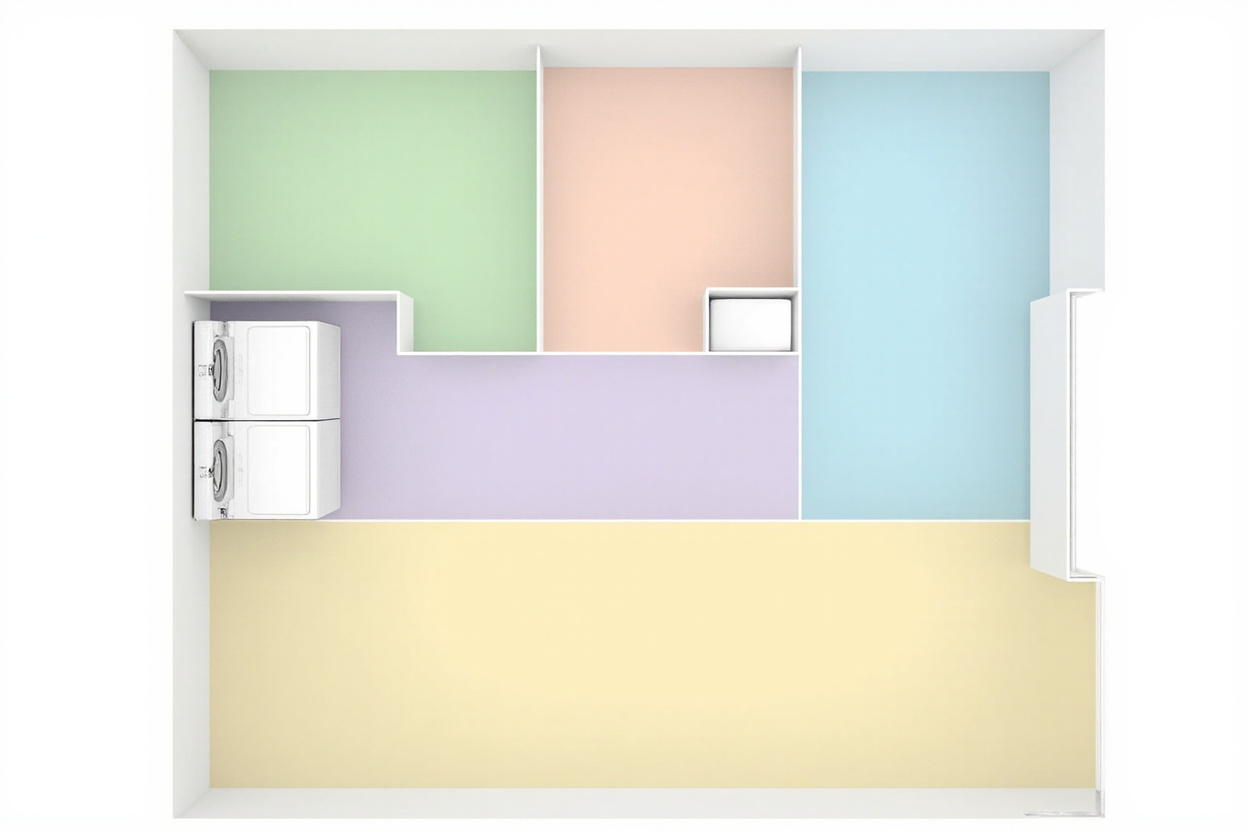
Large footprint often shared with utility sink, freezer, HVAC, and storage shelves. Stretch the 5 stages into sub-rooms but keep them adjacent; add a second sort station if the room doubles as a mudroom, and dedicate a separate utility wall for the broom and mop holder to free the laundry wall for drying and folding.
Quick Wins — Five Small Fixes You Can Do Today
If you only have 15 minutes, do these five — each takes under 5 minutes and removes one specific clutter source.
Label sorting baskets
Use clear, dishwasher-safe labels on each section of the sorter. Color-code if children are doing the sort. Labels survive the laundry-room humidity better than handwritten tape. See the full labeling framework in how to label anything.
Use the wall above appliances
The 12–24 inches of empty wall above most stacked machines is dead space. Add a single shelf + 2-3 small bins for stain supplies and a lost-and-found button jar.
Create one folding surface
If you only fix one thing today, fix this. You need exactly one flat surface at standing height in the laundry room. Everything else (rack, cabinet, cart) is optional. Wall-mounted folding tables fold flat when not in use — the koretech 32” folding table ($59.99) is the small-room winner.
Add a return-to-room basket + size match the cart to the closet
One return basket per load. Folded clothes go in the basket and the basket goes to the bedroom or linen closet — folded clothes that sit in the laundry room stop feeling folded. Sister cross-link: bedroom dresser organization is the typical destination, and the bathroom linen closet organization handles the towel side. For sub-30-sq-ft closets, pair the ROMOON sorter with the OKZEST slim cart — both fit 5 linear feet of floor space. Sister cross-link: how to choose storage bins covers the broader cart decision framework.
Recommended Essentials — 8 Picks by Stage
One product per stage + a utility-wall pick. Mix budget, mid, and premium.
Stage 1: ROMOON 4-Section Rolling Hamper — $39.99, best overall
Locking wheels + 4 mesh bags + 180L capacity cover a 4-person household. Watch out for weight without casters. Sister cross-link: clear bins vs opaque bins covers visibility.
Stage 2a: Wappa Baby Child Safety Locks — $8.99, budget
Clamp-on, no tools, fits cabinet frames and appliance fronts. Watch out for clamp thickness — measure the lip before ordering. Required when kids or pets share the home.
Stage 2b: OKZEST 4-Tier Slim Cart — $32.29, budget
5-inch-wide profile fits next to stacked washer/dryer; wood top adds a one-item folding spot. Anchor to the wall when top-loaded.
Stage 3a: Artilife Magnetic Lint Bin — $9.99, niche pick
Magnet attaches to metal washer or dryer; catches lint between cleanings. Niche pick — lint-bin is a small Amazon market segment with no 4+ star / 1000+ review winner. Vacuum the trap monthly regardless.
Stage 3b: Vikaqi Wall-Mounted Drying Rack — $58.99, mid
40-inch fold-out rack with 14 rods supports a full delicates load. Wall studs or concrete only — drywall anchors only handle small loads. Sister: hooks and racks for vertical storage.
Stage 4a: koretech Wall-Mount Folding Table — $59.99, mid
32” × 16” surface at standing height, folds flat to 2” when not in use. Niche pick — wall-mounted folding tables are a small Amazon category. Stud-mount required.
Stage 4b: OUTNILI Mop and Broom Holder — $11.99, budget utility-wall
5-slot wood holder for brooms, mops, dusters, and the iron cord. Pull test before hanging a wet mop.
Stage 5: Household Essentials Stowaway Ironing Board — $187.73, premium
In-wall mount hides a full-size ironing board behind a flush cabinet door. Worth it only if you iron at least once a week; otherwise a basic wall board saves $130+.
Constraints That Change the Setup
Real-world constraints (rental, kids, appliance type, no dedicated room) change which stages to emphasize. Pick the scenario that matches yours.
If you rent or can’t drill
Use damage-free mounting only — tension rods, 3M Command Strips, over-door hooks. Inline picks: the OKZEST 4-Tier Slim Cart ($32.29, free-standing, lockable wheels) + the OUTNILI Mop Holder ($11.99, single-screw wall mount, patchable). Skip: in-wall ironing cabinets (rough-in framing) and wall-mounted drying racks (stud mount required).
If you have children under 6 or curious pets
Pods and stain sprays belong in closed cabinets with safety locks. Inline picks: the Wappa Baby Safety Locks ($8.99 / 4-pack) + the Household Essentials Ironing Cabinet ($187.73). Why: pods are toxic if ingested; Poison Control is 1-800-222-1222. The AAP recommends keeping pods in original child-resistant packaging.
If you have a front-load washer
Front-load dryers stack higher, freeing floor space but killing the over-appliance shelf. Inline picks: the koretech Folding Table ($59.99, wall-mounted) + the OKZEST Slim Cart ($32.29, any side gap). Why: front-loaders kill over-appliance storage; the wall becomes the workhorse zone.
If you have no dedicated laundry room
A stackable in a closet, kitchen pantry, or bathroom — adapt by picking 2–3 stages only. Inline picks: the ROMOON Rolling Sorter ($39.99) + the OKZEST Slim Cart ($32.29) — both on wheels, both follow you. Why: a half-built 5-stage beats a half-built-but-everywhere plan. Sort + Store is the most portable pair.
Common Mistakes
Three failure cases the 5-stage method explicitly prevents.
Treating declutter as a one-time Saturday project
Most laundry “declutters” fail because the room re-accumulates within 7–10 days. The fix is the daily 60-second + weekly 10-minute cadence below — declutter is a recurring habit, not a single event. See declutter maintenance routine for the full template.
Storing pods in open baskets
Pods are toxic if ingested and weaken in humidity. Open baskets expose the membrane to moisture and put pods within reach of curious hands. Fix: closed cabinet + child-safety lock (Stage 2).
Putting a folding surface on top of the dryer
A folding mat on the dryer tempts you to fold while the dryer runs — the heat damages wood and fabric. Fix: a wall-mounted folding table at standing height that folds flat (Stage 4). Folding surfaces belong at standing height, never on a vibrating, heated surface. Add a return-to-room basket to keep the folding surface from becoming a pile-magnet.
Maintenance, FAQ & Related
Weekly reset rhythm, FAQ, and where to go next
Use a three-tier maintenance rhythm: a 60-second daily tidy (refill detergent, fold the day’s pile, clear lint bin), a 10-minute weekly reset (deep-wipe the folding surface, return finished loads to the bedroom and linen closet, audit detergent levels), and a 30-minute monthly deep (lint-trap vacuum, dryer-vent check, stain-supply restock). Daily + weekly cadence prevents the monthly reset from becoming an all-day project. Sister cross-link: the declutter maintenance routine article gives the cadence template that applies across the whole home.
Where to go next:
- Back to the Laundry organization hub for the 5-zone Astro overview, and the bathroom linen closet organization for the parallel towel-and-sheet zone.
- Read Linen Closet Organization for the per-bed quota system and Declutter Maintenance Routine for the cadence template applied across the whole home.
- Compare vertical options in How to Choose Storage Bins and Hooks & Racks for Vertical Storage if the supply-cart or utility-wall zones still feel cluttered.
- For the parallel pipe-aware + child-safe pattern: Kitchen Under Sink Organization handles the same problem in a different room.
- For seasonal linen waves: Seasonal Closet Rotation explains how winter coats and summer linens enter and leave the laundry room in waves; the Zone Cleaning Method article backs up the 5-stage framework with the 4 vs 6 vs 8 zone systems.
- Pre-work entry: Start Here for readers who landed here first, or run a Declutter Fast 4-quadrant pass if the room has too much volume.
FAQ (full Q/A in frontmatter _faq schema; accordion renders below): 6 entries cover the 5-stage method summary, 4 layout breakdowns, 3 storage trends, the minimum viable laundry room, the 60s + 10min + 30min cadence, and laundry pod safety (AAP guidance + Poison Control hotline 1-800-222-1222 if a child is exposed).