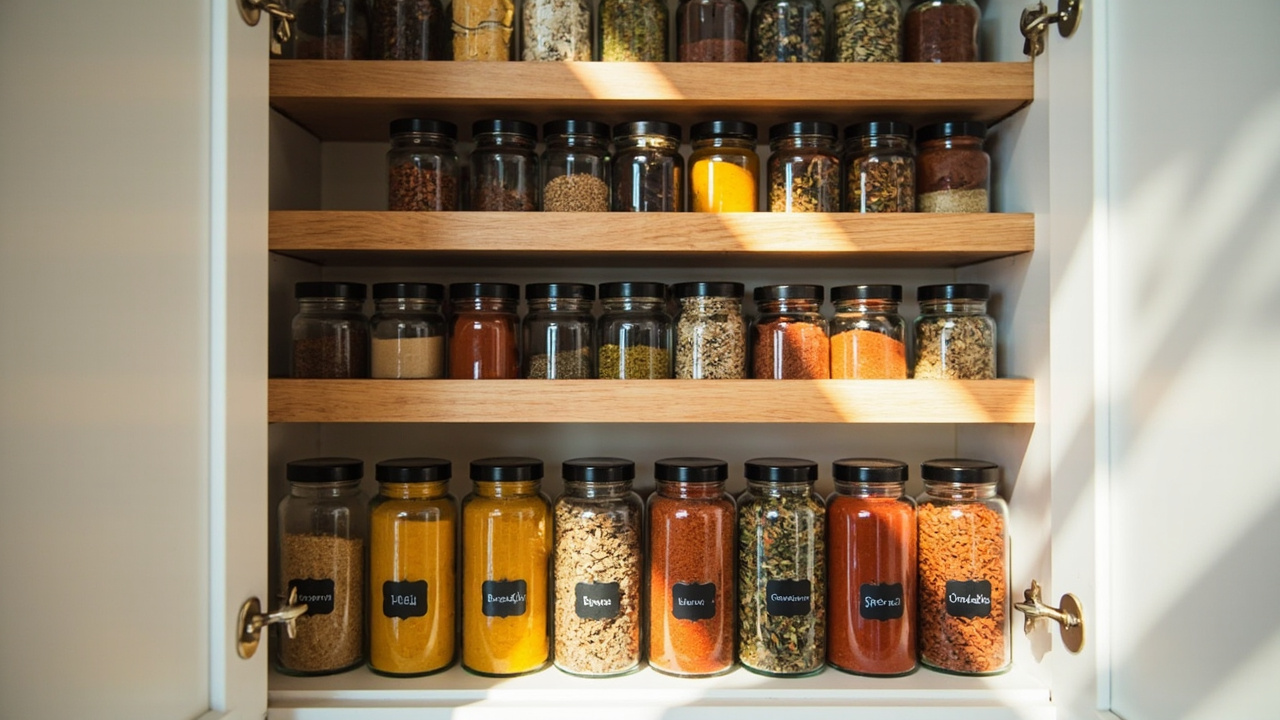
Most spice collections are a graveyard of half-used jars, duplicates from past moves, and mystery tins from gifts. This guide sorts your spice chaos into three categories — daily, weekly, occasional — and matches each to the right storage system.
For broader kitchen storage, see our kitchen pantry organization guide and the kitchen organization hub.
Why Spice Organization Is Different
Spices break the standard “zone” rule. Most zone systems work because items in a zone are similar in size. Spices vary from tiny 0.5-oz jars to tall 16-oz containers, from daily cinnamon to a once-a-year saffron tin. A flat shelf wastes 40 to 60 percent of vertical space because shorter jars leave air above them.
The fix: tiered storage that puts short and tall jars on the same plane visually. Three systems work — tiered racks, rotating lazy susans, and drawer inserts. Each fits a different kitchen layout.
System 1: Tiered Rack (Best for Cabinets)
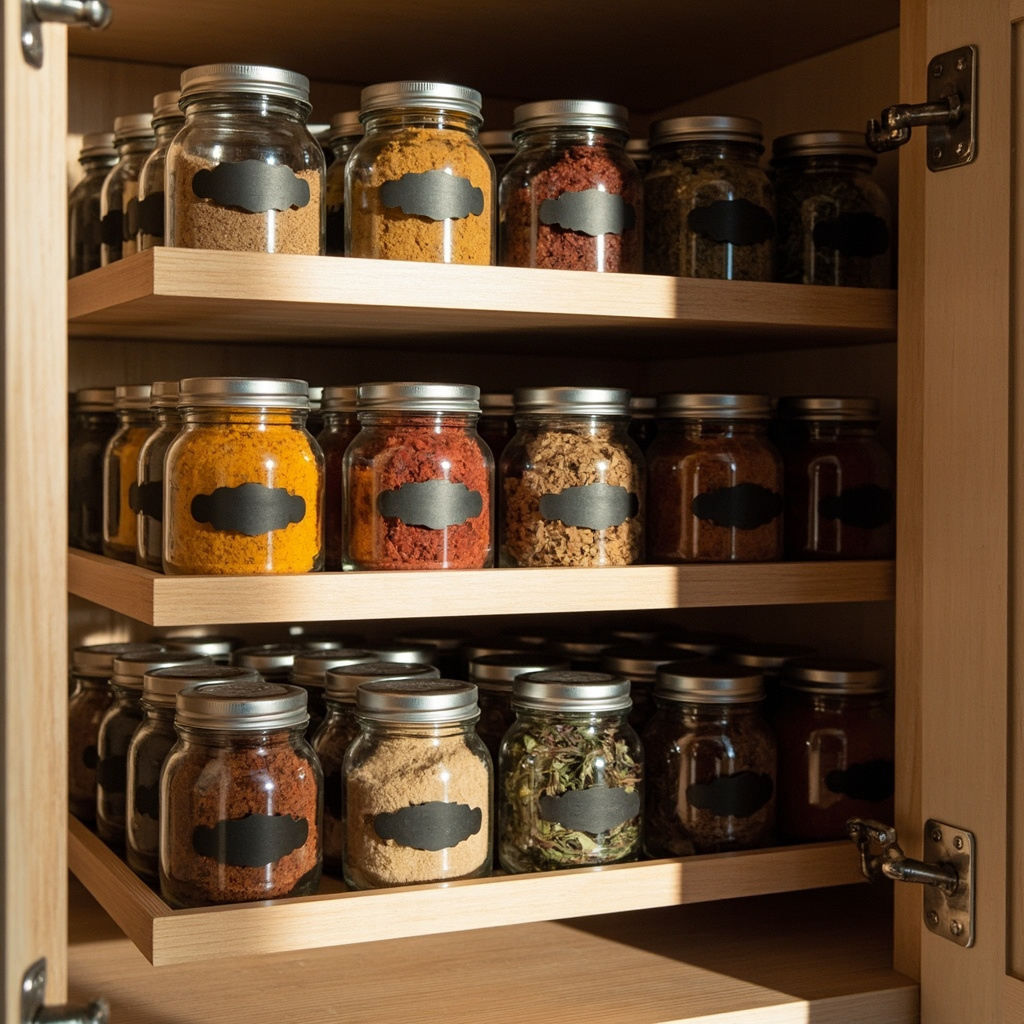
A tiered rack creates 2 to 3 visible rows from one shelf’s worth of space. The INVOCOO expandable spice rack holds 20+ jars across three tiers in a single cabinet shelf.
Best for: wall cabinets where you can see inside from below. Skip if: your cabinet is shallower than 10 inches (rack won’t fit).
System 2: Rotating Lazy Susan (Best for Deep Cabinets)
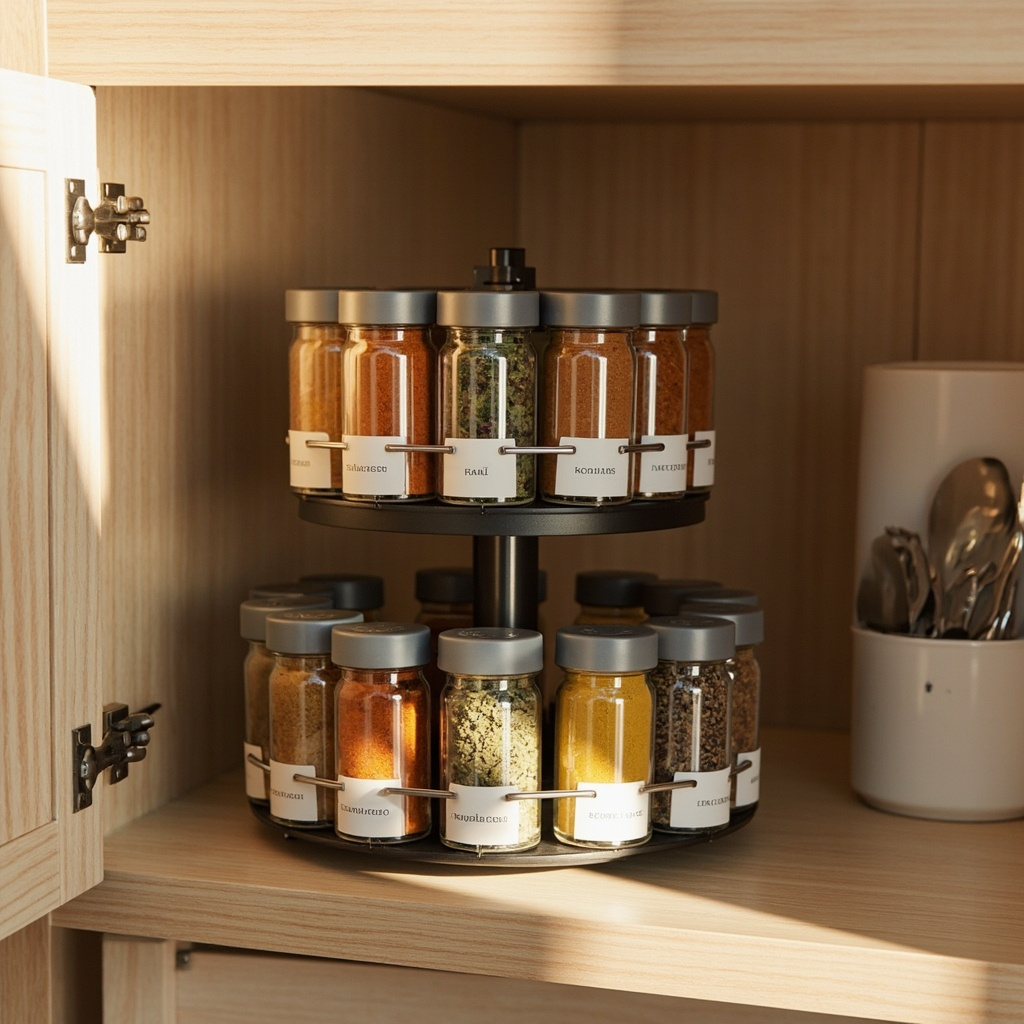
Deep corner cabinets are spice black holes — back-row jars disappear for years. A lazy susan solves this by spinning every jar to the front. The YATINEY 3-Tier rotating rack holds 30+ jars on two tiers.
Best for: deep cabinets, corner cabinets, base cabinets. Skip if: your cabinet is shallow or you have back issues (bending to spin the rack gets old).
System 3: Drawer Insert (Best for Deep Drawers)
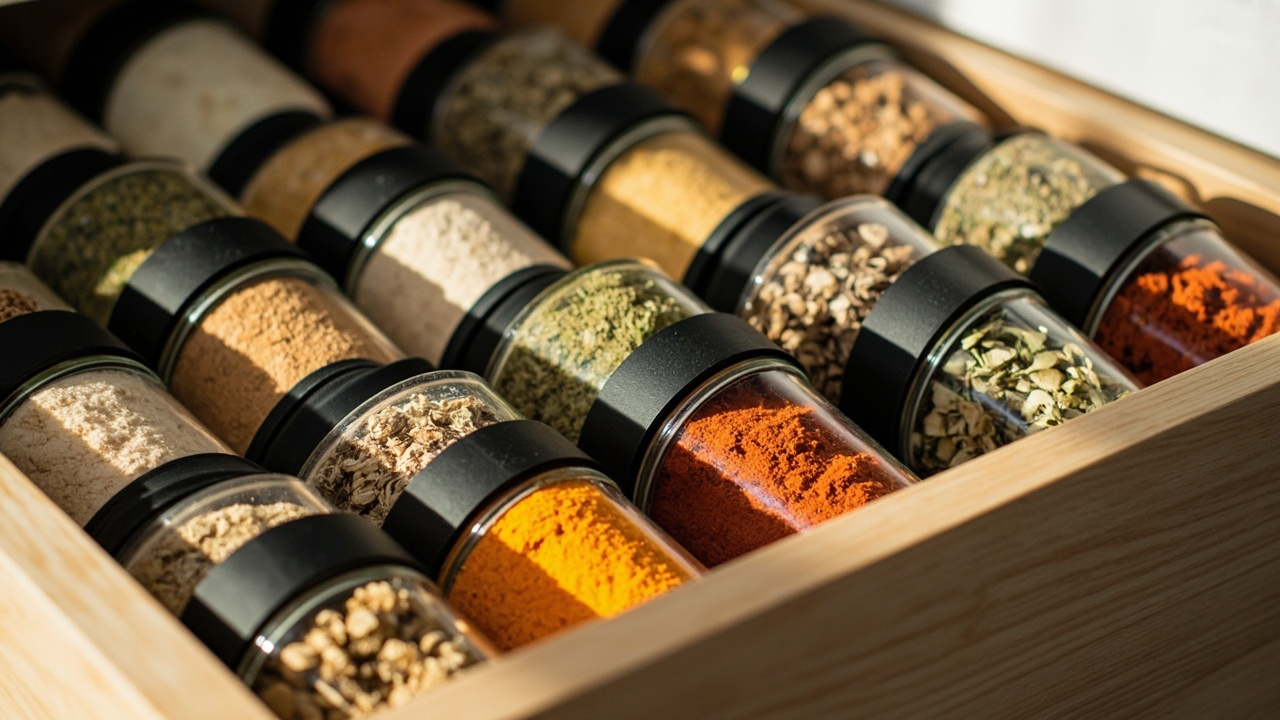
A drawer insert lays all your spice jars on their sides, label-up, in a single layer. The whole drawer becomes a spice library. Most drawer inserts cost $20–35 and fit standard 18-inch kitchen drawers. For small kitchens without counter space, a drawer insert pairs well with the solutions in our small kitchen organization guide.
Best for: kitchens with deep top drawers near the cooking zone. Skip if: you don’t have a drawer near the stove (carrying spices across the kitchen defeats the purpose). For under-shelf or wall-mounted spice storage, see our kitchen pantry guide for broader kitchen zone strategies.
Rack vs drawer: which spice layout to skip
Systems 1–3 already name the three layouts. This section doesn’t pick a winner. It answers one job: which layout to skip, and when a rack plus a drawer is wasted spend.
Pairing: when a rack plus a drawer is redundant
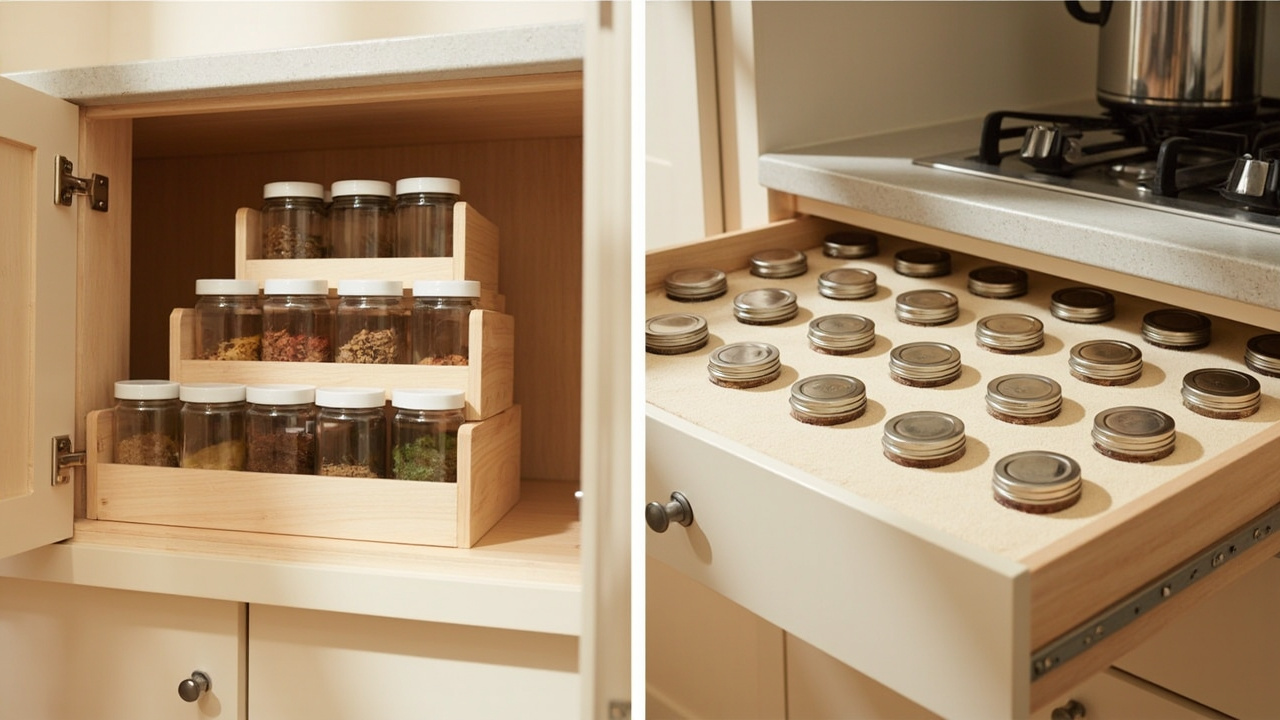
You don’t need both a cabinet rack and a drawer insert for the same daily set. Pairing is redundant when:
- The same 8–12 daily jars would live in both places. That’s a second graveyard, not a system.
- The drawer is already next to the stove and the upper cabinet is shallower than 10 inches. The INVOCOO expandable tiered spice rack won’t seat in that cabinet; buying it “just in case” crowds a shelf you can’t use.
- You’ve already decanted into one uniform row. A second layout hides the row you just labeled.
Pairing is worth it only when the two layouts hold different tiers: drawer for daily (label-up, one motion), cabinet rack for weekly back-stock. If both hold daily jars, skip one.
Skip: which layout to drop
Skip the tiered cabinet rack when the cabinet is under 10 inches deep, or when you cook from a deep top drawer by the stove. Walk-across-the-kitchen spice trips are the failure mode System 3 already named.
Skip the drawer insert when there’s no drawer in the cooking zone. A pretty liner in a far island drawer is still a carry. Use the YouCopia SpiceLiner drawer liner only if that drawer opens next to the pan.
Skip a second rack (stackable plus tiered in the same cabinet) when one shelf already shows every daily jar. The HI NINGER expandable stackable spice rack is the cabinet-clearance tool, not a second daily home.
Don’t skip the lazy susan just because this H2 is named rack vs drawer. System 2 still owns deep and corner cabinets. If the only open volume is a corner base, skip both the shallow rack and the far drawer; keep the rotating layout.
Sister layouts: cabinet zones and small kitchens
Cabinet-wide zoning (doors vs drawers vs shelves for dishes, wraps, and bulk — not spice jars) lives on the kitchen cabinet organization guide. That page’s door-vs-drawer H2 is a different object. Don’t copy it here.
If the real constraint is missing counter and missing pantry, skip the counter rack first. Use the small kitchen organization guide for the rest of the room; keep this page for the spice layout skip only.
The 3-Tier Sorting System
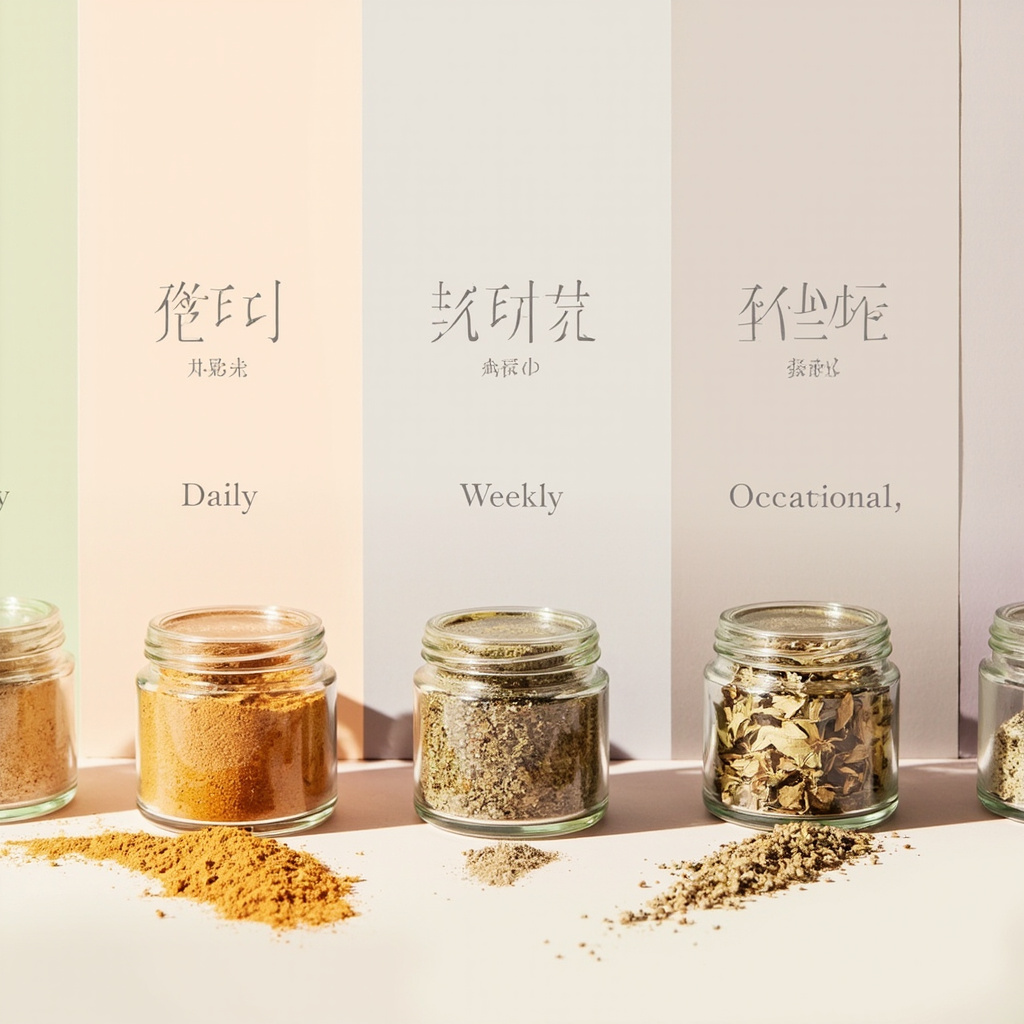
Before choosing storage, sort your spices into three tiers:
Tier 1: Daily (5–10 spices)
Salt, pepper, garlic powder, onion powder, cinnamon, paprika, oregano, whatever you reach for daily. These go in prime real estate — counter rack, drawer near the stove, or eye-level cabinet.
Tier 2: Weekly (10–20 spices)
Cumin, chili powder, thyme, rosemary, basil, parsley, curry powder, ginger, etc. These go on the tiered rack or lazy susan — visible but not blocking daily-use jars.
Tier 3: Occasional (everything else)
Saffron, cardamom, star anise, specialty blends. These go in a back-stock bin with rotation labels. The YouCopia StoraLid system helps if you’ve decanted into uniform jars and need a way to store the original lids. For larger pantry storage strategies, our pantry checklist covers how to zone a full pantry beyond just spices.
For container selection, see our storage bin buying guide and the clear vs opaque comparison.
Rotation and Expiry Tracking
Spices lose potency over time. Ground spices go stale in 2–3 years; whole spices last 3–4 years; dried herbs 1–2 years. Track purchase dates with chalkboard labels on each jar.
How to Label Jars
Use the date format YYYY-MM so you sort by month at a glance. Place the label on the lid, not the side — lids stay clean during cooking, sides get spattered. For uniform jars, a single chalkboard label set covers 60 to 100 jars.
A 6-month rotation habit:
- January: check expiration on daily-use spices.
- July: check weekly-use spices.
- Replace anything past its window.
For broader rotation habits, see our declutter fast system. For an aesthetic decluttering method that prioritizes visual calm, see our KonMari method guide.
Common Mistakes to Avoid
- Storing spices above the stove — heat, steam, and light all degrade spices. Keep them 24+ inches from any heat source.
- Buying matching jars without decanting — the jars are useless if your spices stay in their original packaging inside the matching jars.
- Skipping the daily/weekly/occasional sort — without tiering, you’ll hide rarely-used spices in front of daily ones, then never find the daily ones.
- No purchase-date labels — spices without dates go stale silently. Use the chalkboard labels or buy pre-numbered jars.
- Ignoring the back-stock bin — a “junk drawer” of spices is the same problem as a junk drawer of pens. Sort it annually.
Constraint Guide
- if you cook 5+ nights a week → invest in a counter-top tiered rack like the INVOCOO Expandable Adjustable Spice Rack; visibility matters more than aesthetics.
- if you have a small kitchen → drawer insert system beats a rack; drawers stay out of sight and don’t crowd counters.
- if you have a deep corner cabinet → lazy susan is the only system that solves the back-row problem.
- if you bake frequently → keep baking spices (cinnamon, nutmeg, vanilla) on a separate small tray near the oven.
- if you buy in bulk → decant into uniform jars and store originals in a labeled archive bin.
- if you live in a humid climate → avoid open racks; humidity clumps ground spices. Sealed jars are mandatory.
Conclusion
A well-organized spice collection saves 30 to 60 seconds per meal — small per meal, large per year. The three-tier sort (daily/weekly/occasional) paired with the right storage system (rack/lazy susan/drawer) eliminates the most common spice frustration: hunting for a jar that’s behind three taller bottles.
For the full kitchen system, see our kitchen pantry guide and kitchen organization hub. For broader organization methods, our KonMari guide and declutter fast system help with the underlying decision-making.
Building a Cohesive Spice Set
Once you’ve picked a rack, jar style, and rotation method, the next investment is uniform jars. The ComSaf 24-piece spice jar set includes glass jars with bamboo lids, 93 labels, and a metal funnel — everything to decant a full pantry rack. For drawer setups, the YouCopia SpiceLiner keeps jars from rolling when you open the drawer. For cabinets with limited shelf clearance, an expandable HI NINGER rack adjusts from 12 to 24 inches.