
A garage declutter checklist is a step-by-step purge system that helps you sort every item into Keep, Donate, Sell, Trash, or Recycle piles, then organize what remains into functional zones. This 7-step guide covers preparation, category-by-category purge criteria, what NOT to store, and a weekly maintenance reset. If you’re looking for zone setup after decluttering, see the garage zone organization guide for the post-purge phase.
Why Garages Get Cluttered
The 4 Causes of Garage Clutter
Garages become the catch-all room for a reason. Seasonal items, inherited tools, and “just-in-case” projects accumulate without a system. Items without a home become garage squatters. Tools sit next to holiday decorations next to old paint cans because no zone system separates them. And the open floor plan makes the floor a default dumping ground.
The fix isn’t more bins - it’s a purge first, then a zone system. The garage organization hub frames the room and explains how each zone works together. This checklist handles the declutter phase: sorting, purging, and deciding what stays. Once you know what stays, garage storage solutions handles the containment phase with wall rails, overhead racks, and shelving matched to your space.
What You’ll Need
Declutter Toolkit
Don’t buy storage containers before decluttering - that’s Common Mistake #4. These tools are for sorting and staging during the purge, not for organizing clutter you haven’t purged yet.
- DECOMOMO Fabric Storage Bins ($26.99) - donation staging bins with handles
- Hefty 30 Gallon Trash Bags ($15.49) - heavy-duty bags for the trash pile
- Vtopmart Clear Stackable Bins ($27.89) - clear bins for post-purge storage
- ONUPGO Chalkboard Labels ($9.99) - label every bin by zone after purge
The 7-Step Garage Declutter Checklist
Step 1: Set Goals and Schedule
Define what you want the garage to be - a workshop, parking space, storage only, or a mix. Pick a 4-hour time block per session, not a full day. Take before photos for motivation and progress tracking. You’ll need these photos when motivation dips halfway through.
Step 2: Clear and Prep the Space
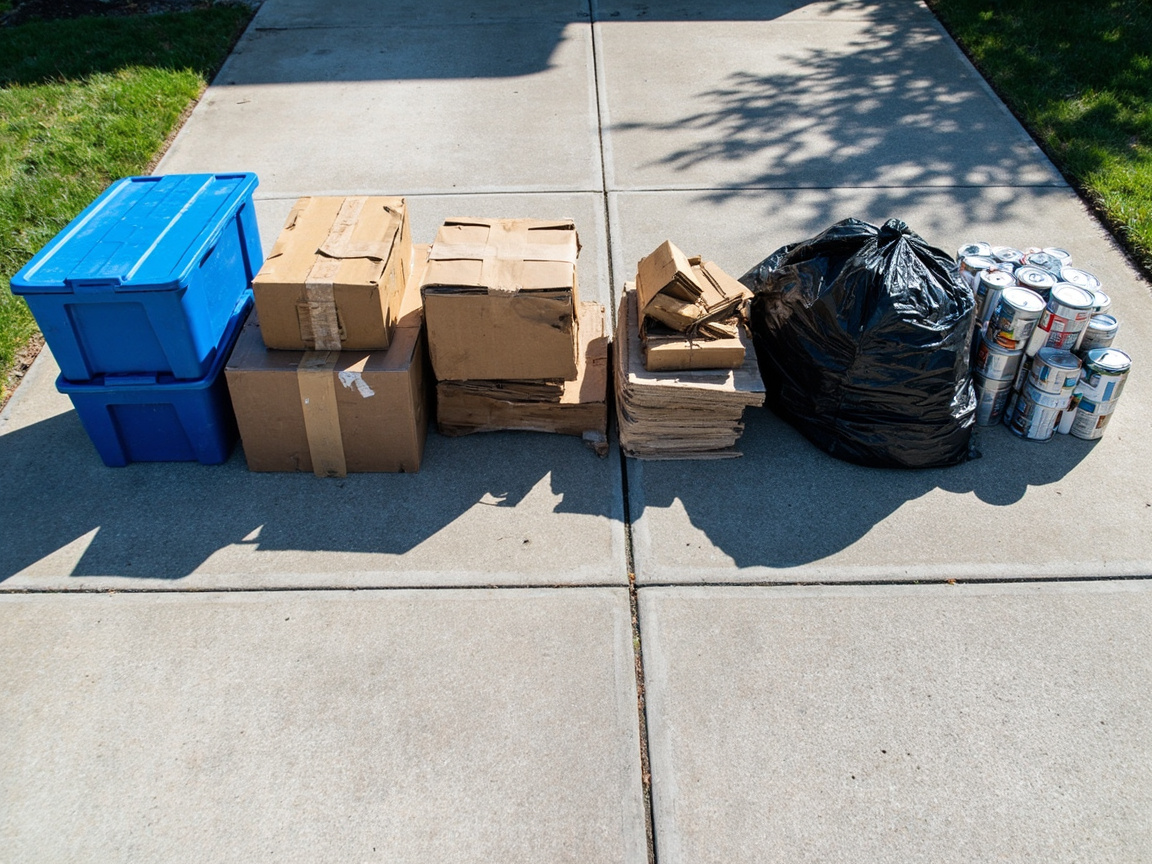
Pull everything out onto the driveway or lawn. If weather doesn’t permit, work zone-by-zone: left wall, back wall, right wall. Sweep the empty floor area so you can see what you’re working with. A clean floor also reveals oil stains, cracks, or pest evidence you’d miss otherwise.
Step 3: Sort Into 5 Piles
Sort every item into five piles: Keep (items you use regularly), Donate (good condition, not used in 12+ months), Sell (items worth $50+ that justify listing effort), Trash (broken, expired, or unusable), and Recycle (cardboard, metal, electronics - check local e-waste rules). The 5-pile system prevents the “maybe pile” that derails most garage declutter projects.
Step 4: Purge by Category
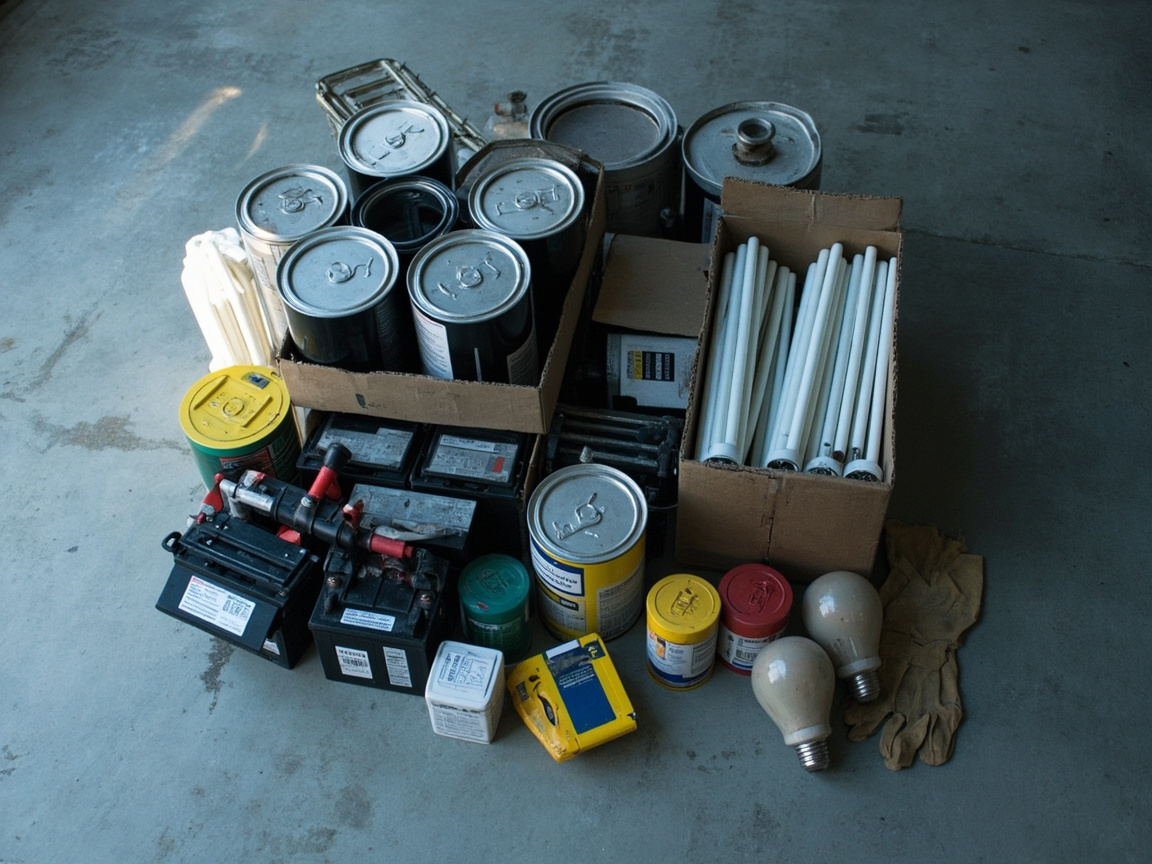
Work through each category with purge criteria. Tools and hardware: keep only what fits your current projects. Sports gear: donate outgrown kids’ equipment. Seasonal decor: keep only current-year items. Paint and chemicals: check expiration and dispose of hazardous waste properly. Gardening: purge dead plants, broken pots, and expired seeds. If you haven’t used a tool in 12 months, it’s a donation candidate.
Step 5: Clean the Empty Space
Sweep or vacuum the floor. Wipe down shelves. Check for pest evidence - droppings, nests, or chew marks. Address any moisture or leak issues before organizing. A wet garage ruins bins and rusts tools, so fix drainage first.
Step 6: Contain What Remains
Install HUPBIPY heavy-duty wall hooks ($23.99) for long-handled tools. Set up the Amazon Basics rolling rack ($54.99) for bin shelving. Use clear bins so contents are visible. Add an INCLY pegboard kit ($21.16) for frequently-used hand tools.
Step 7: Label and Maintain
Label every bin, shelf, and zone with ONUPGO chalkboard labels ($9.99). Take after photos. Set up a weekly 15-minute reset routine so the garage doesn’t slide back into chaos. For zone setup details after this purge, see the garage zone organization guide.
Layout by Declutter Phase
Phase System Overview
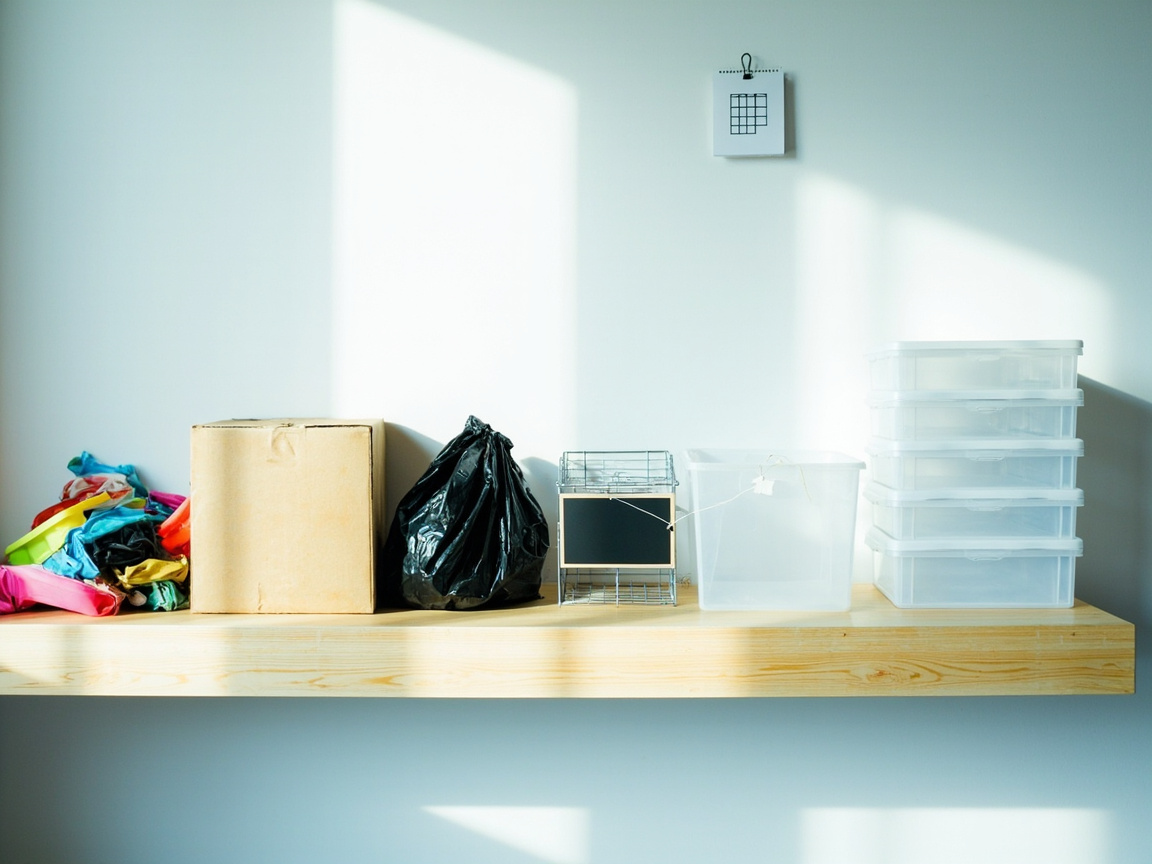
The 5-phase system moves from sorting to maintaining. Each phase has its own products and budget anchor, so you can stop after any phase and pick up later.
Phase 1: Sort - Tools and Hardware
Separate hand tools, power tools, fasteners, and adhesives into distinct groups. Use Vtopmart clear bins ($27.89) for fastener sorting. Budget anchor: $28 for a 6-pack.
Phase 2: Purge - Keep, Donate, Sell, Trash
Apply the 12-month rule: if you haven’t used it in 12 months, let it go. Stage donations in DECOMOMO fabric bins ($26.99) and trash in Hefty bags ($15.49). If you’re selling items worth $50 or more, set them aside in a dedicated sell pile - don’t let them sit in the garage indefinitely.
Phase 3: Contain - Bins, Shelves, Hooks
Vertical storage first: walls before floor. Install the Amazon Basics rolling rack ($54.99) and HUPBIPY garage hooks ($23.99). Budget anchor: $24 for hooks, $55 for rolling shelving.
Phase 4: Label - Zones, Bins, Shelves
Every bin labeled with category and contents. Use ONUPGO chalkboard labels ($9.99). Budget anchor: $10 for 180 labels.
Phase 5: Maintain - Weekly Reset
A 15-minute weekly sweep returns items to their zones. For long-term storage systems, see garage storage solutions for wall rails, overhead racks, and shelving recommendations. No additional products needed for this phase - the goal is habit, not hardware. But if bins slide off shelves during sweeps, add HORUSDY budget hooks ($8.49) to secure loose items to walls.
Constraint Guide by Scenario
Scenario Decision Matrix
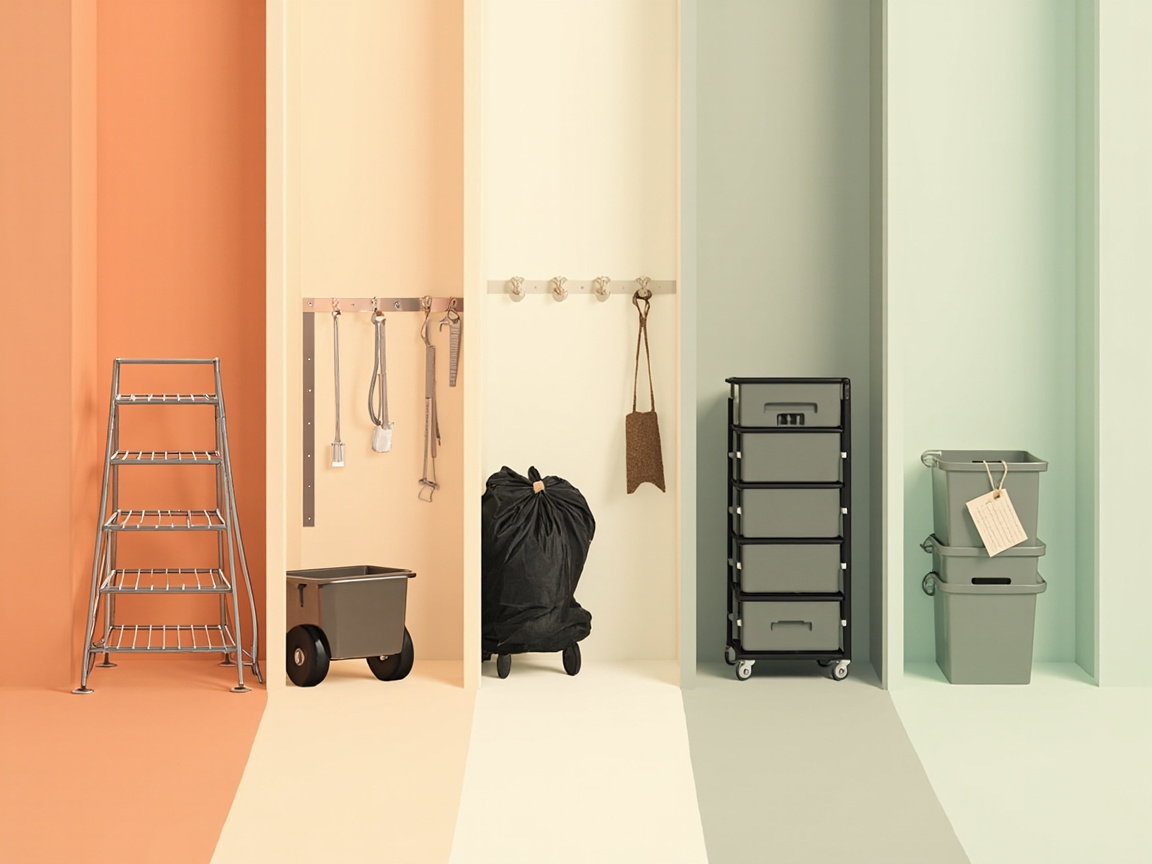
Each scenario below covers a different constraint. Pick the one that matches your situation and follow its product pair.
If You Are Renting (No Drilling)
If you can’t drill into walls, use freestanding shelving instead of wall-mounted systems. The Amazon Basics rolling rack ($54.99) rolls into place without anchors. Add HORUSDY budget hooks ($8.49) with Command Strips as a non-drill alternative. Total: $64 for rental-friendly vertical storage.
If You Are on a Budget (Under $100)
Prioritize purge over purchase. Declutter first, buy only what you need. The baseline kit: Hefty trash bags ($15.49) + HORUSDY budget hooks ($8.49) + ONUPGO labels ($9.99) = $34. Add Vtopmart clear bins ($27.89) to reach $62. For more budget strategies, see how to declutter on a budget.
If You Are Doing It Alone
Use rolling containers so you can move items without lifting heavy loads. Break work into 2-hour sessions across a weekend. The Amazon Basics rolling rack ($54.99) and Vtopmart clear bins ($27.89) let you stage, sort, and shelve solo. Total: $83 for mobile and visible storage.
If You Have Seasonal Items
Rotate seasonal bins to accessible shelves. Move off-season items up high. Use Vtopmart clear bins ($27.89) for visible storage and DECOMOMO fabric bins ($26.99) for seasonal donation. For year-round rotation strategy, see the seasonal rotation guide.
If You Have Hoarding Tendencies
Use the one-box-in, one-box-out rule. Set a maybe box with a 30-day expiry date. Stage donations in DECOMOMO fabric bins ($26.99) and trash in Hefty bags ($15.49). Label the maybe box with ONUPGO labels ($9.99) and a date. For method-based support, see how to declutter fast.
What NOT to Store in a Garage
Items That Do Not Survive Garage Conditions
Some items can’t handle garage temperature swings and humidity. Electronics suffer condensation damage. Important documents absorb moisture and attract pests. Photographs suffer irreversible damage. Fresh food attracts pests and spoils in temperature extremes. Propane tanks should never be stored indoors - most fire codes prohibit it. Latex paint freezes below 32 degrees and becomes unusable.
For safe storage zone setup, see the garage zone organization guide for the 5-zone layout system. For small-space alternatives, small garage organization tips cover what fits where in a 1-car garage. For choosing the right bins for garage-safe storage, see how to choose storage bins for clear vs opaque, stackable vs drawer, and size matching by zone.
Common Mistakes
5 Mistakes That Derail Garage Declutter Projects
- Organizing before decluttering. You can’t organize clutter. Sort and purge first, then set up storage for what remains.
- Tackling the entire garage in one day. A full-day marathon leads to burnout and half-finished zones. Break it into 3-4 hour sessions.
- Keeping just-in-case items. Apply the 20/20 rule: if a replacement costs under $20 and can be found within 20 minutes, let it go.
- Buying storage containers before purging. You don’t know what you need to store until you know what you’re keeping. Declutter first, buy bins second.
- Getting distracted with side projects. Found a bike you forgot about? Ride it later. Fix it later. Stay on the purge task.
Maintenance: The Weekly Reset
The 15-Minute Weekly Garage Sweep
Return misplaced items to their zones. Empty trash and recycling bins. Quick sweep of the high-traffic floor area. Check for new pest evidence. Take one item to donate each week - this prevents clutter from creeping back in.
For KonMari method category-first maintenance philosophy, start each monthly reset by category rather than by zone. For bedroom declutter checklist sister format, the same weekly reset pattern applies across rooms.