Quick Answer
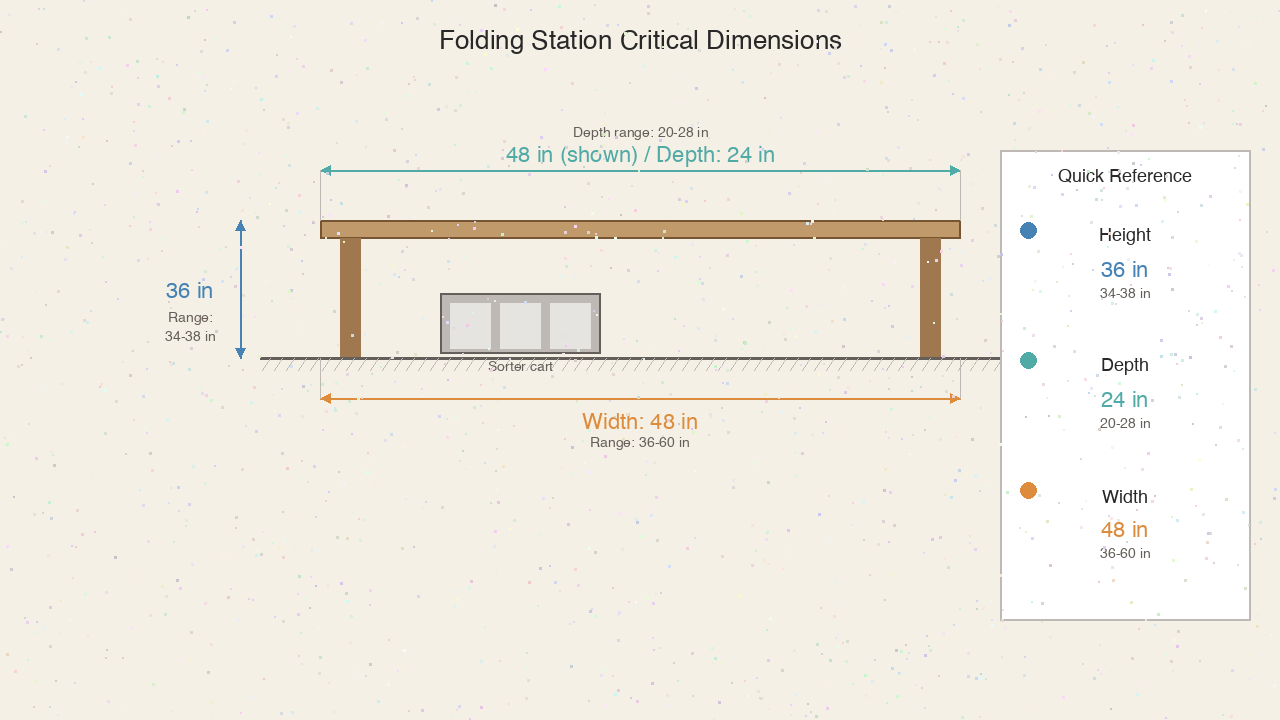
A laundry folding station is a dedicated flat surface paired with sorting and hanging storage that turns a 30-minute fold into a 10-minute workflow. The right setup needs three things: a 36-inch-high folding surface, at least 24 inches of depth so clothes don’t fall off, and a sorter or basket underneath so the surface never becomes a clutter catch-all. Most homes fail at one of these three dimensions.
Why Most Laundry Flat Surfaces Become Clutter Magnets
The problem isn’t laziness — it’s physics. My own laundry surface spent two years as a supply shelf before I built a system around it. A flat surface in a laundry room has three enemies: gravity (clean clothes land there and stay), geometry (most laundry rooms weren’t designed with a folding counter in mind), and habit (without a daily reset, the surface becomes a permanent staging zone for everything except folding).
The System Approach
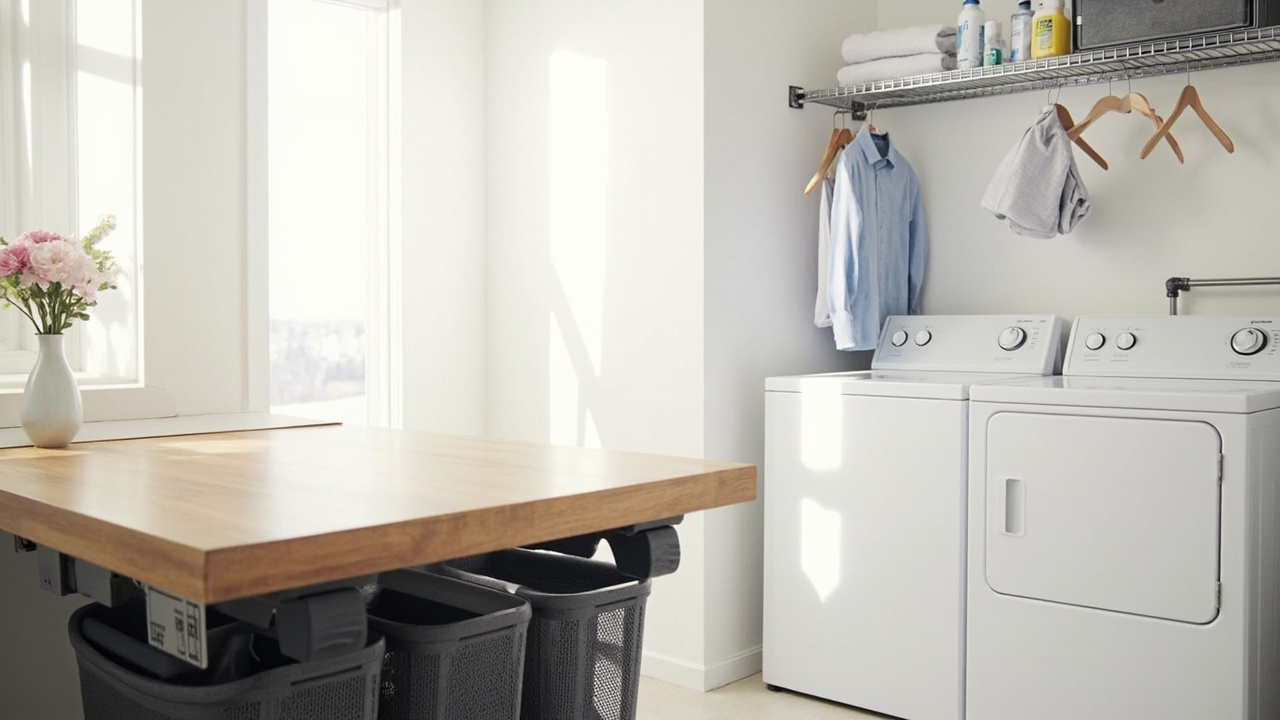
A real folding station solves this by treating the surface as part of a system, not a standalone piece of furniture. The surface is for folding; sorting happens underneath in the Simple Houseware sorter cart; hangers go on the OROPY industrial pipe rack; ironing happens on the Xabitat wall-mount board; detergent and supplies go above the machines on a simple over-washer shelf so they don’t land on the folding surface. When each item has a home, the flat surface stays clear.
The Workflow Loop
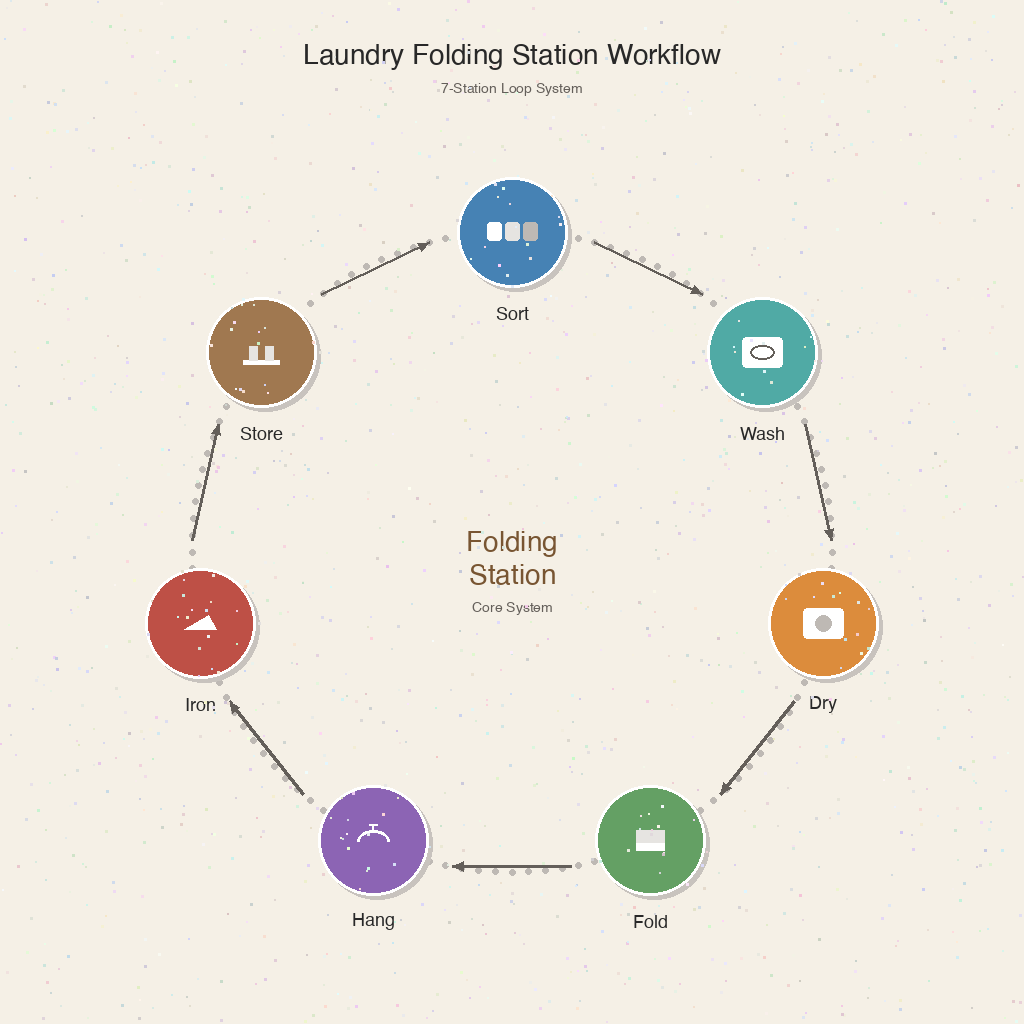
The folding station connects to every other laundry zone. Sorting feeds the washer, the dryer feeds the folding surface, the surface feeds the hanging rod and the utility cart, and the cart delivers to bedrooms. For the full room layout, see Laundry Room Organization or the laundry hub.
Most failed laundry rooms skip this step: they add a table, then pile supplies on it, then pile clean clothes on it, then it becomes invisible. we’ve seen this pattern across every home that builds a station without a system plan. The setup below fixes that.
What You’ll Need
Three tiers of products cover every budget — from a bare-bones $92 setup to a full iron-and-fold combo.
Surface Tier — LIFETIME 4ft Folding Table ($52.97)
The LIFETIME 4-foot folding table sits at the right 36-inch height, folds in half for storage, and sets up in 30 seconds. Adjustable legs let you fine-tune the height for any user. Best for rooms with 36+ inches of width along a wall.
For an all-in-one alternative, the Whitmor 3-section rolling combo ($62.98) handles sort, fold, and iron in one rolling unit.
Underneath Tier — Simple Houseware 3-Bag Sorter Cart ($38.87)
The Simple Houseware sorter cart parks under any folding surface and catches clothes straight from the dryer into pre-sorted bags. Three bags minimum: lights, darks, delicates. This is the product that keeps the surface clear — see the Laundry Sorting Systems guide for deeper coverage.
Above-and-Around Tier — Hanging, Ironing, Storage
- Xabitat wall-mount ironing board ($113.99) — folds flat against the wall when not in use
- OROPY industrial pipe rack ($18.99) — 38-inch wall rack for hang-dry shirts and delicates
- Simple Houseware 3-tier utility cart ($37.97) — rolls folded baskets to bedrooms
For supplies organization details, see Laundry Supplies Organization.
The 5-Step Folding Station Setup Method
Step 1: Measure Your Usable Space (Height, Depth, Width)
Before buying anything, measure three dimensions. The folding surface should sit at 36 inches — standard countertop height. Below 34 inches causes back strain; above 38 inches feels like working at a bar. Depth needs a minimum of 20 inches; ideal is 24 inches or more. Width: a single load needs 36-48 inches; a family of four needs 48-60 inches.
Also measure door swing (you need 30 inches of clearance for a standard laundry-room door), vent clearance (dryer needs 4 inches behind for safe airflow), and where the laundry basket sits when you’re loading the washer. A basket on the floor in front of the dryer blocks access to the folding surface — plan the traffic flow before placing furniture.
Step 2: Choose Your Station Type
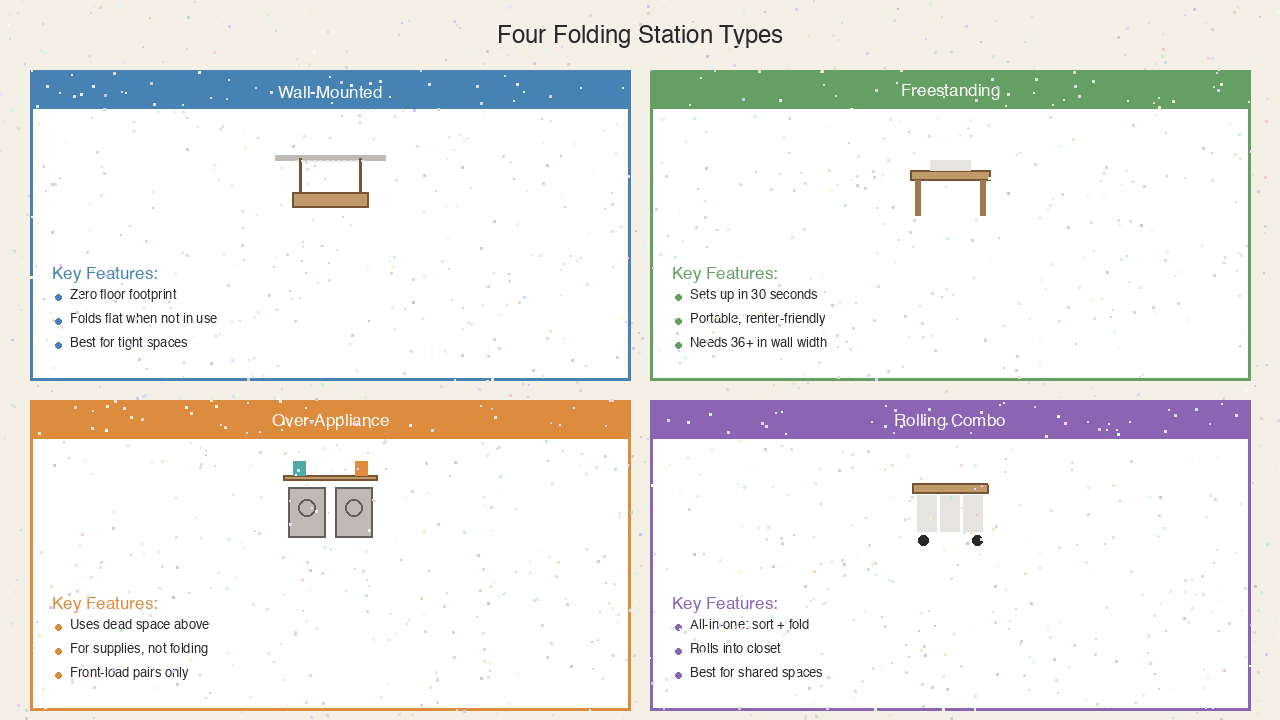
Four configurations cover every laundry space. Wall-mounted works for tight rooms — the Whitmor combo or Xabitat board fold down from the wall with zero floor footprint. Freestanding suits rooms with 36+ inches of width — the LIFETIME table sets up in 30 seconds and works for renters. Over-appliance fits front-load pairs with 54+ inches combined width — park detergent on a simple over-washer shelf for supplies, not for folding (don’t fold on a vibrating machine). Rolling combo works for shared spaces — the Whitmor rolls out for folding day and into a closet between loads.
Step 3: Set the Correct Ergonomic Height (36 Inches Standard)
The 36-inch rule is non-negotiable for daily use. I learned this the hard way: a surface that’s 2 inches too low turns a 10-minute fold into a back-aching chore. Too low (under 34 inches) and you bend forward with every fold, loading the lower back. Too high (over 38 inches) and your elbows rise to chest level, fatiguing shoulders. At 36 inches your forearms rest on the surface naturally, wrists stay flat, and you can lean in without straining. After 20 minutes of folding at the right height, your back and shoulders feel fine — not tight or fatigued. If your surface is too low, add furniture risers ($15-25 per set of 4) under the legs. If too high, you need a different surface entirely.
Step 4: Add Sorting Baskets Underneath
The surface is for folding. Sorting happens below. Park the Simple Houseware sorter cart underneath so that when clothes come out of the dryer, they go straight into a sorted bag — not onto the folding surface. This is the step that keeps the surface clear long-term — without it, every other piece of the system fails. In my experience, the sorter cart is the difference between a station that lasts and one that dies in a month. Three bags minimum: lights, darks, delicates. If you have kids, add a fourth for hand-me-downs or a donate pile. Color-coded bags (white for lights, black for darks, mesh for delicates) speed up the sort and make the habit stick.
Step 5: Establish a Daily Clear-Surface Habit
The folding station only works if it stays a folding station. Build a 5-minute daily reset: fold or hang everything currently on the surface, put folded items in the Simple Houseware utility cart, hang hang-dry items on the OROPY rack, wipe the surface with a damp cloth, and stage tomorrow’s load in the sorter cart. Skip this for three days and the surface becomes invisible — clothes pile on top of clothes, and the station is dead. Build the reset into the same window as unloading the dryer: fold while the load is warm, sort while the categories are fresh, and wipe while the surface is empty.
Layout by Laundry Room Size
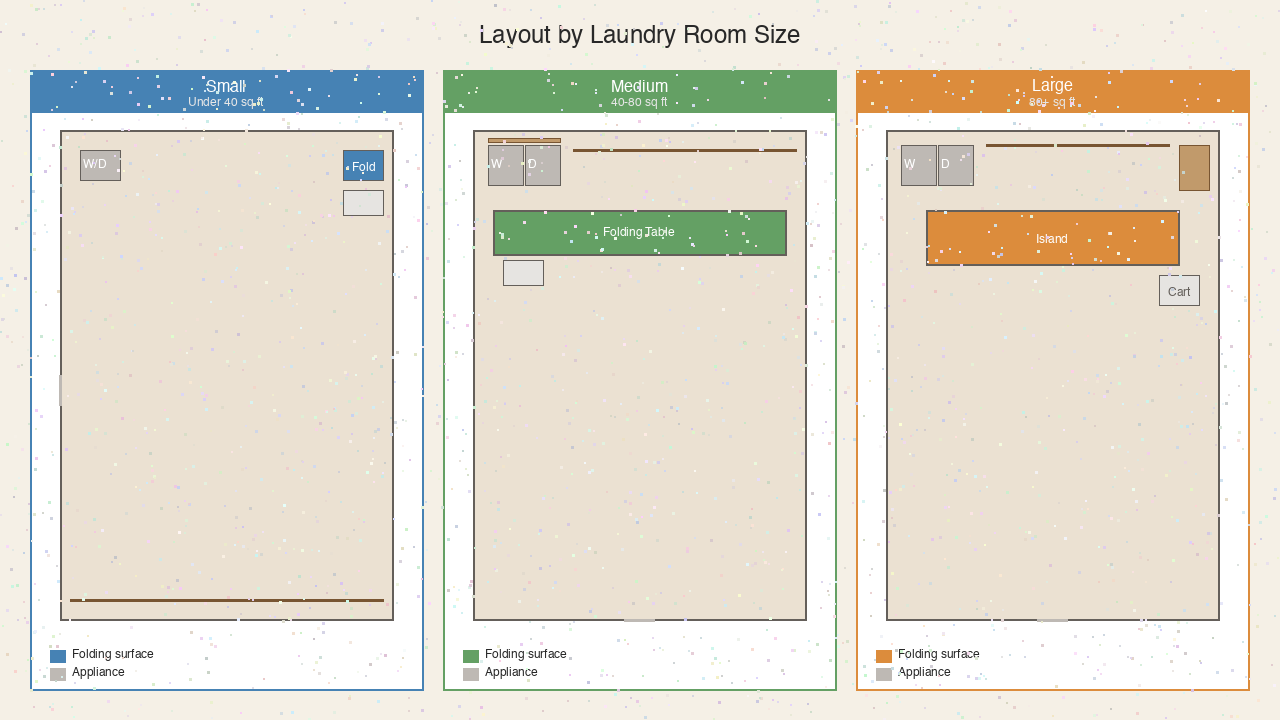
Small (Under 40 Sq Ft): Wall-Mounted Plus Over-Appliance
In a closet, hallway, or tight utility room, you don’t have floor space for a freestanding table. Use the Xabitat wall-mount board as a fold-down surface, a simple over-washer shelf above front-load machines, the sorter cart between machines if width allows, and the OROPY rack on the wall opposite the machines. For more small-space ideas, see Small Laundry Room Organization.
Medium (40-80 Sq Ft): Freestanding Counter Plus Baskets
A standard 6x10-foot laundry room fits the LIFETIME table along one wall, the sorter cart underneath, a simple over-washer shelf above the machines, and the OROPY rack on the wall behind the table. This is the sweet-spot setup. Add the Whitmor combo if you iron regularly.
Large (80+ Sq Ft): L-Shaped or Island Station
A laundry room with room for an island or L-shaped counter supports the Whitmor rolling combo as a mobile island, the LIFETIME table against the wall for backup surface, and the 3-tier utility cart for transporting folded baskets to bedrooms. For room-level layout decisions, see Laundry Room Layout.
Constraint Guide by Scenario
If You Rent and Cannot Drill Walls
Renters can’t drill for wall-mount boards or pipe racks. Stick to the LIFETIME freestanding table ($52.97) and the Whitmor rolling combo ($62.98) — both need zero installation. Use over-door hooks for hanging instead of wall-mounted racks. The sorter cart sits on the floor and rolls anywhere.
If Your Budget Is Under $100
For $91.84 total: the LIFETIME folding table ($52.97) and the Simple Houseware 3-bag sorter ($38.87). This covers surface + sorting; park detergent on a simple over-washer shelf if you have a front-load pair.
If You Have No Laundry Room
No dedicated space? Set up a portable station. The LIFETIME table sets up and breaks down in 30 seconds, the sorter cart rolls between the bedroom and the machines, and the utility cart transports folded baskets back.
If You Iron Weekly
Add the Xabitat wall-mount board ($113.99) to complete the system. It folds flat against the wall when not in use and gives full shirt coverage without claiming floor space. Pair with the Whitmor combo for a sort-fold-iron rolling unit.
Setup Overview
Common Mistakes
- Buy a table before measuring. The most common error. A table that’s too short, too narrow, or too deep for the room becomes another surface to pile things on. Measure first — 36 inches high, 24+ inches deep, 36-60 inches wide. If you skip this step, you’ll end up with a surface that nobody uses because it hurts their back or eats the walkway.
- Put the sorter on top of the folding surface. If the sorter cart lives on the surface, there’s no room to fold. Sorter goes underneath — always. The surface is reserved for hands and clothes, nothing else.
- Fold on top of the machines. A vibrating dryer surface sends clothes to the floor. Use a dedicated surface alongside the machines, or an over-washer shelf for supplies only.
- Skip the daily reset. The surface is clear on day one. By day three without a reset, it’s invisible under a pile of clean clothes. Five minutes daily keeps it working — this is the habit that separates a folding station from a shelf.
- Forget the dryer zone. The folding station is downstream of the dryer. A clogged vent or lint trap slows drying and piles clothes faster than you can fold. See the Laundry Dryer Zone guide for vent maintenance.
Related Guides
- Laundry Room Organization — the full room system this station fits within
- Laundry Sorting Systems — deeper dive on multi-bag sorting
- Small Laundry Room Organization — small-space layouts
- KonMari Folding Method — folding technique that maximizes what this station produces
- Declutter Maintenance Routine — the daily reset philosophy
Key Takeaways
- A folding station is a system (surface + sorter + hanging + storage), not just a table
- Surface height must be 36 inches; depth must be 24+ inches
- Sorter goes underneath, never on top of the folding surface
- Wall-mounted or rolling for small spaces; freestanding for medium rooms
- Budget setup under $100 covers surface + sorting
- A 5-minute daily reset keeps the surface clear long-term
- If you iron weekly, add a wall-mount board to complete the system and keep the folding surface free of ironing clutter