Five zones, one home each: counters, cabinets, drawers, pantry, fridge. Set it up once, then hold it with 15 minutes a week.
- Counters hold only the appliances you use every day. Everything else goes back in a cabinet.
- Cabinets split by heat: baking gear away from the stove, pans within reach of the burner.
- Drawers sort by how often you reach, not by what the tool is.
- Pantry reads like store aisles: one category per shelf, oldest stock in front.
- Fridge keeps ready-to-eat food at eye level. The door holds condiments, not milk.
Skip buying bins until those five homes exist. A container bought first just stores clutter in a tidier shape. If the kitchen is past tidy, declutter before you organize. Depth on one zone lives on the kitchen zone pages.
The 5 Kitchen Clutter Problems
Every messy kitchen fails in the same five places. Find yours below — each one maps to a zone in the system, which is how you’ll fix it later in this guide.
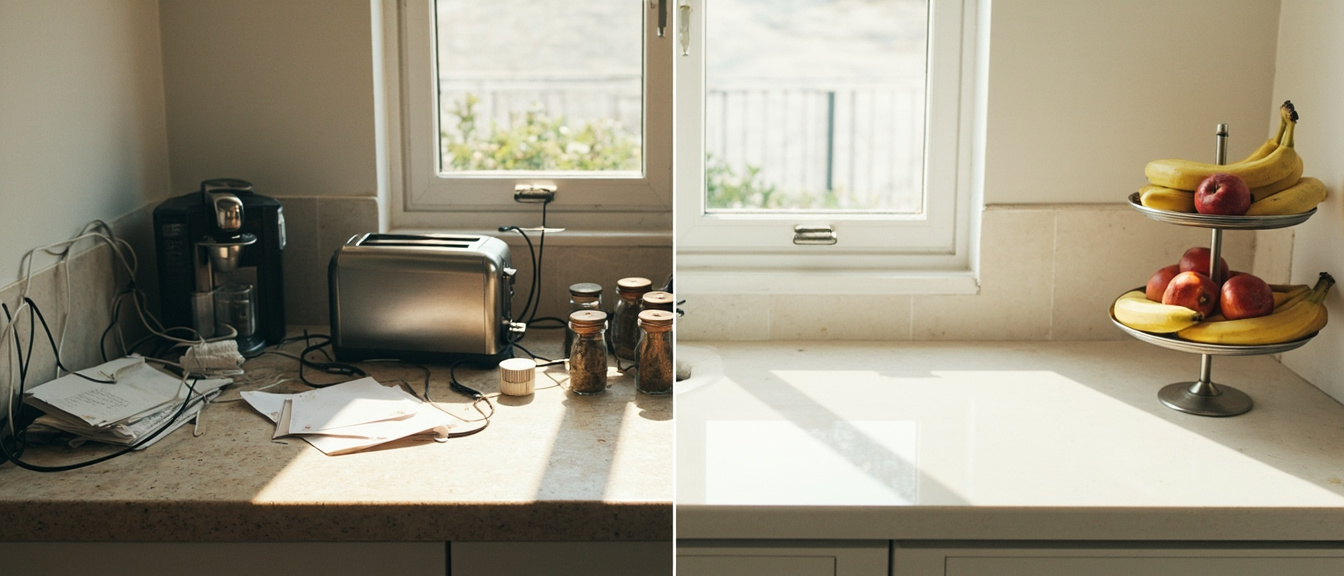
Crowded counters
Counters are work space, not storage. The toaster, the air fryer, the knife block, the mail — each claims a strip, and prep space shrinks to a cutting board’s worth. A crowded counter isn’t really a counter problem. It’s a storage problem leaking onto the work surface.
Overflowing cabinets
Mismatched containers avalanche when you open the door, and the top shelf holds wedding china nobody has touched since the wedding. Cabinets fail when their contents aren’t split by how you actually cook, so everything competes for the same eye-level shelf.
The junk drawer
Every kitchen has one drawer that swallows anything without a home: batteries, twist ties, takeout menus, three tape dispensers. A junk drawer isn’t a failure of discipline — it’s what happens when no item has an assigned address.
The packed pantry
Duplicates you forgot you had, cans that expired two moves ago, snacks somewhere behind the cereal. A packed pantry costs money twice: once when you rebuy what you already own, again when you throw out what quietly expired.
The stuffed fridge
Leftovers drift to the back and become experiments. Condiments crowd the door in no particular order, and the good produce dies under the bad produce. A stuffed fridge isn’t short on space so much as short on a rule for what gets eaten first.
All five problems hit small kitchens hardest, because every zone competes for the same few square feet. The small-kitchen versions of these problems get their own page.
Kitchen Organization Principles: 5 Rules Before You Buy Anything
The system rests on five rules. They cost nothing, and they decide whether the kitchen stays organized after the initial push.
Zone first, products last
Decide what happens where before buying a single bin. Zones are a cleaning staple for a reason — zone cleaning works the same way: one area, one pass, done. That’s also why bins come last, not first — a container bought before the zone exists just stores clutter in a tidier shape.
Declutter before you organize
Organizing clutter gives you tidy clutter. Cut the inventory first — duplicate utensils, dead appliances, expired food — and the declutter-first method takes an afternoon rather than a weekend. Every bin you don’t buy is money and shelf space you keep.
One home per item
Scissors live in one drawer, not three possible drawers. When everything has one address, putting things away stops being a decision — and decisions are exactly what clutter feeds on.
Go vertical when space runs out
When drawers and shelves fill, the walls and the inside of cabinet doors are the cheapest expansion available. Risers double a shelf. Door racks turn dead space into spice storage. Neither needs a drill.
Maintain weekly, not seasonally
A system you tune for 15 minutes a week outlasts the marathon reset you repeat every spring. The weekly rhythm at the end of this guide is the whole maintenance plan — plus a slightly longer pass once a quarter, and nothing else on the calendar.
The 5-Zone Kitchen System
Here’s the whole method. Five zones, five jobs, and a boundary rule for each: what belongs there, and what gets evicted.
The five zones at a glance
Counters hold work, not storage. Cabinets split by heat. Drawers sort by reach frequency. The pantry reads like store aisles. The fridge keeps ready-to-eat at eye level and raw ingredients below. The rest of this section makes each rule concrete.
Zone 1 — Counters: the workspace rule
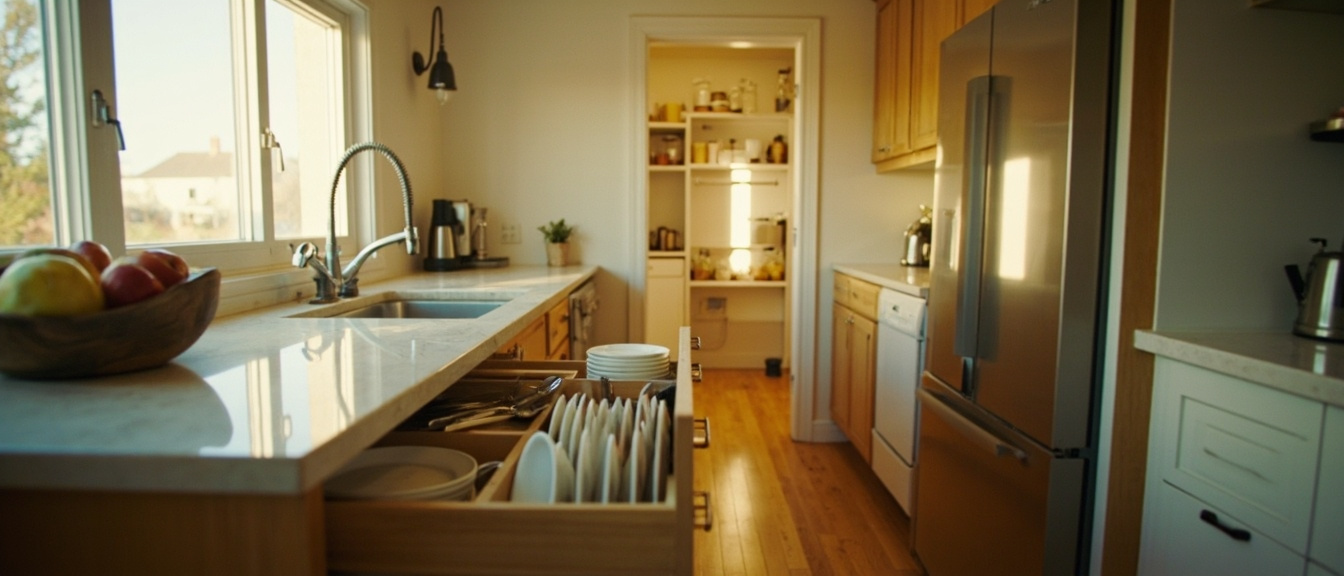
A counter earns its space by being worked on. Daily-use appliances can stay — the coffee maker you switch on half asleep, the toaster that makes breakfast possible. Everything else lives in a cabinet: the waffle maker, the blender, the stand mixer you use monthly. Two appliances out is the ceiling in a small kitchen. Mail and keys get a home outside this zone, or they’ll colonize it within the week.
Zone 2 — Cabinets: split by heat, not by shape
The instinct is to sort by object — plates here, bowls there. Sort by heat instead. Baking sheets, mixing bowls and dry-goods prep live on the side of the stove you bake from. Pots, pans, lids and cooking utensils live within one step of the burner. Everyday plates and glasses go at arm height near the dishwasher, so unloading is a reach rather than a walk across the room. Top shelves hold the once-a-year stuff — that’s their job.
Zone 3 — Drawers: frequency beats category
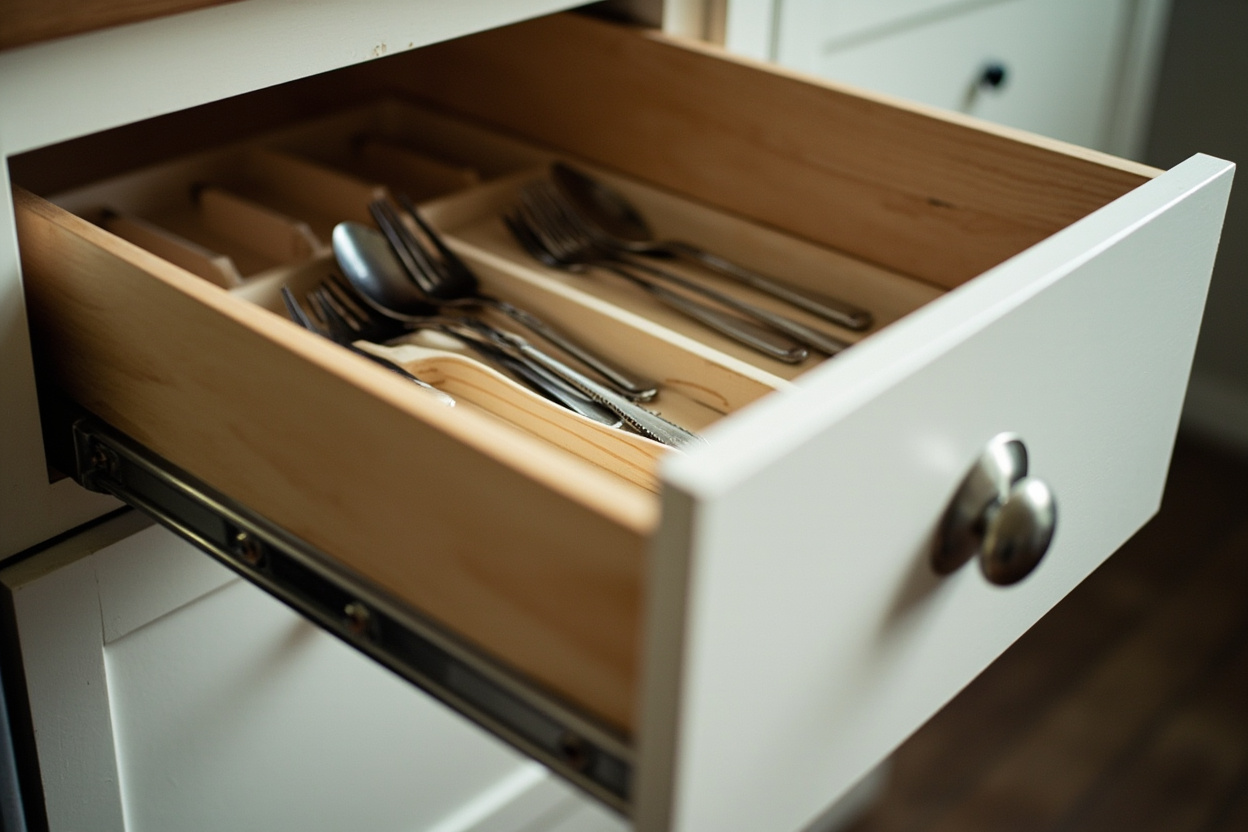
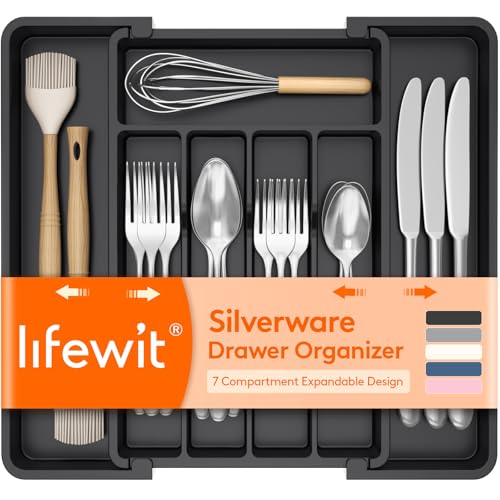
Drawers sort by how often you reach, not by what things are. The front top drawer holds the ten tools you touch daily: knife, spatula, peeler, spoon. Middle drawers take weekly gear — measuring cups, graters, thermometers. Deep bottom drawers hold the occasional equipment. An expandable tray forces the issue by giving every fork and gadget a fixed compartment, which is how the junk drawer stops being one.
Zone 4 — Pantry: shop your shelves like aisles
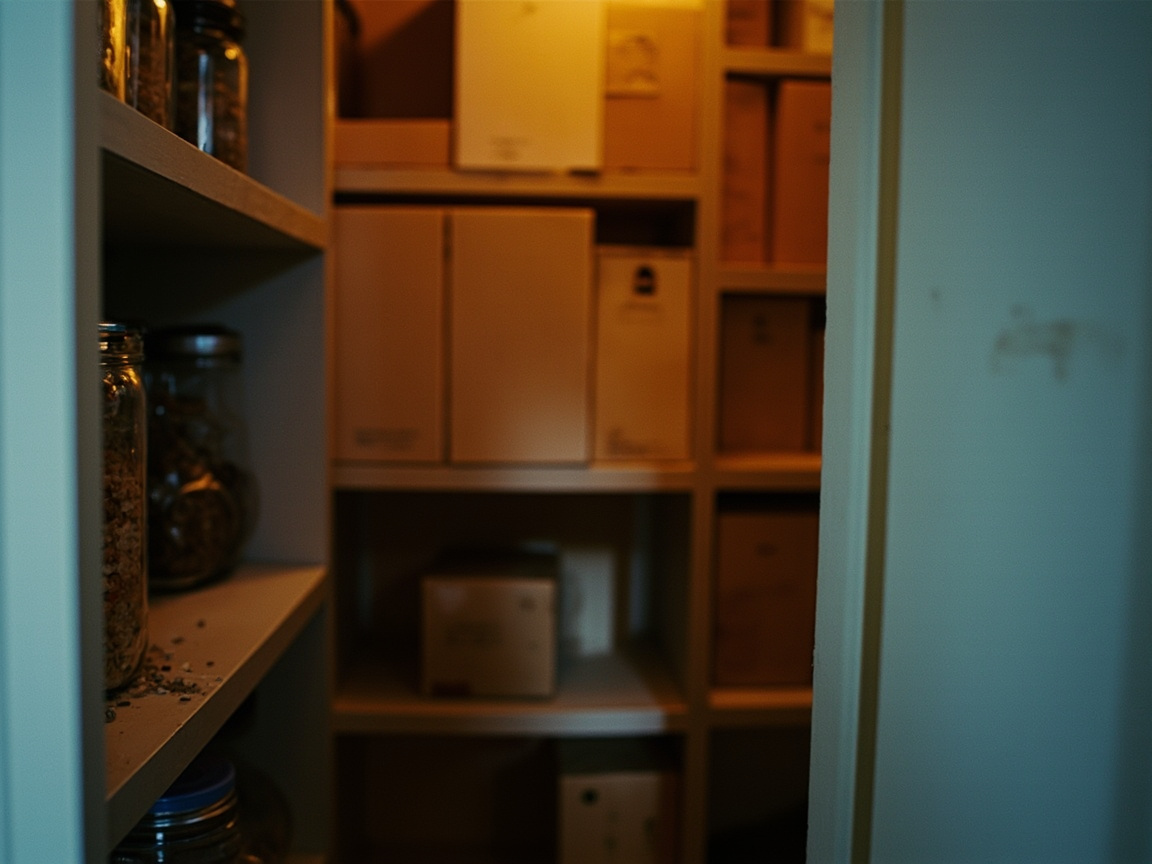
Organize the pantry the way a store organizes you: one shelf per category, labels facing out, newest stock behind the oldest. Breakfast on one shelf, baking on another, cans grouped by type, snacks at kid height if kids are in the picture. When each shelf reads like an aisle, you can see inventory at a glance and stop rebuying what you own. The pantry zone in depth expands this into a full shelf-by-shelf plan.
Zone 5 — Fridge: eat-me-first at eye level
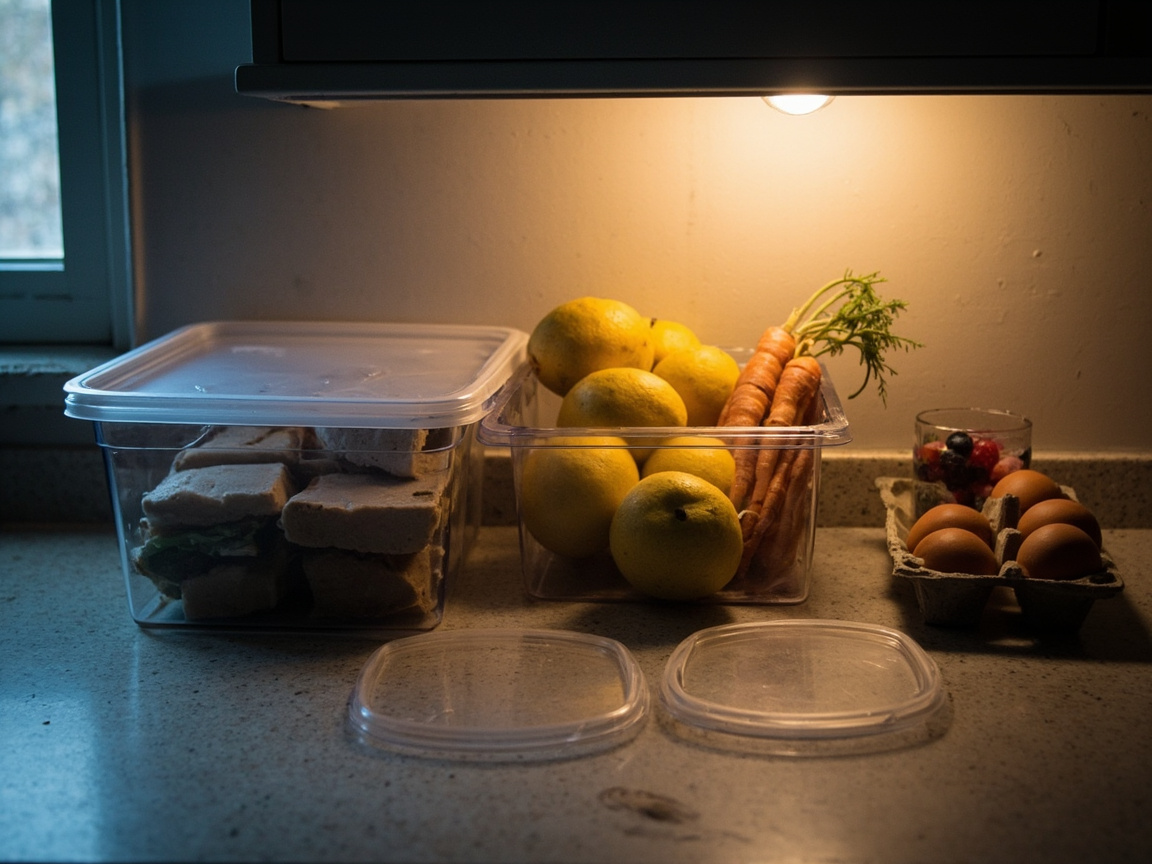
Eye level is prime real estate, so it goes to what needs eating first: leftovers in clear containers, produce at its peak, the open jar of sauce. Raw meat lives on the bottom shelf, where it can’t drip onto anything. The door is the warmest spot in the box, so it holds condiments — not milk, not eggs. A weekly one-minute triage of the eat-me-first shelf is the difference between a fridge that saves money and one that shreds it.
Zone-by-Zone Setup: Which Page Covers Which Zone
Each zone has a full walkthrough elsewhere on this site. Here’s the map — which page matches which zone, and what it adds beyond this hub.
Counters: keeping worktops clear
The countertop organization guide covers appliance triage in detail — what earns counter time, what gets a cabinet, and how to build a mail-and-keys landing that keeps paper off the work surface for good.
Cabinets: three pages for one run
Cabinets get the deepest coverage on the site. Kitchen cabinet organization by heat zone is the main walkthrough. Under-sink storage that stops the leak-panic dig handles the hardest cabinet in the room. And kitchen island storage for the rooms that gained an island covers the island cabinets most renovations added.
Drawers: spice and utensil storage
Spice storage sorted by how often you cook applies the reach-frequency rule from Zone 3 to jars, whether your spices live in a drawer, a cabinet, or a rack on the wall.
Pantry: four levels of depth
The pantry has a page per job. Pantry organization aisle by aisle is the baseline setup. A baking zone that keeps flour from migrating carves out the bakers’ shelf. A pantry inventory checklist ends the rebuying problem. And the deep pantry reset version is for pantries past the 15-minute fix.
Fridge: the cold zone
Refrigerator organization: zones inside the cold box maps the eat-me-first logic shelf by shelf, with the door, crisper and raw-storage rules spelled out.
Recommended Storage Products by Zone
One pick per zone — this isn’t a product tour. Each earns its spot by doing its zone’s specific job, and the buying guides linked along the way cover everything else.
Pantry: the airtight reset
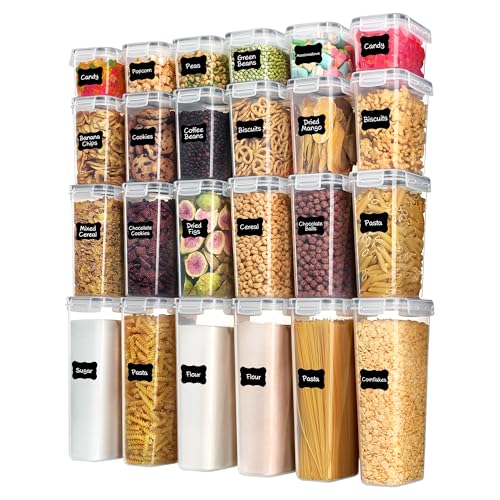
The fastest visible change in the whole kitchen. The Vtopmart Airtight Food Storage Containers with Lids, 24 pcs (Gray) ($39.99) covers a full pantry shelf in four stackable sizes — six each of 2.5, 1.8, 1.5 and 0.7 quarts — so flour, cereal, pasta and rice pour clean and line up like store stock. Decanting is the step that makes the Zone 4 aisle system visible at a glance.
Counters: a fruit station, not a fruit pile
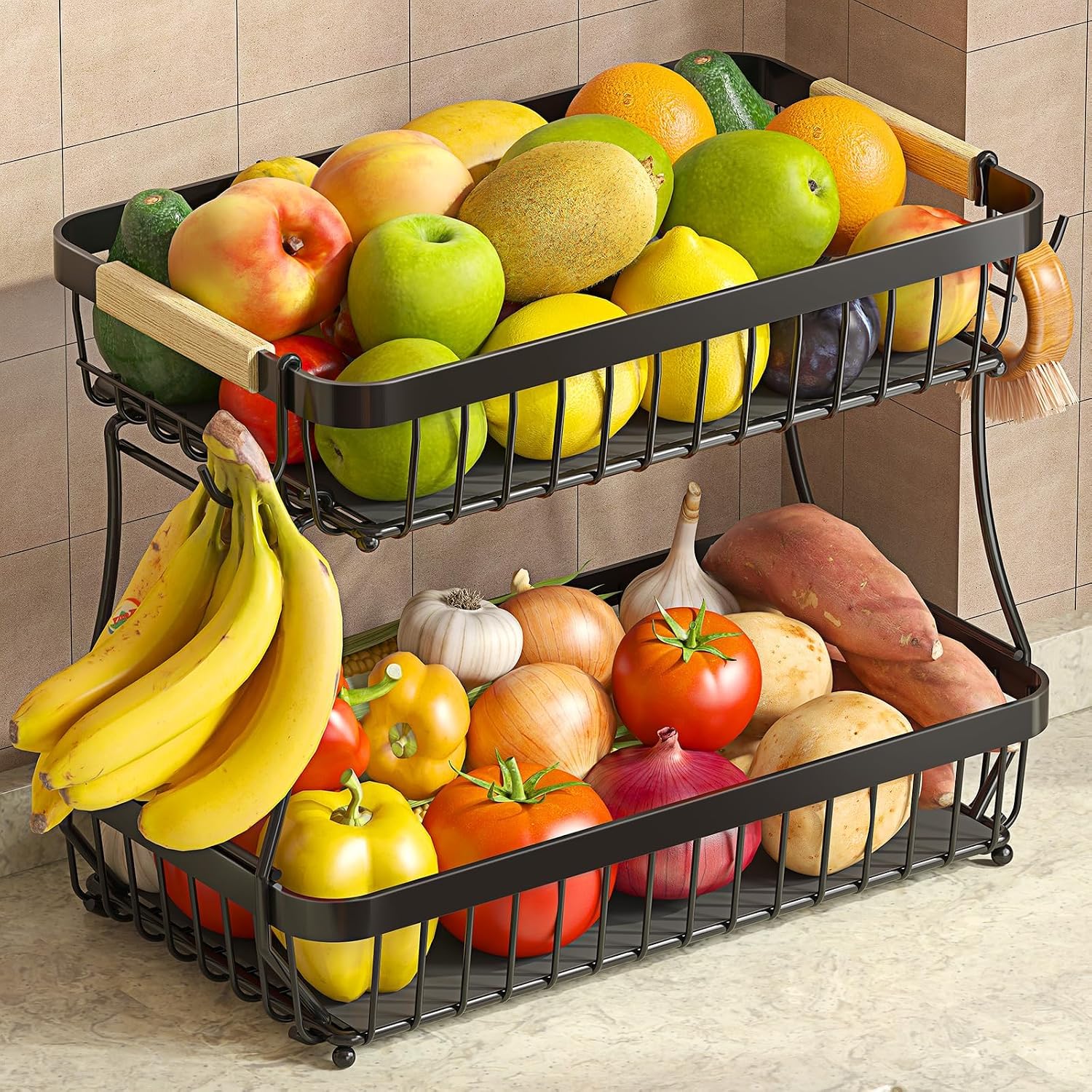
The Sevenblue 2-Tier Fruit Basket with Banana Hangers ($15.99) gives produce one address on the counter. Two tiers hold about a week of fruit for a family, and the hanging hooks keep bananas away from the apples — which slows the ripening of everything underneath them.
Cabinets: double the shelf, zero drilling
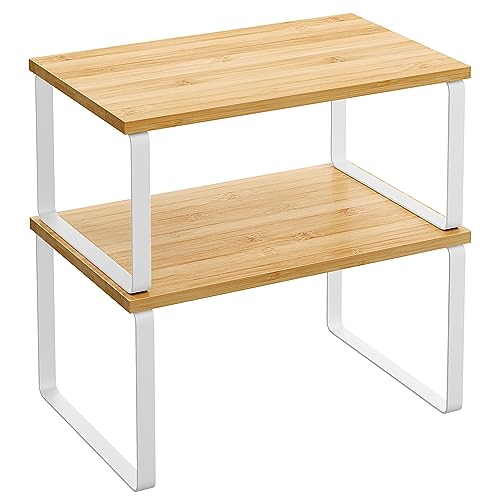
A stackable riser is the cheapest square footage in the kitchen. The SONGMICS Cabinet Organizer Shelf, Set of 2 (Stackable Riser) ($22.79) turns one cabinet shelf into two for plates, mugs or cans, with no tools and no wall anchors — which is why it also works in rentals. The shelf riser buying guide covers clearance so the riser fits what you actually stack.
Drawers: one tray, everything visible
The Lifewit Expandable Silverware Drawer Organizer ($9.99) is the junk-drawer cure. It expands to fit the drawer you have, and its compartments put the one-home rule from Zone 3 on knives, spoons and gadgets. If your drawer runs small or odd-sized, how to pick a drawer organizer that fits your drawers walks the measuring before you buy.
Fridge: clear bins for the eat-me-first shelf
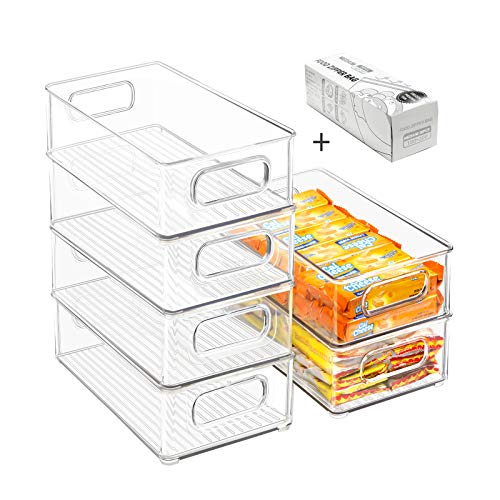
The Beauty Cottage Stackable Fridge Organizer Bins, 6-Pack (Clear) ($24.29) makes the eat-me-first rule physical. Clear walls mean leftovers get seen instead of forgotten, the stackable footprint keeps bins from eating the shelf, and the handles survive a pull-out-a-week rhythm. One bin reserved for eat-me-first items runs the whole Zone 5 rule on its own.
Every zone: labels that make the system stick
Zones decay when nobody remembers what goes where. The Nelko P21 Bluetooth Label Maker (Black, with Tape) ($16.98) prints from a phone, which means the labeling actually happens — no fumbling with a tiny keyboard. Label pantry canisters, fridge bins, drawer trays, and the system survives contact with the whole household.

Layout by Kitchen Size and Type
The five zones stay the same in every kitchen; what changes is the floor plan they land on. Find your layout below.
Galley kitchen: zone in a line
A galley forces all five zones into a corridor, so keep the line in workflow order — storage, sink, stove — and hold the two-appliance ceiling on counters so prep space survives. Vertical does the heavy lifting: risers on the shelves, door racks on the insides of the cabinets.
L-shaped and U-shaped: triangle zoning
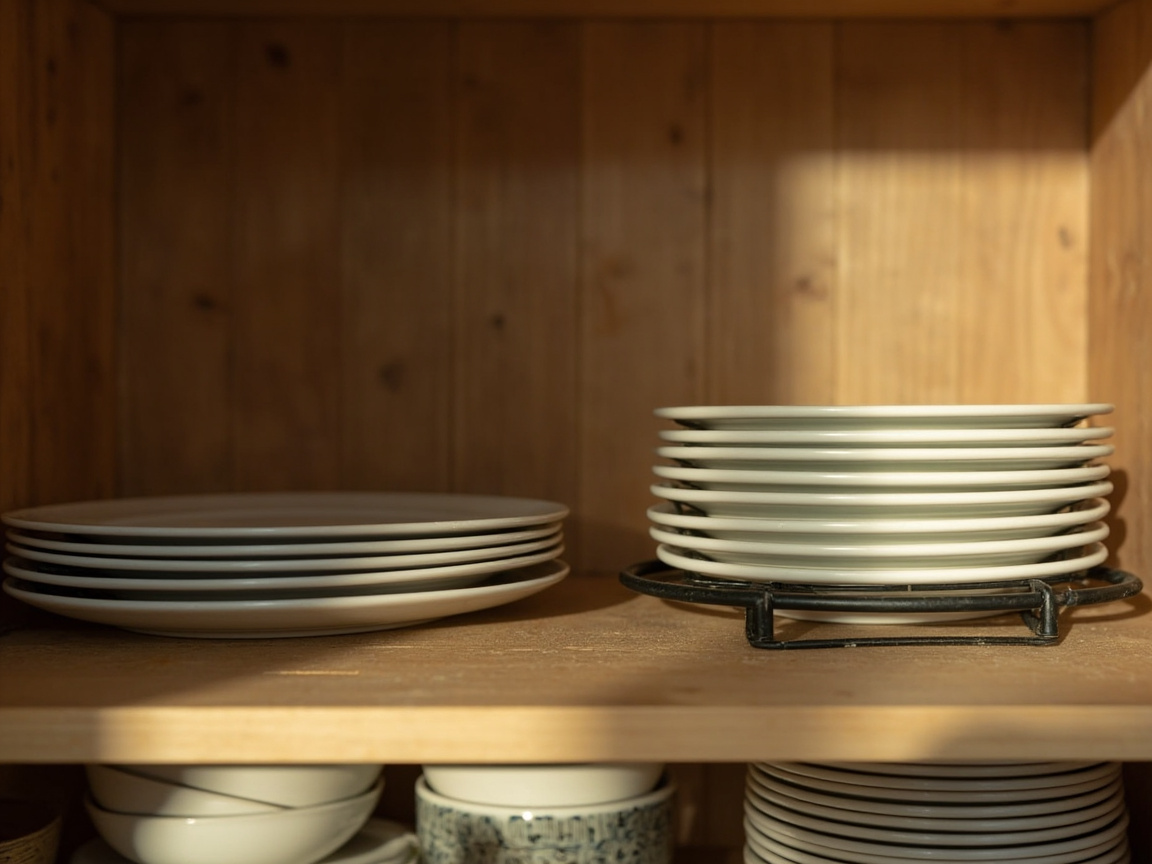
These layouts give you a corner, and an unassigned corner is dead space. Corner cabinets nearest the stove take the daily pans. The far corner becomes pantry overflow, with a stackable riser or two doubling the shelf height so the overflow stays visible instead of burying itself. That’s the trick in the photo below — one metal riser lifts a stack of plates so the shelf under it stays usable.
Small kitchen, no pantry: fridge-adjacent shelving
No pantry doesn’t mean no system — it means the pantry moves. A freestanding shelf beside the fridge takes the overflow, one cabinet shelf becomes the pseudo-pantry, and counters stay clear so the pseudo-pantry stays findable. The guide to how to organize a small kitchen step by step maps the whole layout, and the small-space decluttering rules that apply to kitchens keep the inventory down before it ever reaches a shelf.
Family kitchen: kid-height zones
Kids hold a zone if the zone holds their height. A snack drawer at kid level, a fruit basket within reach, one fridge bin they’re allowed to raid — that ends the constant foraging and gives them a zone of their own while your counters stay work space.
Constraint Guide
The system flexes with your constraints. Pick the branch that matches your situation.
If you rent and can’t drill
Skip wall anchors entirely. Tension rods inside cabinets take spray bottles. Shelf risers and drawer trays do the structural work. Freestanding units stand in for built-ins. Everything in the picks above works in a rental without a single hole in the wall.
If your budget is under $50
Buy in this order: the expandable drawer tray ($9.99), the two-tier counter basket ($15.99), and the label maker ($16.98) — $42.96 all-in, and three zones are organized. Skip the $40 container set until the declutter is finished; containers bought before the purge just make clutter neater.
If you have no pantry
Decant dry goods into airtight containers and give them one dedicated cabinet shelf — a pseudo-pantry. Add a freestanding wire shelf beside the fridge for overflow, and keep counters clear so the pseudo-pantry stays findable. Matching bins to the constraint gets its own guide, including the no-pantry case.
If you share the kitchen with kids
Drop a zone to kid height: snack drawer, fruit at arm level, one fridge bin they own. Label all of it — labeling systems that survive kitchens covers what holds up to grease and small hands — so the zone refills itself without you standing over it.
If counters must stay clear
Adopt appliance rotation: one in, one out. The coffee maker stays because it works every morning. The air fryer lives in the cabinet and comes out on its nights. If a gadget doesn’t earn a week of daily use, it doesn’t earn counter space.
If you buy in bulk at warehouse clubs
Bulk breaks the aisle logic — twelve identical jugs don’t fit a one-category-per-shelf system. Decant a working amount into containers weekly, and store the overflow outside the kitchen: garage shelf, basement, hall closet. The kitchen holds two weeks of everything; the stockroom holds the rest.
The 15-Minute Weekly Kitchen Reset
The system holds if you touch it weekly. Same day, same 15 minutes — set a timer and run the five sweeps.
The five 3-minute sweeps
Fifteen minutes, five zones, three minutes each. The photo is the counter mid-reset: spray bottle, towel tray, and a clear bin of bowls still out, not yet back in the fridge.
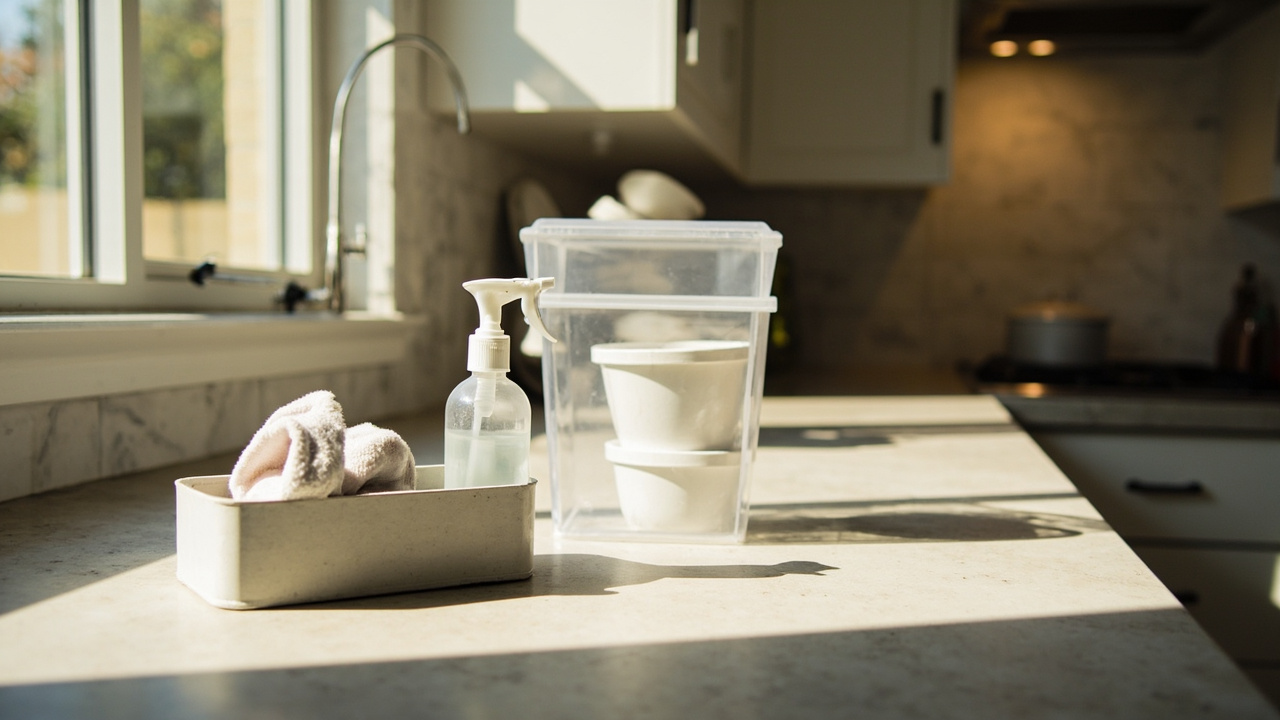
- Counters sweep (3 min). Everything that isn’t a daily appliance goes back to its cabinet home.
- Fridge triage (3 min). Pull the eat-me-first bin forward, toss what lost the race, wipe one shelf.
- Pantry front-face (3 min). Newest stock to the back, oldest to the front — the store trick that expires nothing quietly.
- Junk-drawer empty (3 min). Dump it, return the four things that wandered in, re-seat the tray.
- Bins re-seat (3 min). Straighten what sagged. The system stays honest when the bins stay labeled.
That’s the routine. When a zone needs more than 15 minutes — the pantry usually does, twice a year — the full maintenance routine scales the same sweeps room-wide, and the deep pantry reset version handles the worst shelf in the house.
Related Tips
The zone method works in every room that collects stuff. Next stops: the garage organization hub for the heavy equipment, the home office organization hub for paper and cables, the entryway drop-zone guide for the clutter the kitchen gets blamed for, and the pantry hub for food storage deep-dives when the food side needs a plan of its own.